Most Expensive Watches
Where watchmaking meets the auction record
The most expensive watches in the world combine extreme mechanical complexity, hand finishing, rarity and, at auction, a story. The record holder is the Patek Philippe Grandmaster Chime Ref. 6300A-010, a double-faced watch with 20 complications that sold for over 31 million dollars at auction in 2019, the highest price ever paid for a watch. The most famous sports watch result is the Rolex Daytona that belonged to the actor Paul Newman, which sold for 17.8 million dollars at a Phillips auction in 2017 and made the exotic-dial Daytona the defining collector's chronograph. The flagship models of the great houses show where retail prices peak: the Audemars Piguet Royal Oak Grand Complication, the Richard Mille RM 56-02 Tourbillon Sapphire with its case milled from sapphire crystal, and the gem-set Rolex Daytona Rainbow. Fame attaches to watches through their wearers as well: Marlon Brando's Rolex GMT-Master, worn in the film Apocalypse Now, and the Omega Speedmaster Buzz Aldrin wore during the Apollo 11 mission, the first watch worn on the Moon, are landmarks of collecting. This guide explains what drives these prices, the difference between flagship retail pieces and unique auction watches, and why provenance decides the top of the market.
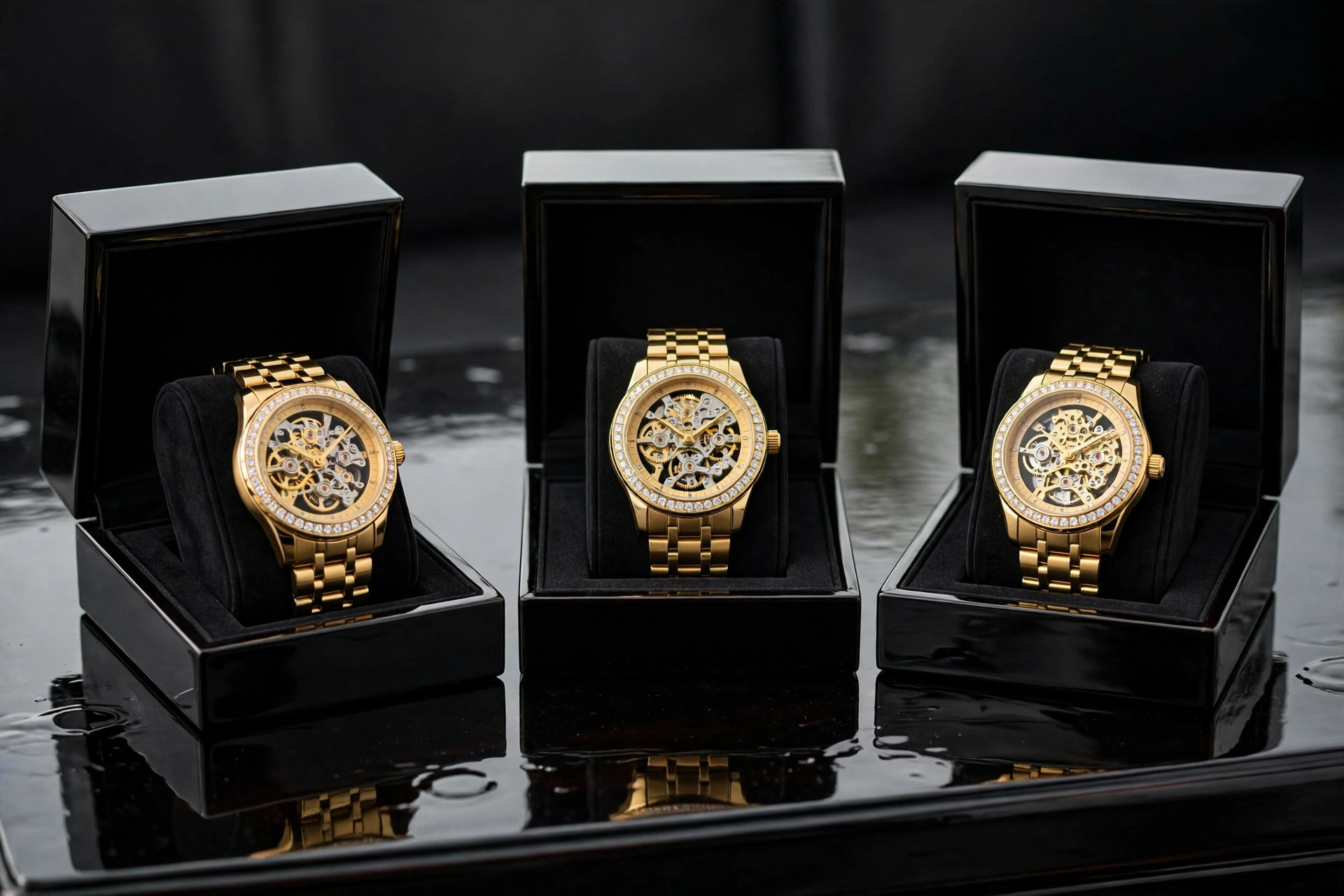
The world of luxury watches is adorned with timepieces that are not only masterpieces of engineering and craftsmanship but also symbols of status and prestige. Here are some of the most expensive watch brands, their flagship models, notable auctioned watches, and watches owned by royalty or celebrities.
Most Expensive Watch Brands:
- Flagship Model: Patek Philippe Grandmaster Chime Ref. 6300A-010
- Description: The Grandmaster Chime is a highly complicated timepiece, with a double-face featuring 20 complications, and it made history by being the most expensive watch ever sold at auction.
- Patek Philippe Official Website
Audemars Piguet:
- Flagship Model: Audemars Piguet Royal Oak Grand Complication
- Description: This is an exceptional and highly complicated timepiece, showcasing intricate mechanical engineering and exquisite design.
- Audemars Piguet Official Website
Richard Mille:
- Flagship Model: Richard Mille RM 56-02 Tourbillon Sapphire
- Description: Known for their innovative designs and use of high-tech materials, this particular model features a case made entirely of sapphire crystal.
- Richard Mille Official Website
- Flagship Model: Rolex Daytona Rainbow
- Description: The Daytona Rainbow is an exquisite timepiece embellished with precious gemstones, making it a statement of luxury and style.
- Rolex Official Website
Some of the Most Expensive Watches Sold at Auctions:
Patek Philippe Grandmaster Chime Ref. 6300A-010:
- Auction Price: Sold for over $31 million at a Sotheby's auction in 2019.
- Description: The Patek Philippe Grandmaster Chime made headlines as the most expensive watch ever sold at auction, featuring intricate complications and a double-face design.
Paul Newman's Rolex Daytona:
- Auction Price: Sold for $17.8 million at a Phillips auction in 2017.
- Description: This Rolex Daytona, famously known as the "Paul Newman" Daytona, belonged to the legendary actor Paul Newman and became one of the most iconic and valuable watches in history.
Famous Watches Owned by Royalty or Celebrities:
Rolex GMT-Master worn by Marlon Brando:
- Description: Marlon Brando's Rolex GMT-Master, worn in the movie "Apocalypse Now," became legendary and contributed to the popularity of this Rolex model.
Omega Speedmaster worn by Buzz Aldrin:
- Description: Buzz Aldrin wore an Omega Speedmaster during the Apollo 11 moon landing mission, cementing its status as the "Moonwatch" and forever linking it to space exploration history.
Audemars Piguet Royal Oak worn by LeBron James:
- Description: NBA superstar LeBron James is known for wearing Audemars Piguet Royal Oak watches, showcasing his affinity for luxury timepieces and the brand's iconic design.
These watches epitomize luxury, craftsmanship, and history, making them highly sought after by collectors, enthusiasts, and individuals seeking the epitome of horological excellence.
Luxury watches are often displayed in museums, especially those with historical significance, exceptional craftsmanship, or iconic designs. Museums around the world frequently showcase horological collections, allowing visitors to appreciate the art, engineering, and heritage associated with these timepieces. Some watches are displayed as part of broader exhibitions on horology, fashion, or the history of timekeeping.
As for the most rare type of watch, it's challenging to pinpoint a single "most rare" type, as rarity can be defined in various ways within the realm of watches. Rarity can stem from a combination of factors, including limited production numbers, unique designs, historical importance, and exquisite materials. Here are some categories of rare watches:
Limited Editions:
Limited edition watches are produced in small quantities, often to commemorate a special event, anniversary, or collaboration. These can be highly sought after by collectors due to their scarcity.
Vintage Watches:
Vintage watches, especially those from renowned watchmakers with limited surviving examples, are considered rare. Vintage models that are in exceptional condition and retain their original features are particularly valuable.
Complicated Watches:
Watches with intricate complications, such as minute repeaters, tourbillons, or perpetual calendars, are relatively rare due to the technical expertise and time required to create them. The rarity increases with the complexity of the complications.
Historical or Prototype Watches:
Watches that have historical significance, were worn by notable figures, or are prototypes with unique features are extremely rare. These watches often hold immense value due to their historical importance.
Unique or Custom-Made Watches:
Watches that are custom-designed or created as one-of-a-kind pieces for specific clients are inherently rare. These watches are unique in design, materials, or both, making them highly sought after by collectors.
Ultimately, the rarity of a watch can be influenced by a multitude of factors, making it a nuanced and varied aspect of the luxury watch world.
Flagships, Unique Pieces and Famous Wearers
Flagship models are a house's demonstration of capability, made in small numbers to standard designs: grand complications from Patek Philippe and Audemars Piguet, sapphire-cased tourbillons from Richard Mille, gem-set pieces from Rolex. Unique and auction watches are a different category, one-off pieces made for charity sales or pieces whose history makes them singular, and their prices are set in a room on a day rather than by any list. Royal and celebrity ownership connects the two worlds, since a production watch becomes a unique artifact when a documented famous wearer makes it the example.
For readers who will never bid at this level, the top of the market still matters: complications, finishing techniques and designs proven in flagship pieces filter down through each house's ordinary range, and the auction records explain why vintage versions of the linked Patek Philippe and Rolex models are collected so intensely. The expensive end of watchmaking is its research laboratory and its archive at once.
Common Questions
Why do some watches sell for tens of millions of dollars?
Several kinds of value stack together. The watch itself may be mechanically extraordinary, with dozens of complications finished by hand over years. It may be unique or one of a tiny edition. At auction a third factor dominates: provenance and story, since the Paul Newman Daytona's price rested on who wore it and its documented history as much as on the watch. Charity auctions add a fourth, where bidders pay partly as a donation. Remove the story and the same model sells for a small fraction of the record, which is why authentication and documentation are the market's foundation.
What is a complication, and why does it raise a watch's price?
A complication is any function beyond telling the time: a calendar, a chronograph, a moonphase, a repeating chime that sounds the time, a tourbillon. Each complication adds wheels, levers and springs that must be made, finished and regulated by hand, and combining many in one case multiplies the work and the rarity. The Grandmaster Chime's 20 complications, including two different chiming functions and a perpetual calendar across two dials, represent thousands of hours, which is the mechanical half of its record price.
Are very expensive watches a good investment?
A small number of watches have appreciated strongly, but the top prices are exceptions, not a market rule. Most watches, including expensive ones, sell second-hand below their retail price, and the pieces that gain are specific models with limited supply, strong demand and full documentation, bought well. Collectors who do best financially usually bought watches they wanted to own, kept boxes, papers and service records, and treated any gain as a bonus. Anyone buying purely for return needs specialist advice, since condition, originality and timing decide results.