Three Logics
How to Read These Six Types
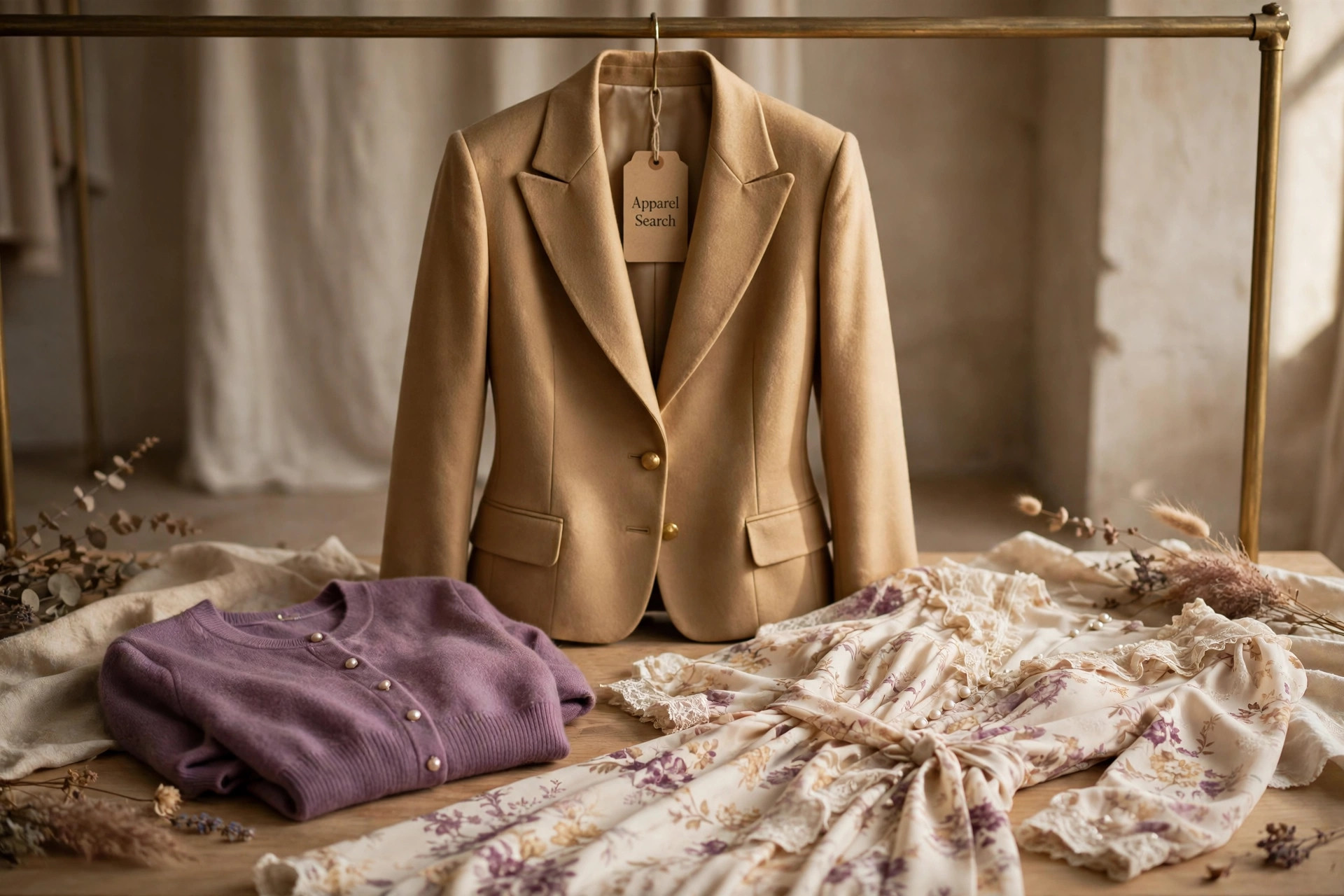
This half of the Kibbe spectrum runs on three different logics. The Classics are built on balance — yin and yang in near-equal measure — so their clothes aim for symmetry, smoothness and restraint. The Gamines are built on contrast — a compact frame carrying sharp and soft features side by side — so their clothes break the line into lively, fitted pieces. The Romantics are built on curve — yin in the lead in bone, flesh and face — so their clothes follow the body’s rounding with drape, gathering and a waist that is always dressed. Within each pair, the second type adds something: sharpness for the Dramatic Classic, softness for the Soft Classic and both Romantics’ distinction, and curve for the Soft Gamine.
The Classics
Dramatic Classic and Soft Classic
Dramatic Classic. Balance with a sharp edge. The silhouette is clean, tailored and symmetrical — the classic suit, the straight skirt, the structured dress — with just enough yang in crisp shoulders, geometric detail and polished fabrics to keep it from blandness. The women’s blazers guide is home territory: a well-cut blazer is this type’s single most reliable garment. What fights her: extremes in either direction — oversized relaxed styling drowns her moderation, and fussy ornament buries her clean line. Restraint with a point of view is the whole brief.
Soft Classic. The same balance, softened. Lines stay smooth and symmetrical but fabrics gain fluidity — soft wool, silk, fine knits — edges round gently, and the waist receives light, graceful emphasis rather than tailoring’s firm hand. Detail is delicate but never scattered: a small pearl, a soft bow at a neckline, a rounded collar. What fights her: sharp severity on one side and sloppy ease on the other. She is the type most often mistyped as boring by people who have only seen her dressed in other types’ clothes; dressed in her own lines she reads as the most quietly polished person in the room.
The Gamines
Flamboyant Gamine and Soft Gamine
Flamboyant Gamine. A petite, angular frame with a contrasting mix of features, dressed in broken lines: cropped jackets, short skirts or tapered trousers, colour blocking, mixed prints, pieces that stop and start rather than flow. Animation is the point — crisp fabrics, sharp small-scale detail, wit in the accessories. What fights her: long, unbroken, flowing lines, which erase her compact energy, and oversized softness of any kind. The vertical must be interrupted, deliberately and often.
Soft Gamine. The same compact, broken-line logic with yin flesh added: fitted, rounded shapes in short lengths — a cropped cardigan over a soft dress, a nipped waist, curved details, small lush prints. She needs the Gamine’s staccato construction and the Romantic’s softness at once, sized small. What fights her: severe tailoring, long straight columns, and anything boyish-straight that ignores her curves. If a Flamboyant Gamine borrows from the boys, a Soft Gamine borrows from the 1950s ingénue — and then crops it.
The Romantics
Theatrical Romantic and Romantic
Theatrical Romantic. Curve with drama: a yin body — soft flesh, rounded bones, lush facial features — carried at a slightly larger, more deliberate scale. The waist is sharply defined, fabrics are lush and clinging or draped with intent, and detail is ornate: lace, beading, jewel tones, a dramatic neckline. What fights her: straight, boxy, understated styling, which reads on her as unfinished rather than minimal. She is the type for whom “too much” is most often exactly enough.
Romantic. Yin throughout, at a softer and often more petite scale. Silhouettes follow the body’s rounding in gathered, draped, softly fitted shapes; the waist is always acknowledged; fabrics are lightweight and fluid — chiffon, soft lace, draping jersey, silk that moves. Detail is delicate and rounded: soft florals, gentle ruching, rounded necklines, jewellery with curves rather than angles. What fights her: structure — stiff tailoring, sharp geometrics, oversized menswear lines all sit on her frame like borrowed armour. Of all ten types, hers is the clearest case of the Kibbe principle: the clothes work when they repeat, in cloth, the curves that are already there.
Both Romantic types sit closest to the classic hourglass shape, which is why Kibbe vs body shapes uses them to show where the two systems agree — and where the shape system alone would send a Theatrical Romantic and a Soft Dramatic to the same rack despite needing opposite clothes.
Questions
Common Questions
What is the difference between Dramatic Classic and Soft Classic?
Both Classics dress a balanced, symmetrical frame with clean, moderate lines. The Dramatic Classic adds yang: crisper tailoring, sharper detail, more polished structure. The Soft Classic adds yin: more fluid fabrics, gentler shaping at the waist and rounder, more delicate detail.
Why do Gamines dress in broken lines?
A Gamine’s physicality is itself a contrast — compact scale with sharp and soft features mixed — so a long, unbroken, flowing outfit erases her outline and her energy. Cropped, fitted, contrasting pieces repeat her own stop-and-start geometry, which is why they look intentional on her and choppy on longer types.
Are Romantic types the same as the hourglass body shape?
They overlap but are not identical. Hourglass is a measurement pattern — bust and hips in balance with a defined waist. Romantic types are hourglass-shaped women whose bones, flesh and face are also yin: rounded, soft and delicate. An hourglass with a strong, sharp frame is more likely a Soft Dramatic.
More to Explore
Search Apparel Search