Apparel Search Consumer Guides
Hourglass Shape Style Guide
Follow the frame's own lines, and let the waist do the talking.
The hourglass shape arrives with its architecture built in: bust and hips in near-equal measure, and between them a waist that is not a suggestion but a fact. Dressing it, in this part of our dress for your body type guide, is less about creating balance than about not disturbing it. The strategy is fidelity — choose garments whose lines follow the frame's lines, keep the waist visible as the organizing point, and let fabric drape rather than stand away or squeeze.
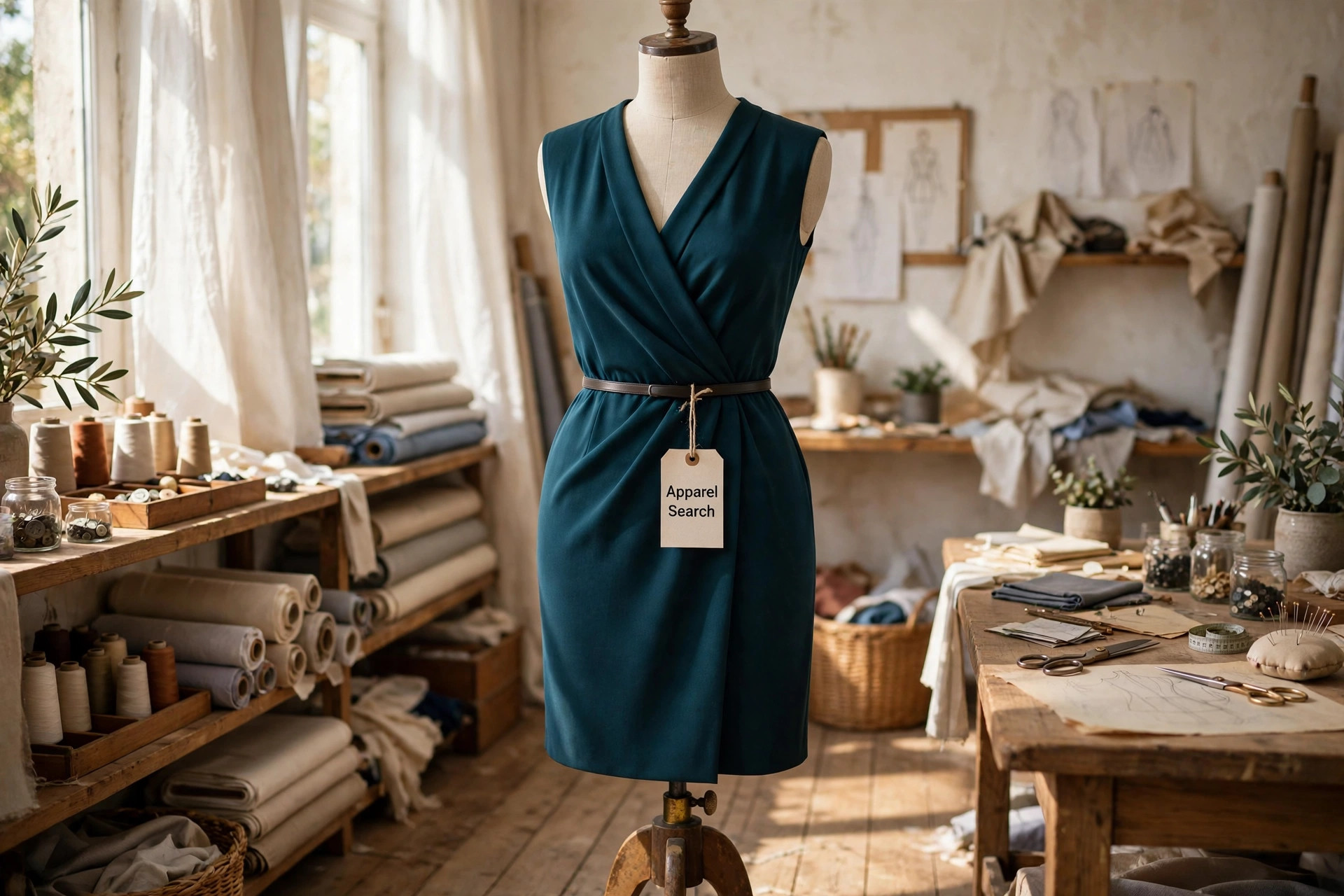
The Hourglass Shape at a Glance
The measurement pattern — the find your body type guide has the method — is symmetry with a narrow middle: bust and hips within a few inches of each other, waist smaller by a clear margin. Because the proportions are pre-balanced, this shape's dressing questions are rarely about where to add or subtract. They are about fit precision: a garment cut for a straighter frame will pull at bust and hip while floating at the waist, which is why tailoring and shaped cuts matter more here than for any other shape.
Wrap Styles: The Native Language
If one design belongs to this shape, it is the wrap. The wrap dress crosses over the bust without straining, settles at the natural waist by its own geometry, and skims the hips in a fluid fall — three correct decisions in a single garment, adjustable to the individual body rather than to a size chart. Wrap tops do the same work in separates form. The principle generalizes: any garment that acknowledges all three lines — bust, waist, hip — in that order will look made for this frame, because in effect it was.
Fitted, Not Tight
The distinction matters. Fitted means the garment follows the frame's geography: seams where the body changes direction, ease where it moves. Tight means the fabric is negotiating. Jersey and knit fabrics with recovery, woven fabrics with a little give, and cuts with princess seams or shaped darts all deliver the first; a size too small delivers only the second. The sheath dress, properly fitted, is the formal expression of the same idea — a clean column interrupted at exactly the right place by the waist it was cut around.
The Waist, Marked Lightly
Belts are this shape's punctuation. Worn at the natural waist they underline what is already true, turning a loose dress into a defined one and giving a coat or cardigan its missing middle. Our women's belts guide covers widths and hardware; the hourglass guidance is mostly placement — at the waist itself, not above or below it — and proportion, with the belt's width matched to your scale and the outfit's weight. A waist seam in a dress does the same job silently and is worth preferring when you shop: it is a belt that can never slip.
Necklines and Symmetry
Because the top and bottom halves already match, necklines have an easy brief: keep the bust comfortable and the line open. V-necks, scoops and sweethearts all echo the frame's curves; high necklines work when the fabric and fit are right. The one asymmetry to watch is emphasis — a heavily detailed skirt under a plain top, or the reverse, tilts a balance that did not need tilting. Even distribution of interest is this shape's version of the other guides' strategies.
Between Two Shapes?
If your hips lead the bust by a growing margin, the pear guide shares your southern border and its A-line advice will serve you. If your bust leads instead, borrow the neckline thinking from the apple guide. The waist advice in this page remains yours in both cases.
Common Questions
What is an hourglass body type?
An hourglass shape has bust and hips close in measure — balanced with each other — and a waist that is dramatically smaller than both, typically by a quarter or more. The balance is the definition: the same waist on unbalanced proportions would read as a different shape entirely.
Why do wrap dresses suit hourglass shapes so well?
A wrap dress is engineered for this frame: it crosses at the bust, ties or fastens exactly at the natural waist, and releases over the hips in a fluid fall. It follows all three of the shape's lines in one garment, adjusts to the wearer's own proportions rather than a size chart's, and moves gracefully. It is the closest thing dressing has to a solved equation.
How should hourglass shapes wear belts?
At the natural waist, where the frame is narrowest, in a width that suits your scale — slim belts for subtle definition over dresses, wider ones to organize a loose top or a coat. A belt placed anywhere else relocates the waist visually, which is occasionally useful and usually unnecessary on a shape that already has the real one.
What should hourglass shapes avoid?
Nothing is forbidden, but shapeless cuts work against the frame's gift: a boxy, waistless silhouette hides the one line that organizes everything else, and the outfit reads larger than the body inside it. If you love a loose cut, give it a belt or choose the version with shaped seams — the frame deserves a vote.
Back to the Dress for Your Body Type Guide
Five shapes, one principle: proportion. Find yours, and getting dressed gets simpler.