Apparel Search Consumer Guides
Apple Shape Style Guide
Lengthen the line, open the layers, and let the outfit travel vertically.
The apple shape carries its proportions through the middle: bust and waist are the frame's generous lines, the torso is where an outfit succeeds or struggles, and the legs — often the slimmest part of the frame — wait patiently to be noticed. This guide is part of our dress for your body type guide, and its strategy is simple to state: draw long vertical lines through the torso, place definition high or not at all, let fabric skim rather than grip, and give the legs and the neckline their share of the attention.
The Apple Shape at a Glance
Measured honestly — our find your body type guide shows how — the apple pattern is a bust and waist that run close together, with the midsection the fullest line of the three. Shoulders are usually average, arms and legs comparatively lean. Nothing about this arrangement is a problem to be solved; it is a distribution to be dressed, and the distribution has real assets: a strong bust line, good legs, and a torso that carries fluid, dramatic fabrics beautifully.
Empire Lines and Early Definition
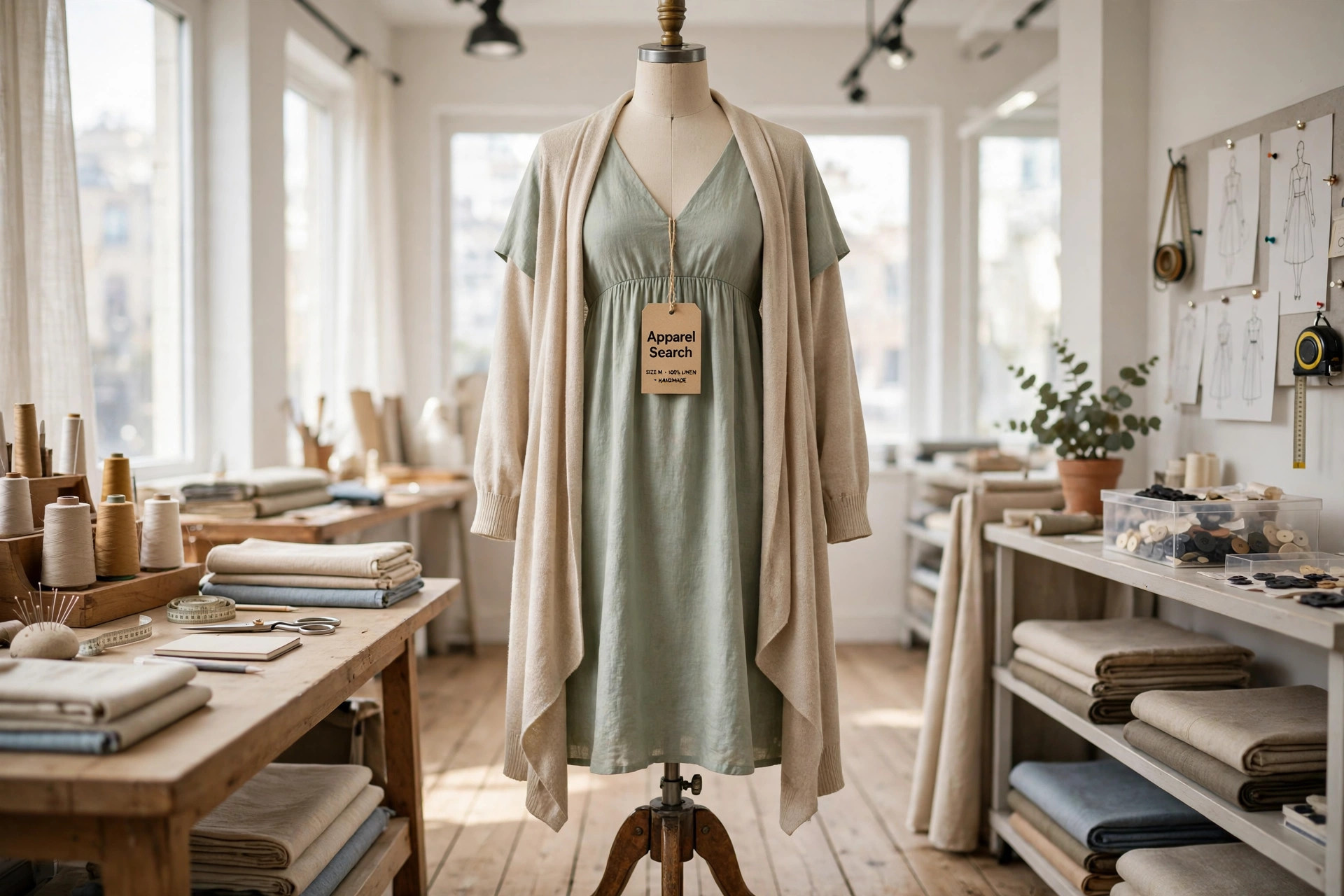
The hardest-working silhouette for this shape defines itself under the bust and then lets go. Empire dresses seam at the highest, narrowest point of the torso and fall in one unbroken line from there, which lengthens the body and gives the midsection complete freedom underneath. The same logic works in tops: a seam, a placket or a change of fabric under the bust organizes the whole garment. What does not help is definition demanded at the natural waist, where the frame has not offered one — fabric pulled in there advertises the width it was meant to organize.
Open Layers and Vertical Lines
An open layer is the apple shape's framing device. A long cardigan, an unbuttoned shirt or one of the fluid styles in our women's jackets guide, worn open over a simple base, draws two vertical lines down the front of the body. The eye follows the lines, reads length, and passes the midsection without stopping. Structure at the shoulder — a clean shoulder seam, a slight sharpness to the cut — strengthens the effect by giving the verticals a firm place to hang from. Underneath, keep the base simple: a smooth top in a fabric with drape, tucked nowhere, ending at a clean point on the hip or below it.
Necklines That Open the Frame
Where the torso is full, an open neckline is worth several inches of visual length. V-necks, deep scoops and open shirt collars all break the chest's horizontal expanse into a vertical invitation, and the V-neck tops in the clothes guide are the everyday version of the idea. Jewelry works the same geometry: a pendant that falls to a point below the bust continues the line the neckline started. High, closed necklines are not forbidden — they simply ask the rest of the outfit to supply the verticals instead.
Fabric That Skims
For this shape, fabric choice is half the design. Matte jerseys, crepe, fluid viscose and soft woven fabrics with body fall from the bust and move with the wearer; stiff, shiny or clinging fabrics either tent or grip, and neither serves the line. The test in the fitting room is motion: a fabric that still looks smooth when you sit, reach and turn is doing its job. Prints are welcome at any scale, with one consideration — a bold motif concentrated at the midsection will hold the eye there, while the same print spread over the whole garment simply reads as pattern.
Between Two Shapes?
If your waist is only slightly fuller than your hips, you may be reading the border between apple and the rectangle shape — borrow that guide's layering advice. If a defined waist appears when you measure but your bust leads strongly, the hourglass guide may hold a few useful pages too. The borders are friendly; take what works.
Common Questions
What is an apple body type?
An apple shape carries its proportions through the bust and midsection: the waist measures close to the bust, the torso carries the fullest line of the frame, and the legs and arms are often comparatively slim. It is a description of where width sits, nothing more — and it is one of the most common shapes there is.
What dresses suit an apple shape best?
Dresses that define their line high and release it early: empire styles that seam under the bust and fall freely, A-line dresses that flare from the shoulder or bust, and fluid shifts with enough shaping to suggest a frame without gripping it. The goal is a long, unbroken fall of fabric from the highest point of definition.
Should apple shapes wear belts?
A belt cinched at the natural waist usually works against apple proportions, because it draws the eye to the widest line and divides the torso at its fullest point. If you enjoy a belt, wear it lower and looser, at the hip, or choose the under-bust line of an empire dress instead. It is a guideline about where the eye lands, not a rule about what you may wear.
What jeans work for an apple shape?
Mid-rise jeans with a flat front and a smooth, wide waistband sit most comfortably and keep the line clean. Straight-leg and gentle bootcut styles balance the torso's presence, and a darker, uniform wash keeps the lower half understated while the top half carries the interest.
Back to the Dress for Your Body Type Guide
Five shapes, one principle: proportion. Find yours, and getting dressed gets simpler.