Apparel Search · Starting a Clothing Line
Launching & Marketing Your First Collection
Photography, line sheets, audience building and the first-season calendar — how a finished collection becomes a launched one.
Stock on a rail is not a launch. A launch is the organized moment when a collection, its photographs, its story and its selling channels all arrive together — the final stage of the starting a clothing line path, and the one where the earlier stages either pay off or are exposed.
What a Launch Actually Consists Of
Approved, photographed product; prices and a line sheet a buyer can order from; a place to buy (your site, stockists, or both — see wholesale vs DTC); imagery and content that tell the collection's story; and a calendar that sequences announcements, outreach and availability so attention lands when garments can actually be bought.
Photography Is Not an Afterthought
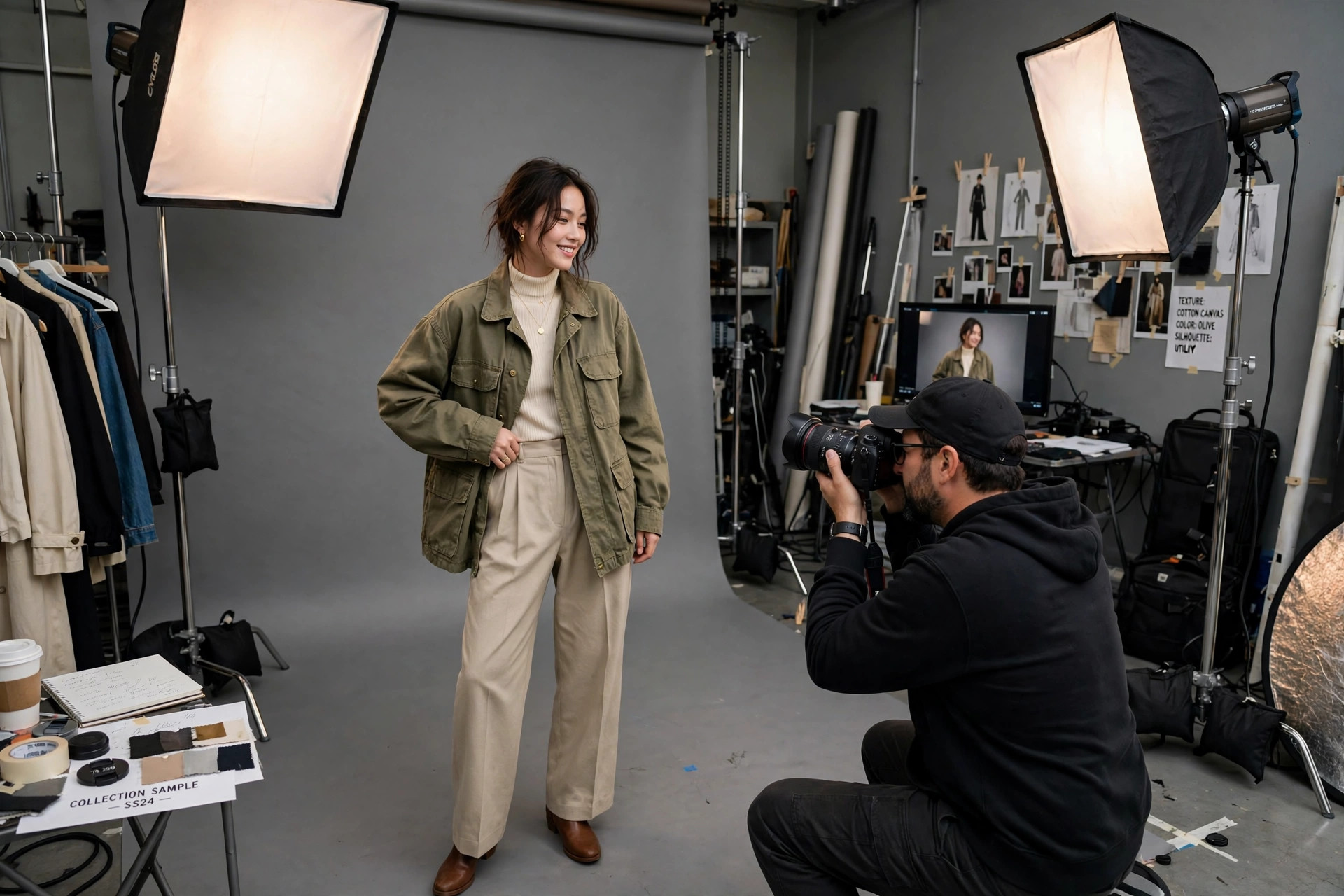
For a first collection, photography does the selling that a founder's voice cannot: e-commerce shots that show fit and fabric honestly, and campaign images that give the line an identity worth sharing. Both are crafts with their own planning — casting, styling, shot lists, licensing — covered in the Fashion Photography & Media Production Guide. Budget for photography inside the startup costs, shoot every style in every color you intend to sell, and shoot more content than the website needs: the same session feeds social channels, wholesale outreach and press for the whole season.
The First-Season Calendar
Build the audience before the drop
Behind-the-scenes development content, a mailing-list signup and early access for interested followers turn launch day from a cold start into an event. An audience built during sampling costs nothing but consistency.
Prepare wholesale outreach
If wholesale is in the plan, line sheets, price lists and lookbooks go to target buyers timed to their buying calendar — which is why trade show and market dates belong in the launch plan months ahead.
Sequence the announcement
Tease, reveal, availability, proof: collection story first, then the product, then the first customers and press wearing it. Each wave needs its own imagery, which is another argument for overshooting the photography session.
Convert attention into a list
Whatever the launch earns in traffic, its durable asset is the mailing and follower list it leaves behind. Season two is launched to people; season one is launched at strangers.

Marketing Channels for a First Collection
A first season's realistic channel mix is narrow: the founder's own social presence and the story of building the line; targeted outreach to local and niche press and creators whose audiences match the niche; in-person moments — pop-ups, markets, a launch event — where fit and fabric can be experienced; and, where budget allows, small, tightly targeted advertising tested against the best-performing organic content. The wider discipline is taught in the Fashion Marketing & Brand Building Guide; the launch applies it at first-season scale, with first-season money.
Launch Mistakes That Waste a Good Collection
- Announcing before stock, photography and the buying path are all ready — attention that cannot convert does not come back.
- Spending the marketing budget on one big moment instead of a season of consistent presence.
- No capture mechanism: traffic that leaves no email address or follower behind is rented, not owned.
Common Questions
When should I start marketing my clothing line?
During development, not after production. Sharing the sampling process, fabric choices and fitting journey builds an audience that is ready when the collection drops, and it costs nothing beyond consistency. A launch announced to an audience built over months will outperform the same announcement made to strangers on the day.
What is a line sheet and why do I need one?
A line sheet is the wholesale selling document for a collection: every style photographed or drawn, with style numbers, sizes, colors, wholesale prices, delivery dates and order terms. Buyers cannot order from Instagram posts; if wholesale is part of your channel plan, the line sheet is as essential as the garments themselves.
How much should a new brand spend on launch marketing?
There is no universal figure, but the principle is to fund marketing inside the startup budget from the beginning rather than treating it as whatever is left after production. A realistic first-season allocation covers photography, a line sheet and lookbook, basic content production and a modest testing budget for targeted advertising — scaled to the size of the launch.
Do I need a launch event for my first collection?
No, but some in-person moment is valuable for a tactile product: a pop-up, a market stall, a trunk show at a friendly boutique. Feeling fabric and trying fit converts skeptics in a way photography cannot, and the feedback a founder hears in person during launch week is some of the most useful research a young brand ever gets.
Back to the Starting a Clothing Line Guide
A launch is a beginning disguised as a finish line — the brands that survive treat season one's launch as research for season two. The full Starting a Clothing Line guide walks the whole path — business plan, business models, manufacturers, collection planning, costs, selling channels and launch.