Cloth Inspection Machines
Testing machinery and equipment for the textile and clothing industry — what it measures, how it works, and the companies that supply it.
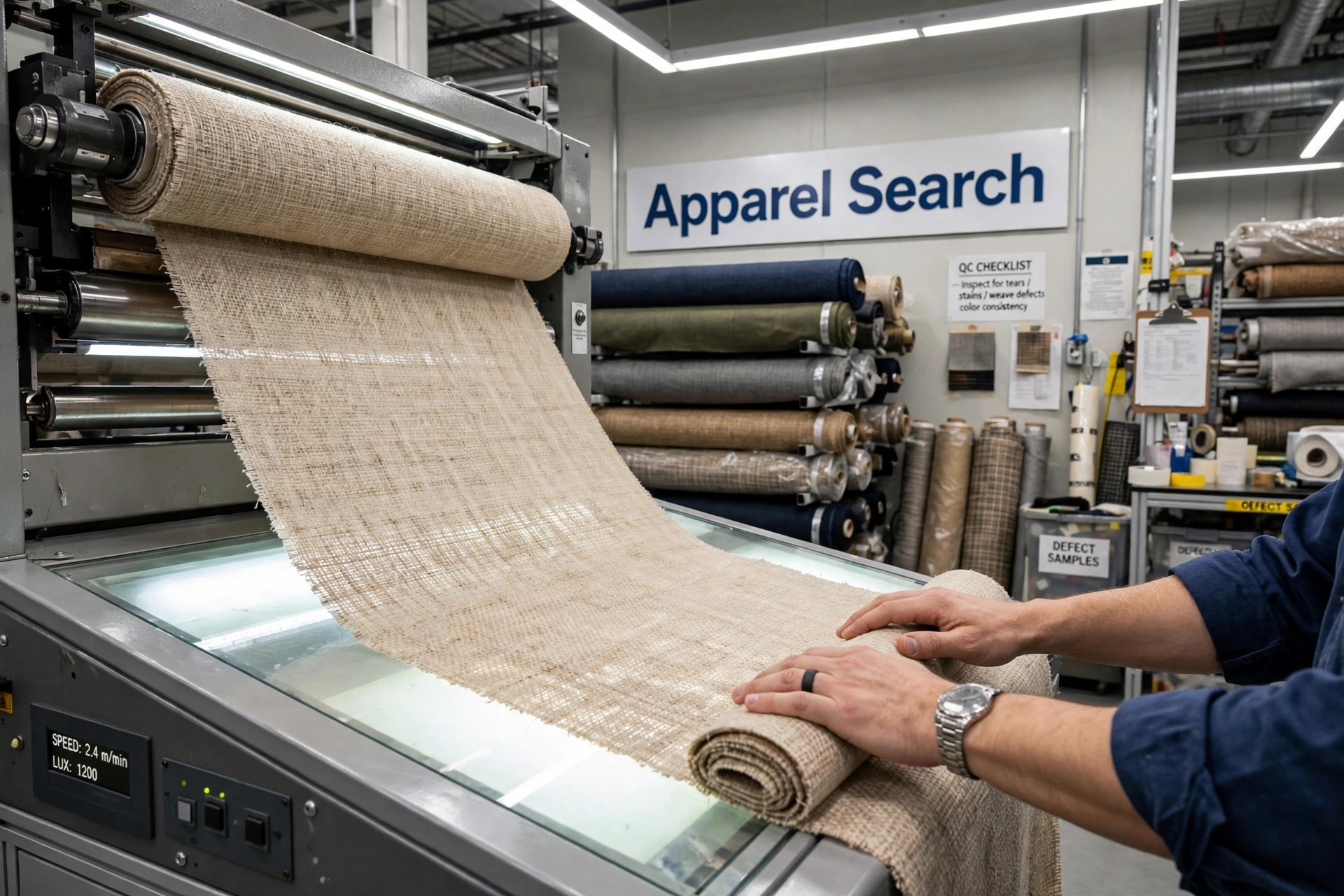
A cloth inspection machine is where fabric gets its honest look. Cloth leaving a loom or a dye house carries the record of everything that happened to it — weaving faults, broken picks, oil stains, shade bands, holes — and none of that is visible while the cloth sits wound tight on a roll. An inspection machine unwinds the fabric at a controlled speed over an angled, evenly lit surface, so a trained eye (backed on modern lines by cameras and sensors) can spot faults as the cloth passes, mark them, and record where they are. The same pass usually measures the length and re-rolls the cloth evenly, so inspection, measuring and rolling arrive as one machine job — and the faults found here decide whether a roll is accepted, downgraded, mended or rejected before it reaches a cutting table.
Textile Machinery Directory
How Cloth Inspection Works
The fabric path is the whole design: cloth is drawn from the supply roll, passed over an inspection board or light table set at a comfortable viewing angle, and wound onto a take-up roll under steady tension. Backlighting shows holes, thin places and missing threads; surface lighting at an angle shows stains, slubs and weave irregularities; and a raking light reveals shade variation that flat light hides. The inspector controls speed, can stop and reverse the cloth to bring a fault back into view, and marks faults with a ticket, a thread or a recorded position so the cutting room knows exactly where the defect sits in the roll. Inspection speed is a quality decision in itself — cloth run too fast is cloth not really inspected.
What inspectors look for follows the fabric: woven goods are checked for broken warp and weft, reed marks, double picks, knots and dye streaks; knitted goods for dropped stitches, holes, needle lines and barré; all fabrics for stains, contamination and shade differences from selvedge to selvedge and end to end. Faults are commonly graded by size and severity into a points-per-length score, and that score — agreed between mill and buyer in advance — is what turns a visual check into an acceptance decision both sides can work from.
Choosing Inspection Machinery — and the Rolling and Measuring Combination
Because the cloth must move to be inspected, inspection frames are usually sold as combination machines: unroll, inspect, measure and re-roll in one pass. Width capacity, inspection surface and lighting type, drive and tension control, and whether the machine handles delicate knits as gently as heavy wovens are the specification points that separate one model from the next. Hiemac Industries, listed below, builds exactly this combination in Australia — its fabric rolling and measuring machine is a compact portable unit with high speed rolling, easy thread-up, fixed tension control and forward and reverse running at variable speed, the reverse being what lets an inspector wind a fault back into the light.
Inspection only pays when its records are used. Rolls should leave the machine with their measured length, fault count and fault positions documented, so the cutting room can plan lays around defects instead of discovering them under the knife. Keep inspection lighting tubes on a replacement schedule — a dim or uneven light quietly lowers the standard of every roll passed under it — and calibrate the measuring side with the same care as the viewing side, since the roll's stated length is set here.
Companies Supplying Cloth Inspection Machine
Hiemac Ind. Pty. Ltd.
Hiemac Industries (Australia) offers a wide range of high-tech sophisticated machinery and equipment allied with the textile, apparel manufacturing and handling industry. Designed and manufactured in Australia, they can offer quick deliveries, affordable prices, versatility and excellent after-sales back-up. Their machinery is engineered above world leading standard, is aesthetically pleasing and its functions are unparalleled. In addition to many other clothing and textile machines, they have fabric rolling and fabric measuring machinery — a compact portable unit incorporating high speed rolling, easy thread-up, fixed tension control, forward and reverse with variable speed.
Supplies: Fabric Rolling Machinery · Fabric Measuring Machinery · Cloth Inspection Machinery
Testing, Inspection & Quality Machinery
Related Guides and Resources
Common Questions
Why is cloth inspected over a light instead of on a table?
Light does what a flat look cannot. Backlighting exposes holes, thin places and missing threads, while angled surface light reveals stains, slubs and shade variation. Passing the cloth over a lit inspection surface at a controlled speed lets an inspector see — and mark — faults that are invisible on a wound roll or a flat table.
What happens to a roll that fails inspection?
It depends on the fault score agreed between mill and buyer. A roll may be accepted with faults marked for the cutting room to plan around, downgraded to a lower grade or price, sent for mending where faults can be repaired, or rejected outright. The inspection record — length, fault count and positions — supports whichever decision is taken.
Is inspection combined with measuring and rolling?
Usually, yes. Because the cloth has to move to be inspected, most machines unroll it, pass it over the inspection surface, measure its length and re-roll it evenly in one pass. Combination units such as Hiemac's add controlled tension and forward-and-reverse running so a fault can be wound back into view.