Apparel Search · Design Guide
Mood Boards & Trend Research
How designers decide what a collection should be before drawing a single garment — the sources they mine, and the board that turns research into direction.
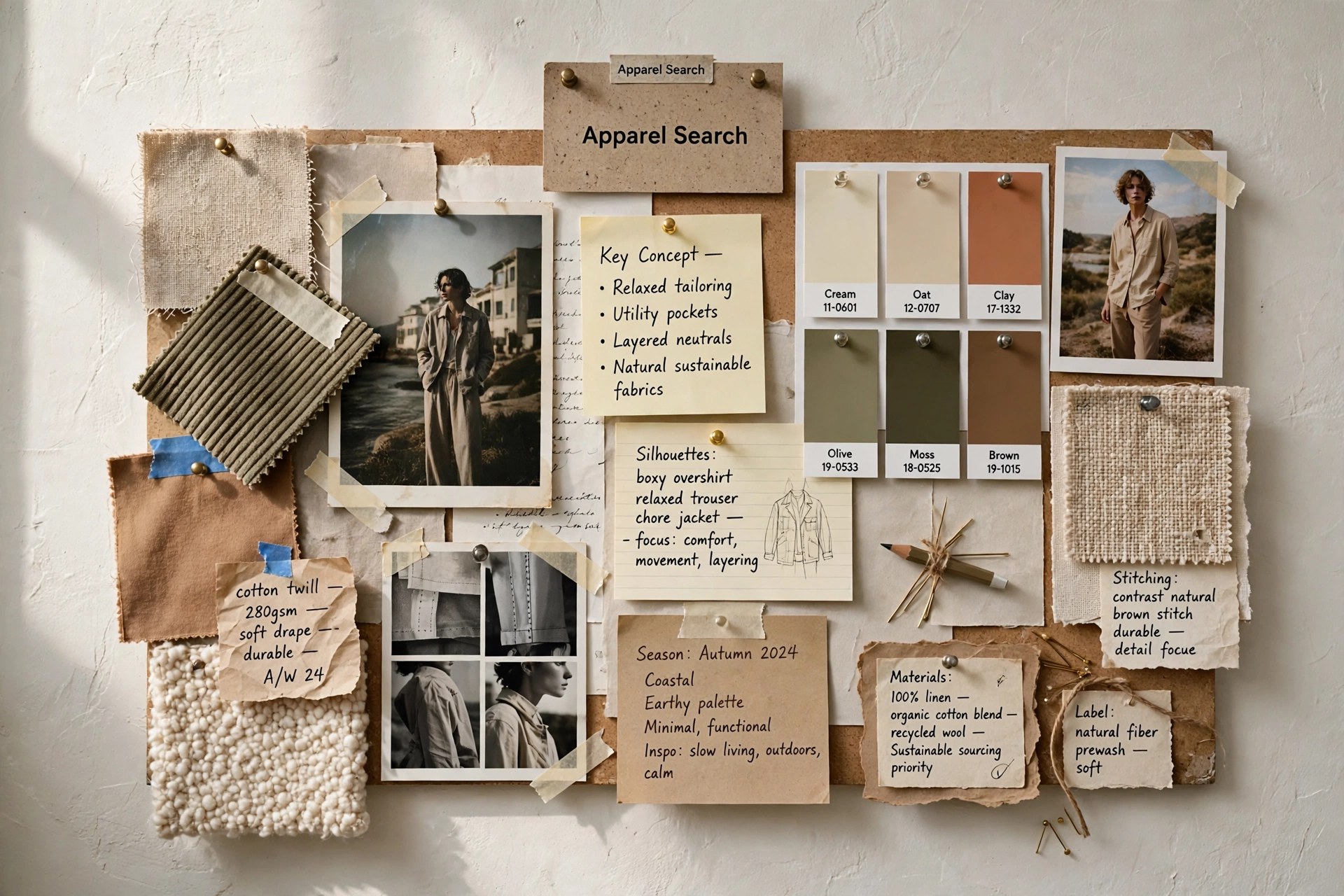
Before the sketches in the design process can start, someone has to answer a harder question: what is this collection about? Mood boards and trend research are how designers answer it — the research half of the Fashion Design & Illustration cluster. This guide covers what a mood board really does, what belongs on it, and where trend direction genuinely comes from.
Mood Board, Defined
A mood board (or concept board) is a curated visual summary of a collection’s direction: the imagery, colors, fabrics, textures and words that define its world. It is not decoration and not a collage of things the designer likes — it is a working decision tool. Every sketch, fabric and trim choice for the season gets tested against it: if it does not belong on the board, it does not belong in the collection.
What Goes on the Board
A complete board mixes five kinds of material. Imagery — photographs, artwork, runway and street-style pictures that carry the mood and the customer. Color — the palette fixed as physical chips or swatches, because screen color lies and fabric color is the product. Fabric and texture — actual swatches wherever possible; a board that claims luxury in polyester pictures convinces nobody. Silhouette references — garment shapes and details that point the sketching in the right direction. And words — a title and a handful of phrases that name the concept, so a whole team can argue about the same idea. Arrangement is editing: the strongest image goes largest, and anything merely pretty that does not serve the direction comes off.
Where Trend Research Comes From
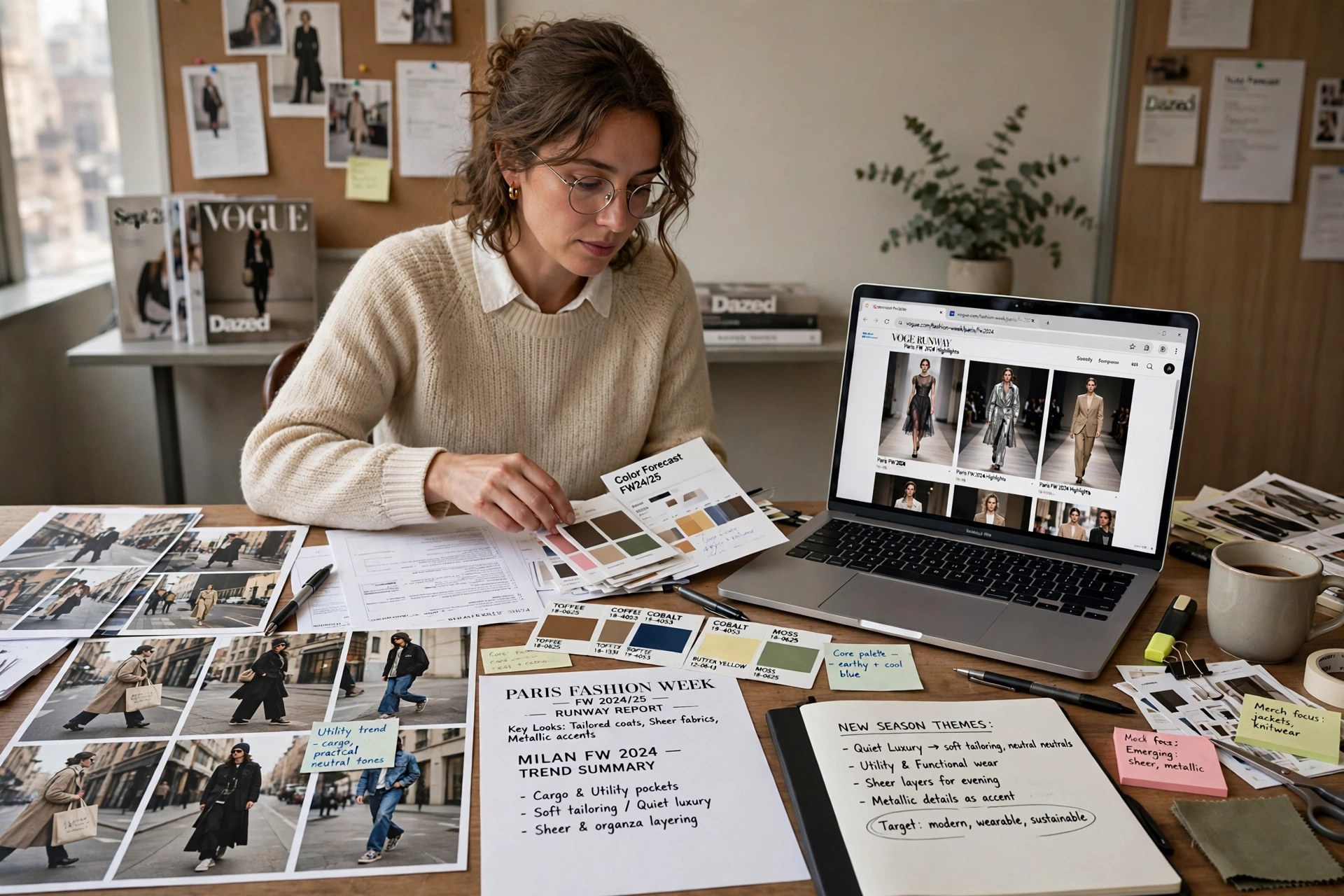
Designers do not wait for trends to announce themselves. They work a circuit of sources, each with its own lead time. Fabric and yarn fairs and the mills’ seasonal ranges set the material palette first. Forecasting agencies publish color, silhouette and consumer direction one to two years ahead, built from cultural and economic signals. Runway coverage proposes the season’s ideas at the top of the market, while street style and social media show which ideas real people are already adopting — the difference between a proposal and a movement. Retail research — shopping competitors, reading sales data on last season — grounds it all in what customers demonstrably buy. The craft is triangulation: a direction confirmed by fabric fairs, street adoption and sales data is safe to build on; a direction from one editorial shoot is a mood, not a trend.
From Research to a Collection Direction
The board is the bridge between looking and drawing. Once it is fixed — usually in a review where the direction is defended and adjusted — sketching begins against it, and it stays visible all season as the court of appeal for every dispute: this fabric or that one, this color story or another. Apparel Search’s companion coverage of the newest research tools, including its AI design and forecasting guide and its roundup of AI fashion design tools, shows how the same triangulation is now partly automated — but the judgment that turns signals into a point of view remains the designer’s job, and the mood board remains where that judgment gets pinned down.
Common Questions
What goes on a fashion mood board?
Anything that fixes the collection’s direction in visible form: inspirational photographs and artwork, runway and street-style images, the color palette as physical chips, fabric swatches and texture samples, silhouette references, typography and graphic motifs, and a few words — a title and short phrases — that name the mood. A board should answer, at a glance: what world does this collection live in, and what does it never do?
Where do fashion trends actually come from?
From several directions at once. Forecasting agencies analyze cultural, economic and street signals years ahead; fabric and yarn fairs set the materials palette a season before garments are designed; runway shows propose silhouettes; street style and social media prove what real people adopt; and retailers’ sales data shows what is actually selling. Designers triangulate all of it rather than following any single source — a trend confirmed by three sources is a direction, one from a single source is a gamble.
Are mood boards physical or digital now?
Both, usually in sequence. Digital gathering is faster and bottomless — shared boards, saved runway coverage and searchable archives — and most teams keep the working research digital. But a large physical board still earns its wall space in many studios: real fabric swatches and color at true scale, visible to the whole team all season, cannot be scrolled past. Portfolios and client presentations increasingly show the board digitally either way.
How far ahead do designers research trends?
Farther than most people expect. Color and fabric direction is set roughly two years before a garment reaches a store; runway-driven design work typically runs six to twelve months ahead of the selling season; fast-fashion and direct-to-consumer brands compress their research-to-store cycle to a few months by monitoring street and social signals continuously instead of working to the traditional calendar.
Back to the Fashion Design & Illustration Guide
The Fashion Design & Illustration hub maps the whole creative front end — the design process, illustration, croquis, flats and portfolios alongside this guide.