Apparel Search · Design Guide
The Fashion Design Process
Six stages, in the order working designers actually follow them — from the first spark of research to a selected, developed set of designs ready to be made.
Outsiders imagine fashion design as a single flash of inspiration followed by a beautiful sketch. Inside a studio it looks different: a disciplined sequence in which research feeds a concept, the concept feeds hundreds of sketches, and ruthless editing reduces those sketches to the few dozen designs worth developing. This guide walks through that sequence — the creative front end of the Fashion Design & Illustration cluster — so students and new designers can see where each skill they are learning actually gets used.
Research & Inspiration
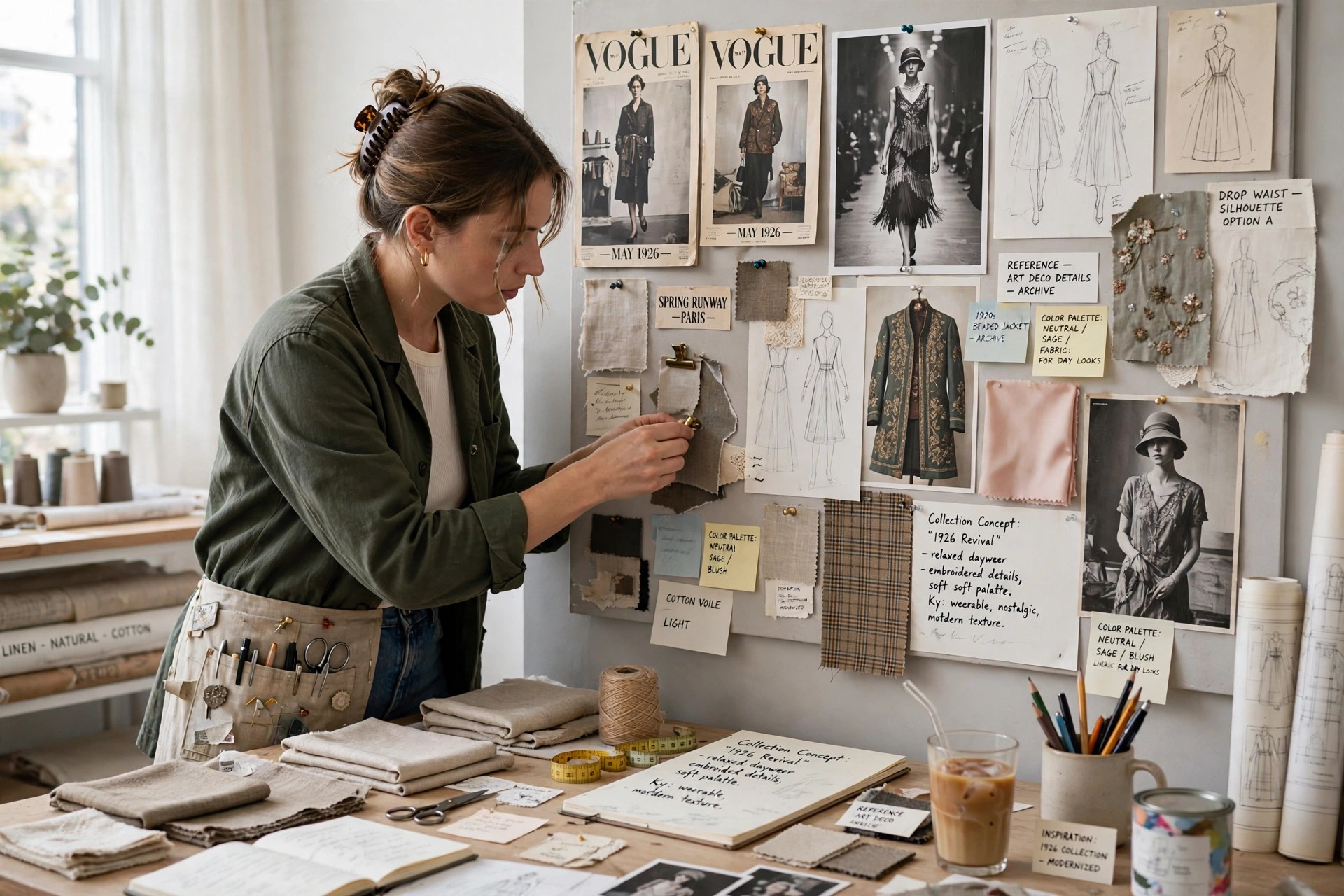
Every collection starts with looking. Designers study runway shows, street style, vintage garments, art, film, architecture and their own sales history, gathering images and references into a research file. The goal is not to copy but to find a direction — a mood, a silhouette family, a story the season will tell. The mood boards and trend research guide covers this stage in depth, including how professional forecasting feeds the process.
Concept & Direction
Research hardens into decisions: a color palette, a fabric story, key silhouettes and the customer the collection is for. Designers pin these choices on a concept or mood board that stays on the studio wall all season. Every later decision — is this sketch right? is this fabric right? — gets tested against that board. A weak concept cannot be rescued by strong sketching, which is why experienced designers spend real time here.
Sketching & Ideation
Now the drawing starts, in volume. Working over croquis figure templates, the designer sketches fast and loose — dozens of variations on each silhouette, sleeve, neckline and detail. Speed matters more than polish: these are thinking drawings, and most are disposable. Fabric ideas are noted beside sketches as they develop, because a design and its material are really one decision made in two parts.
Editing & Selection
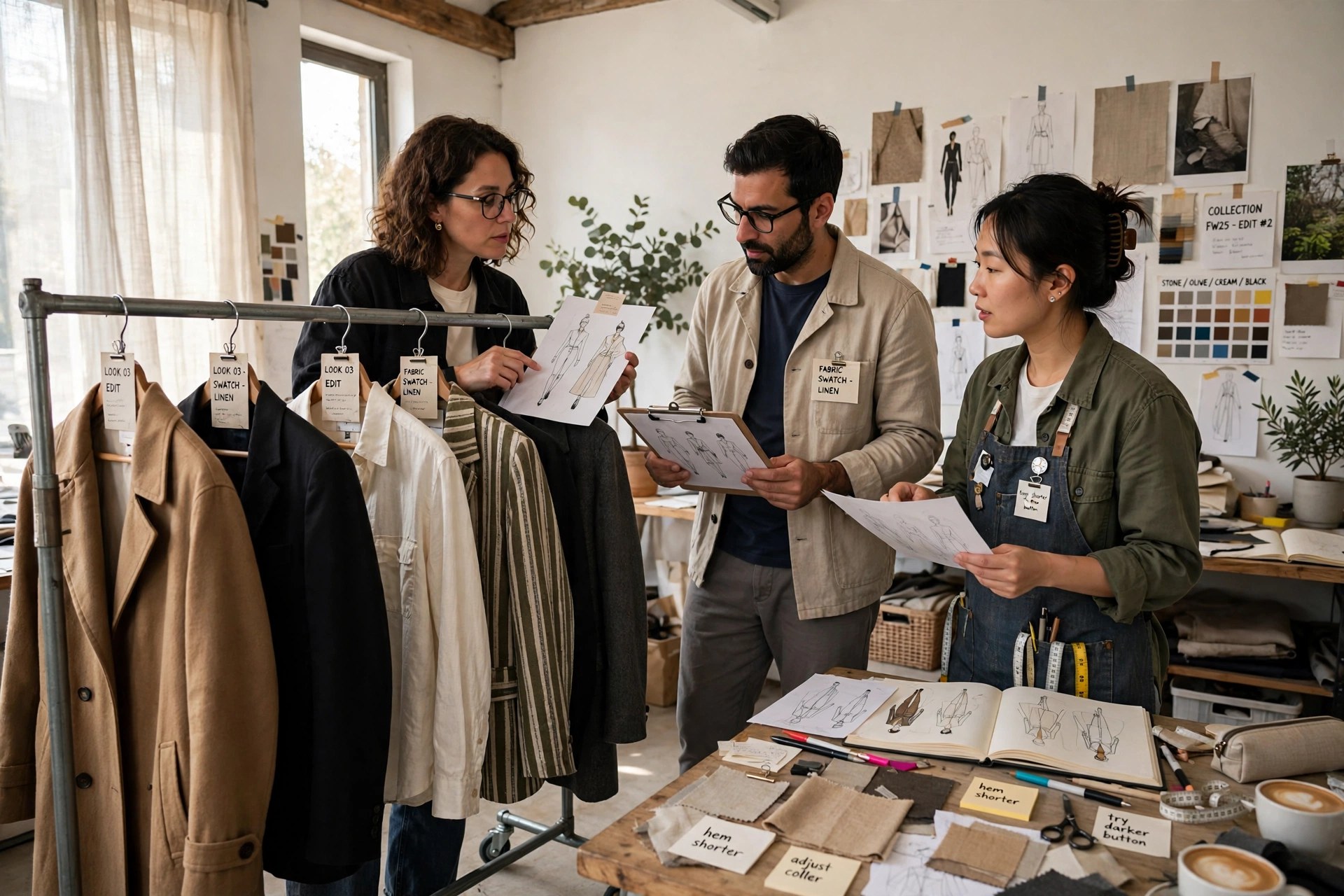
The design team pins up everything and edits: duplicates go, weak ideas go, and the survivors are checked as a group. Does the line balance across categories — enough tops against bottoms, dresses against separates? Do the colors and fabrics tell one story? Can the price architecture work? This is where a sketchbook becomes a collection, and it is the stage beginners most often skip — to their cost.
Developing the Chosen Designs
Selected sketches get drawn properly. The designer produces presentation illustrations that show the garment’s character, and technical flats that pin down every seam and detail exactly. Fabrics and trims are confirmed, colorways assigned, and each style is reviewed — often on a fit form or in a rough toile — before it is allowed to leave the design stage.
Handoff to Product Development
Design ends with a package: the developed drawings, flats, fabric and trim selections and colorways for each style. From here the Apparel Product Development Guide takes over — the flats anchor a tech pack, patterns are drafted per the Pattern Making & Fitting guide, and samples prove whether the design survives contact with reality. A clean handoff is a professional courtesy that saves weeks.
How Long the Process Takes
Timelines vary with the market. A traditional seasonal collection may spend two to three months in design before development begins, working six to nine months ahead of the selling season. Fast-fashion and direct-to-consumer brands compress the same six stages into weeks by researching continuously, sketching digitally and editing in smaller, more frequent drops — but the stages themselves do not disappear. Skipping research produces derivative lines; skipping the edit produces incoherent ones. The sequence is the discipline, whatever the calendar.
Keep Exploring
Common Questions
How many sketches does a designer make for one collection?
Far more than will ever be produced. Designers commonly sketch three to five times as many ideas as the final line will hold — a 24-style collection may start with 80 to 120 sketches. The surplus is the point: editing down from abundance produces a stronger, more coherent collection than trying to make every first idea work.
What comes first in the design process, fabric or sketch?
Both orders exist and good designers work each way. Some start from a silhouette and source fabric to serve it; others fall for a fabric and design what the fabric wants to become. In practice the two develop together during the concept stage, because a silhouette that ignores its material rarely survives sampling.
What is the editing stage of fashion design?
Editing is the disciplined selection step between sketching and development: the designer reviews all the ideas, removes duplications and weak concepts, checks the survivors balance as a collection — across categories, colors, fabrics and price points — and chooses the styles worth the cost of development. It is the least glamorous stage and the one that most separates professional collections from sketchbooks.
Where does the design process end?
Design ends when the selected styles are developed enough to be specified: clear illustrations or working sketches, technical flats, fabric and trim choices, and colorways. At that point product development takes over — tech packs, patterns, costing and samples turn the selected designs into manufacturable products.
Back to the Fashion Design & Illustration Guide
The Fashion Design & Illustration hub maps the whole creative front end — illustration, flats, croquis, mood boards and portfolios — with this process as its backbone.