Apparel Search · Design Guide
Fashion Design & Illustration
How a garment gets designed before it ever gets made — the research, concept boards, sketches, illustrations and technical drawings that turn an idea into a design a team can build.
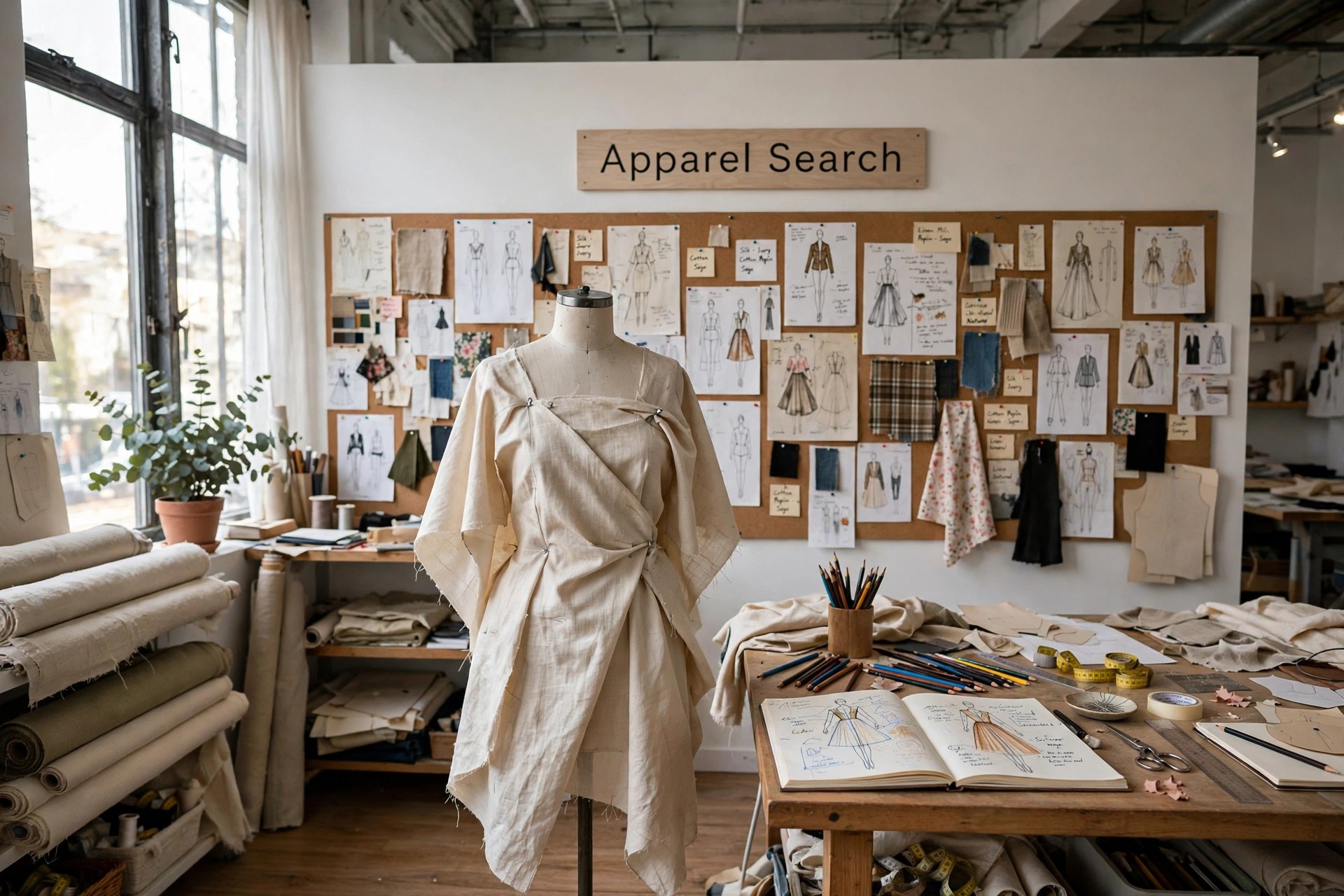
Every garment in every store began as a drawing. Before there is a pattern, a sample or a production run, a designer researches, imagines, sketches and edits — and the quality of that front-end work decides almost everything downstream. A clear sketch becomes a clean sample; a vague one becomes three rounds of corrections. Yet while Apparel Search has long catalogued the industry that makes and sells clothing, the creative work at the very start of the chain was the missing piece. This guide cluster fills it in.
The six guides below cover getting to the design: the process that produces it, the drawing skills that express it, and the portfolio that proves you can do it. Once a design is selected and needs to be specified, costed and sampled, the story continues in the Apparel Product Development Guide — this cluster ends exactly where that one begins.
Fashion Design, Defined
Fashion design is the creative process of conceiving clothing and accessories: researching direction, choosing silhouettes, fabrics and colors, and developing each idea through sketches and drawings until it is ready to be patterned and made. Illustration is the expressive drawing skill inside the process; technical drawing is its precise counterpart. Design is the whole act of deciding what a garment should be — drawing is how those decisions get communicated.
The Six Guides in This Cluster
Work through them in order for the full path from blank page to finished design, or jump to the skill you need.
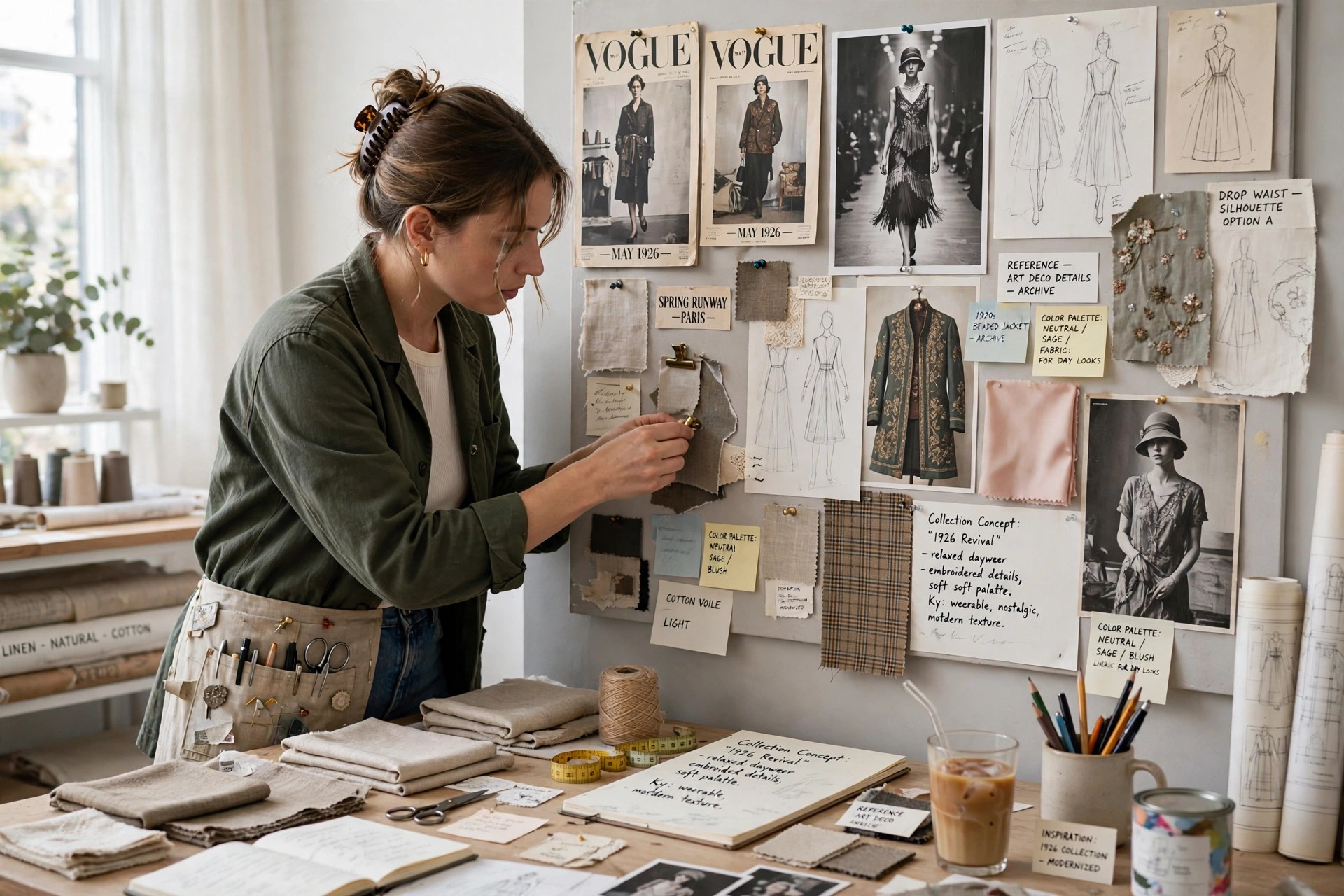 The Fashion Design ProcessResearch, concept, sketching, editing and selection — the step-by-step path every collection follows from inspiration to a chosen set of designs.
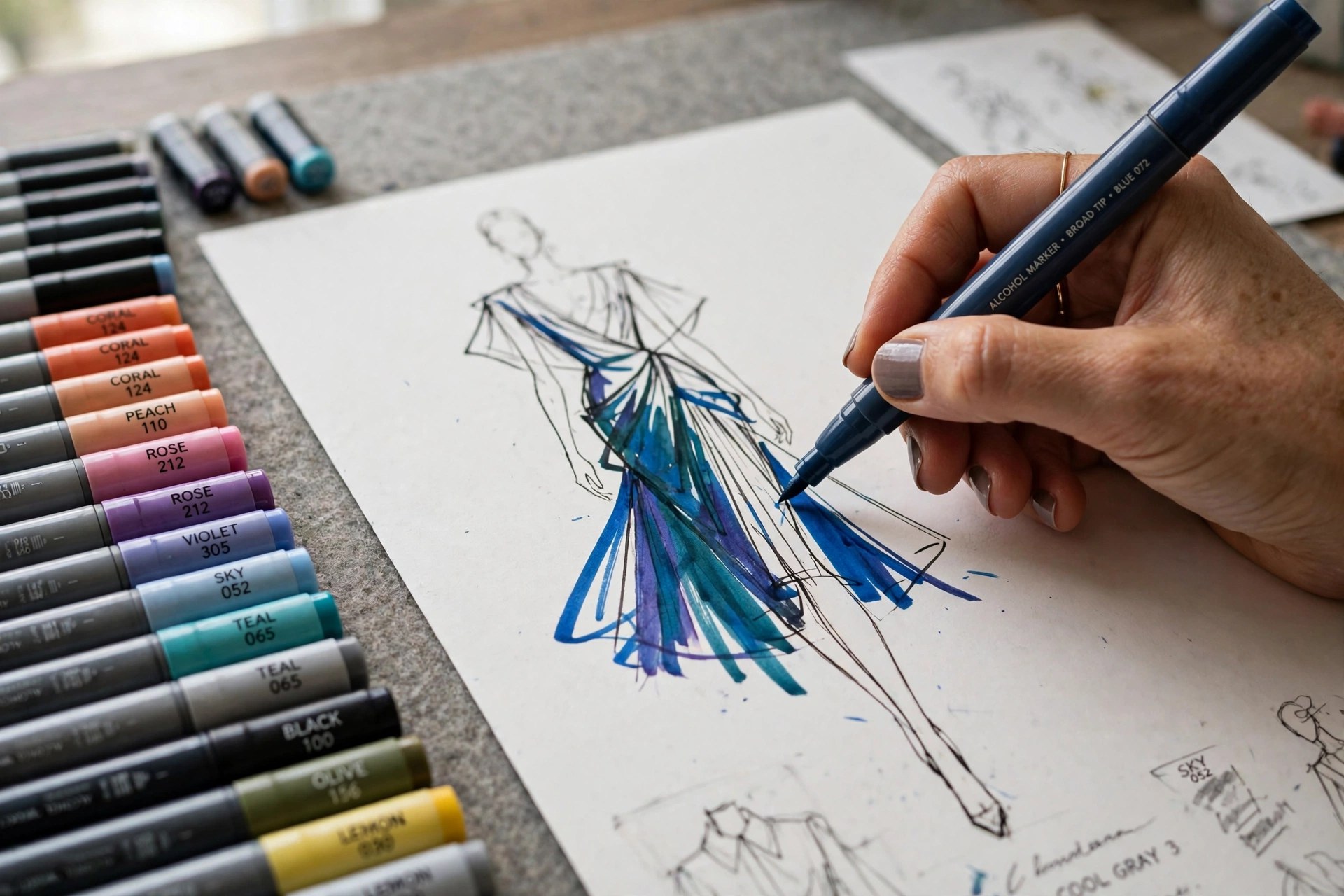 Fashion Illustration TechniquesMarker, watercolor, gouache and digital media, rendering fabric and drape, and giving a figure movement and attitude.
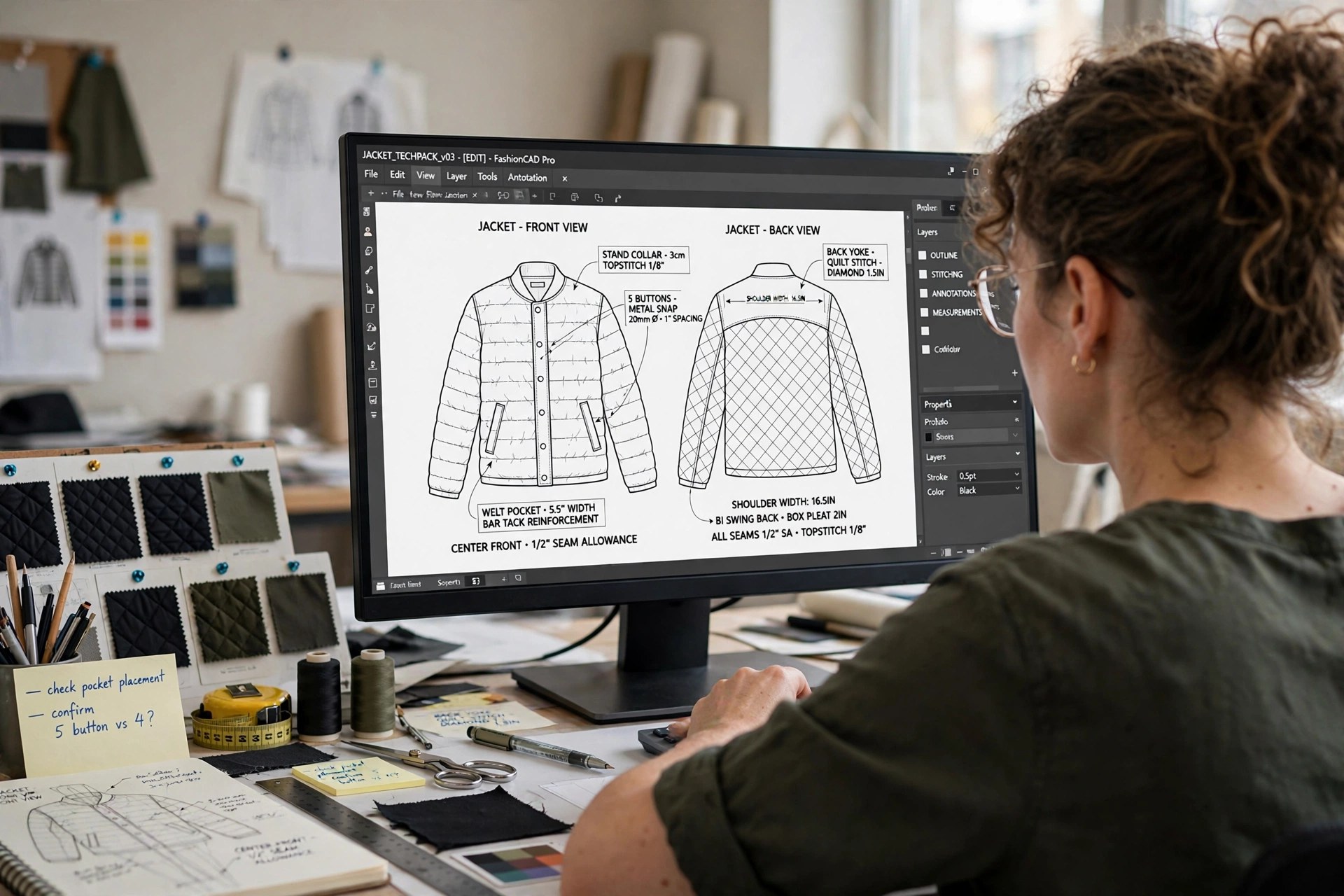 Technical Flats & Fashion CAD DrawingsThe precise front-and-back line drawings a factory can actually build from — by hand and in vector CAD — and how they differ from illustrations.
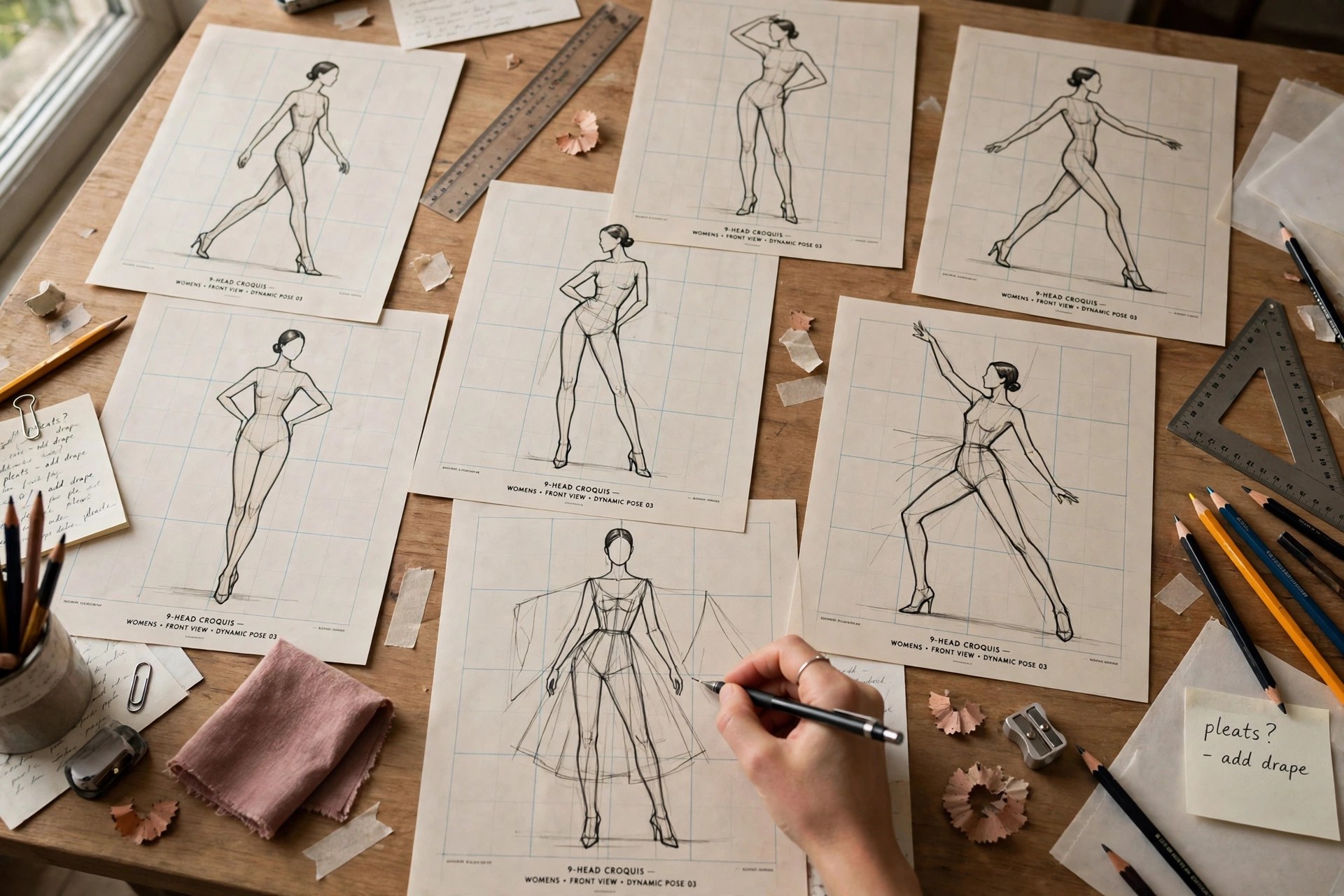 Fashion Croquis & Figure DrawingThe nine-head fashion figure, balance lines, building your own croquis templates, and sketching garments on figures that move.
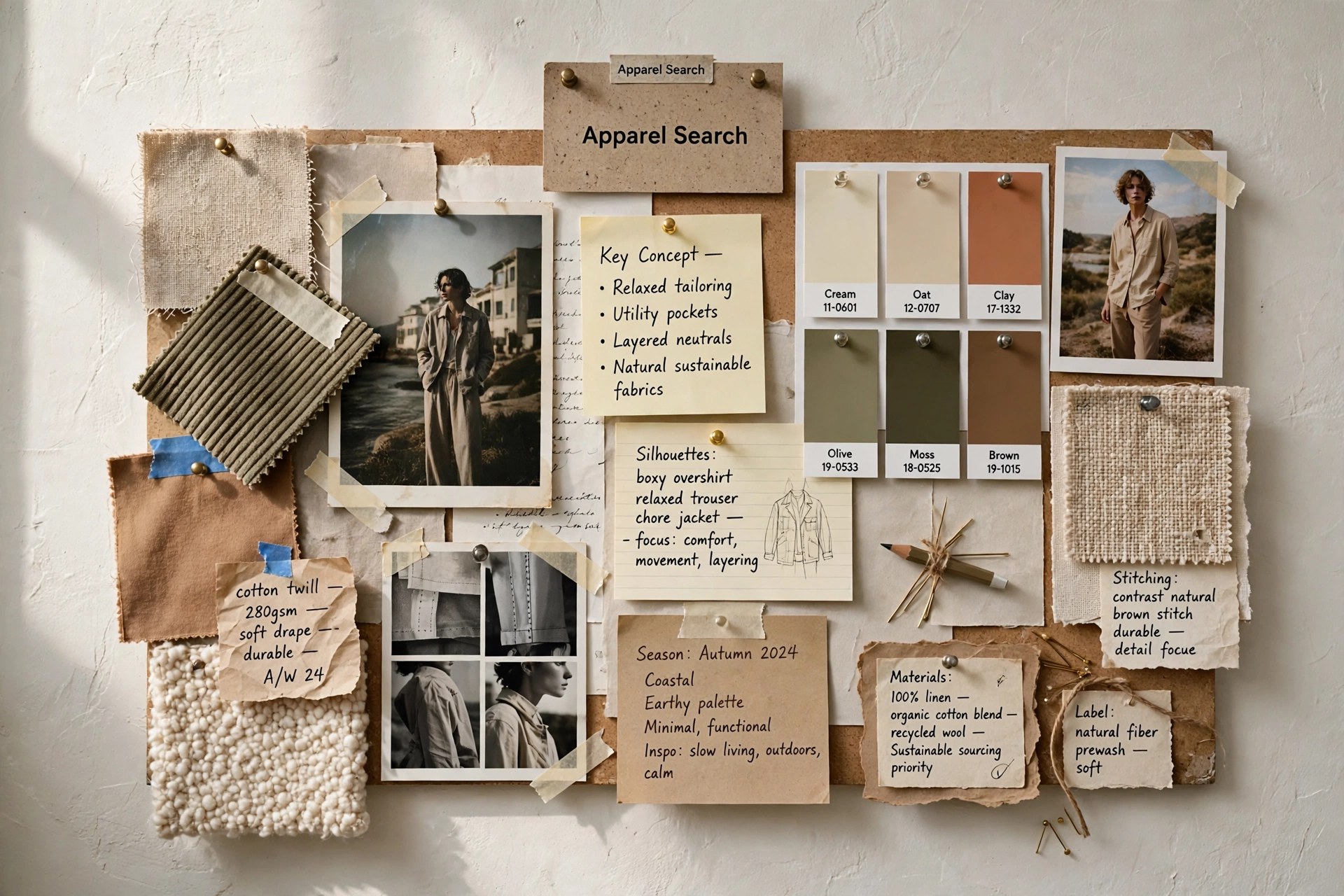 Mood Boards & Trend ResearchHow designers gather direction — runway, street style, retail and forecasting — and pin it into a board that steers a whole collection.
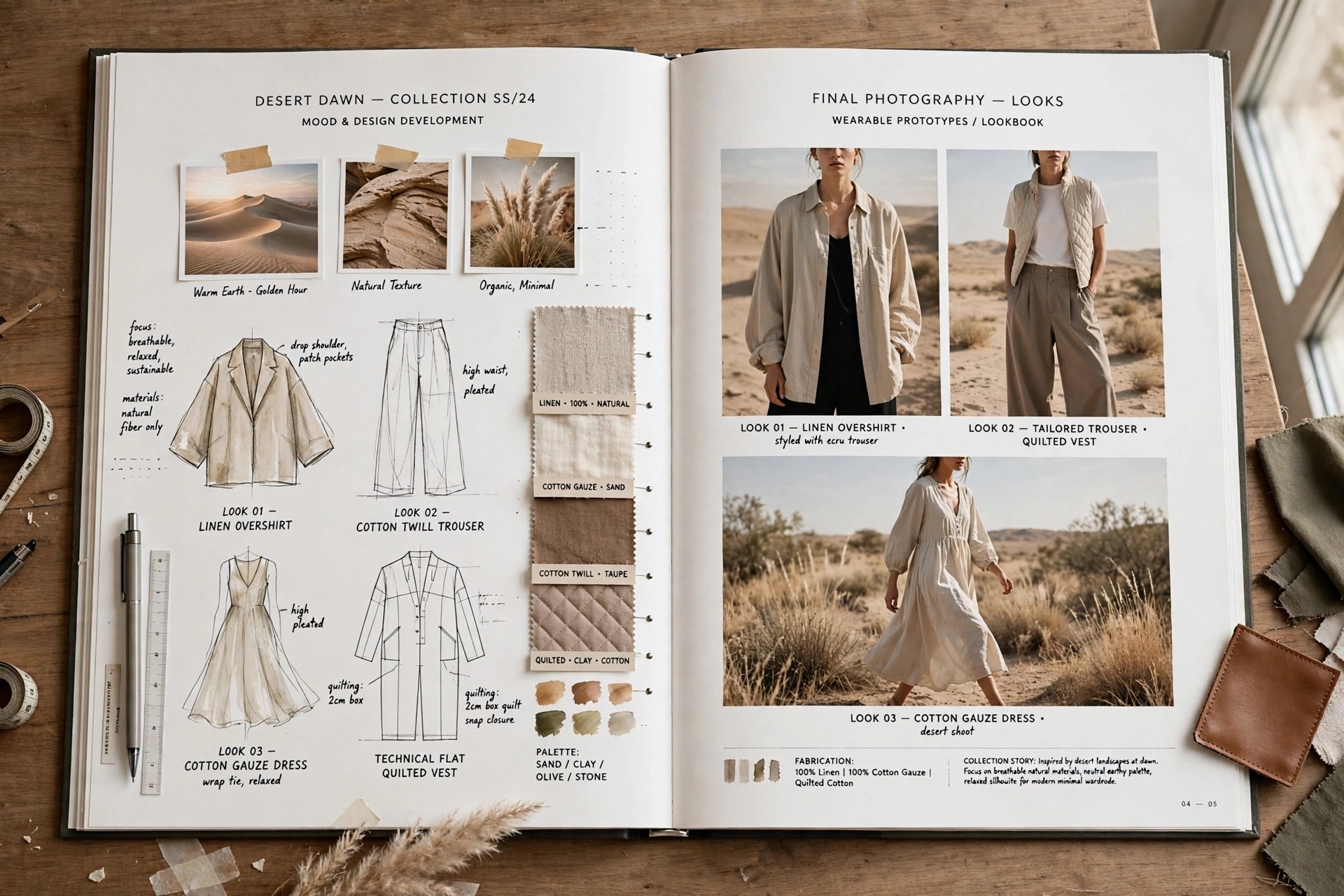 Building a Fashion Design PortfolioWhat school admissions tutors and employers actually look for, what to include, how to sequence it, and the mistakes that sink good work.
Two Kinds of Fashion Drawing
New designers are often confused by being asked for both expressive illustrations and exact technical drawings, because the two do opposite jobs. An illustration sells the feeling of a design: the figure is elongated, the fabric flows, the attitude is the point. It is how a designer convinces a team, a buyer or themselves that an idea has life. A technical flat does the reverse — it removes all style and shows the garment exactly as it is: seams, stitching, closures and proportions, front and back, nothing exaggerated and nothing hidden. Studios need both, usually of the same garment, a few pages apart in the same presentation.
Underneath both sits the croquis, the reusable figure template that keeps proportions consistent while ideas come fast. Master the croquis and sketching speeds up dramatically; the illustration and the flat then become two renderings of a design you have already worked out.
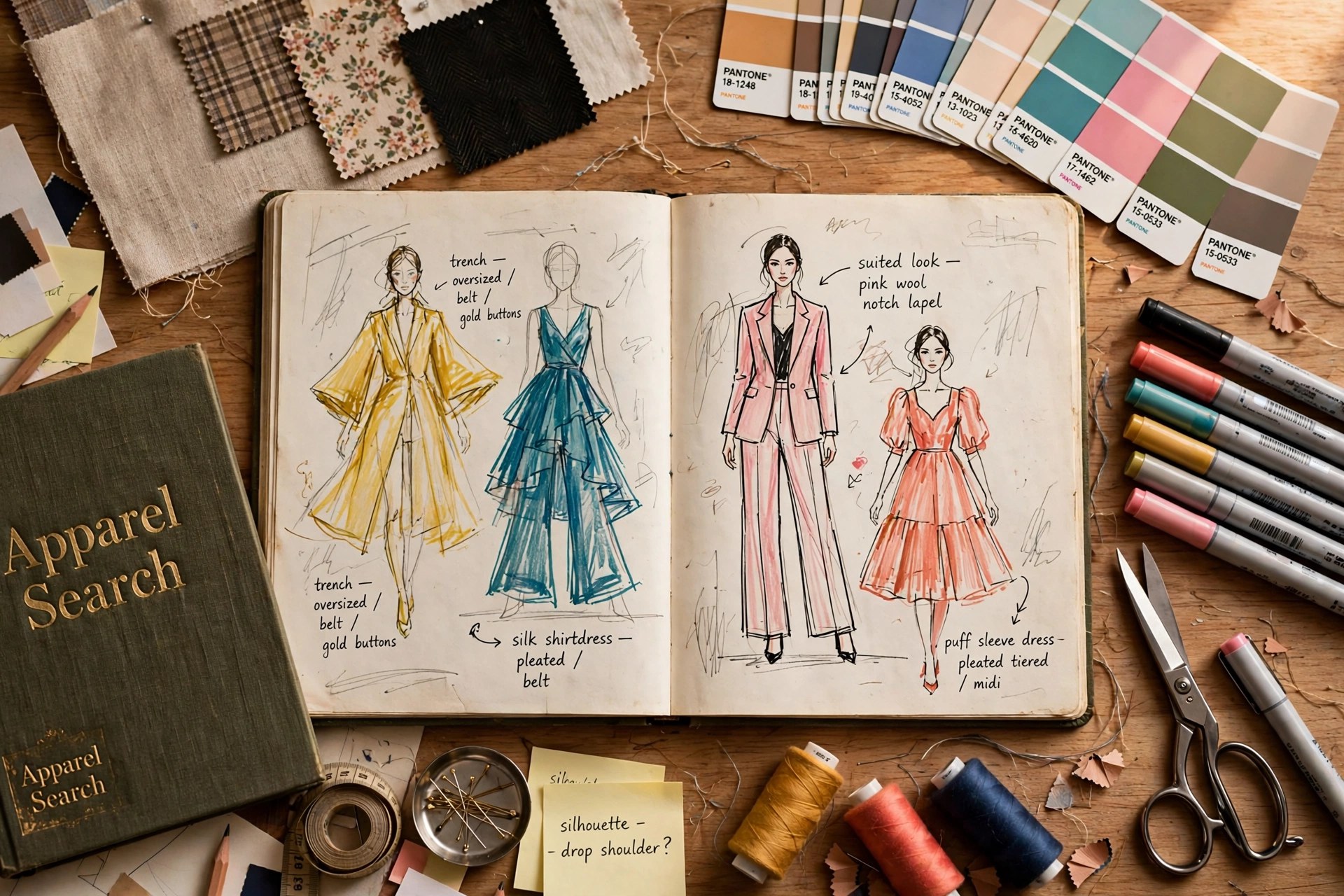
The Designer’s Toolkit, Hand and Digital
The hand skills in this cluster are not nostalgia. Sketching by hand is still the fastest way to think on paper, and every guide here treats it as the foundation. But the modern studio is hybrid: flats are drawn in vector programs, illustrations are finished on tablets, and research lives in digital boards. Apparel Search covers the software side separately in its guide to AI fashion design tools and its AI design and forecasting guide — read those alongside the mood boards and trend research guide here to see both the traditional and the newest ways of gathering direction.
Where Design Hands Off
A selected design is not yet a product. It still needs a pattern, a specification, a cost and a sample that fits — the territory of the Apparel Product Development Guide, whose tech pack turns these drawings into buildable documents. The patterns themselves are drafted and fitted in the Pattern Making & Fitting guide, and once garments exist, the Fashion Photography & Media Production guide covers presenting them to the world. Design is the first link in that chain, and this cluster is its map.
Related Guides on Apparel Search
Common Questions
What is the difference between fashion design and fashion illustration?
Fashion design is the complete creative process of conceiving a garment — research, silhouette, fabric, construction and fit. Fashion illustration is one skill inside that process: drawing the idea expressively so its mood, movement and proportions can be seen and judged. Designers also make technical flats, which are the precise, flat drawings used to communicate construction. A designer needs both kinds of drawing; an illustrator may specialize in the expressive kind alone.
Do fashion designers need to be able to draw?
Designers need to communicate ideas visually, but gallery-level drawing talent is not required. Most working designers sketch quickly and functionally, lean on croquis templates for proportion, and refine their ideas in technical flats and CAD. Clear, fast, honest sketching that a team and a factory can read matters far more than beautiful finished artwork.
What is a croquis in fashion design?
A croquis is a quick figure template — from the French word for sketch — drawn in fashion proportions, usually about nine head-lengths tall. Designers trace or draw over croquis to test garment ideas quickly with correct proportion and movement, instead of redrawing a figure from scratch for every sketch.
What is a technical flat in fashion?
A technical flat (or flat sketch) is a precise, two-dimensional line drawing of a garment as if laid flat, showing front and back views with seams, stitching, closures and details at correct proportion. Unlike an illustration, nothing is stylized: flats are the drawing a pattern maker and factory work from, and they anchor the tech pack.
Start With the Process
If you read one guide first, make it The Fashion Design Process. It lays out the path every collection follows — and shows exactly where each drawing skill in this cluster earns its place along the way.