Apparel Search · Design Guide
Fashion Illustration Techniques
The expressive half of fashion drawing — the media illustrators reach for, how they make cloth look like cloth, and how a figure gains movement and attitude.
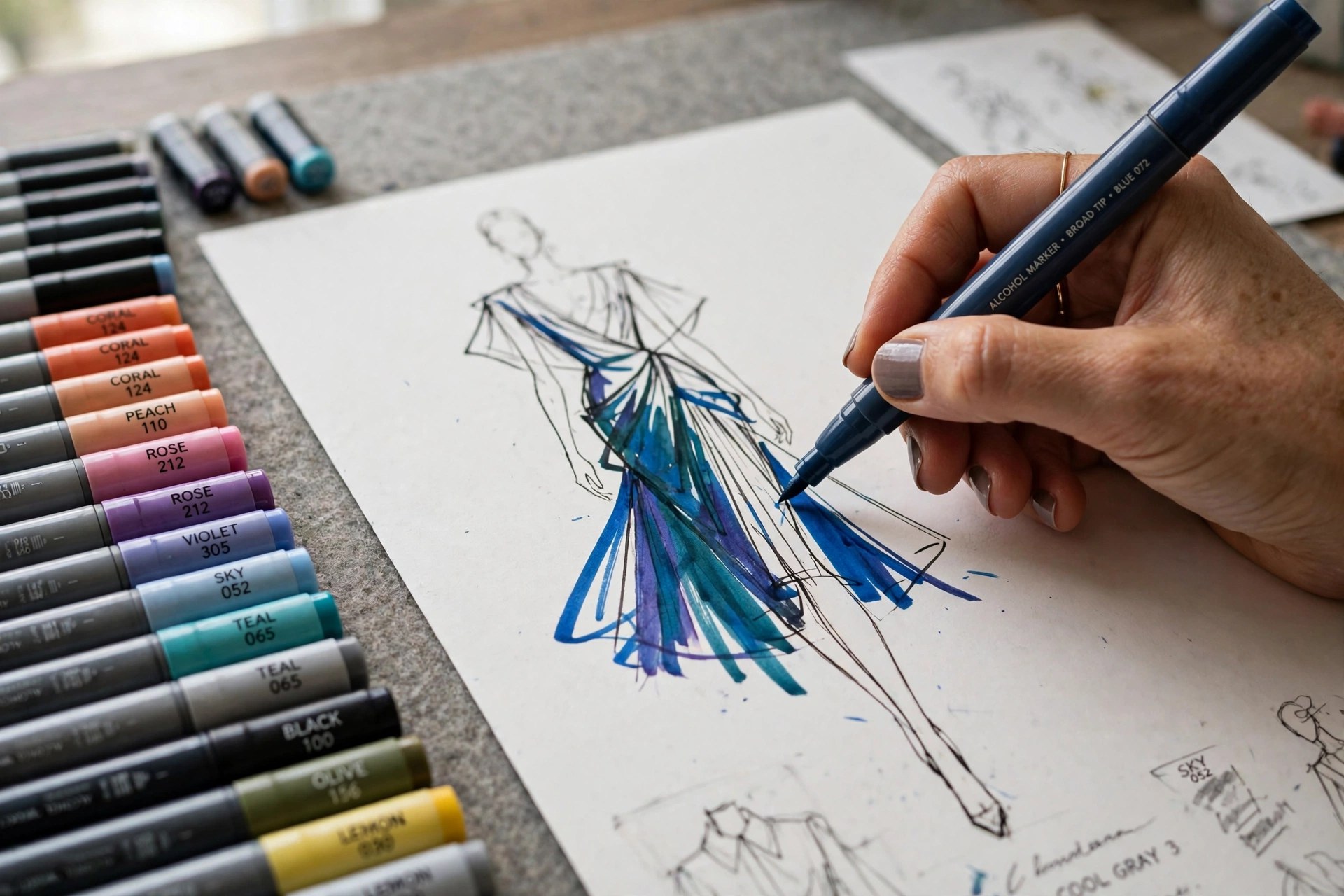
An illustration has one job: make someone feel the garment before it exists. Within the wider Fashion Design & Illustration process, illustration is the persuasive drawing — the one pinned up in reviews, shown to buyers and used in portfolios — while the technical flat handles the facts. This guide covers how illustrators actually work: the media, the fabric-rendering craft and the figure work underneath it all.
Choosing a Medium
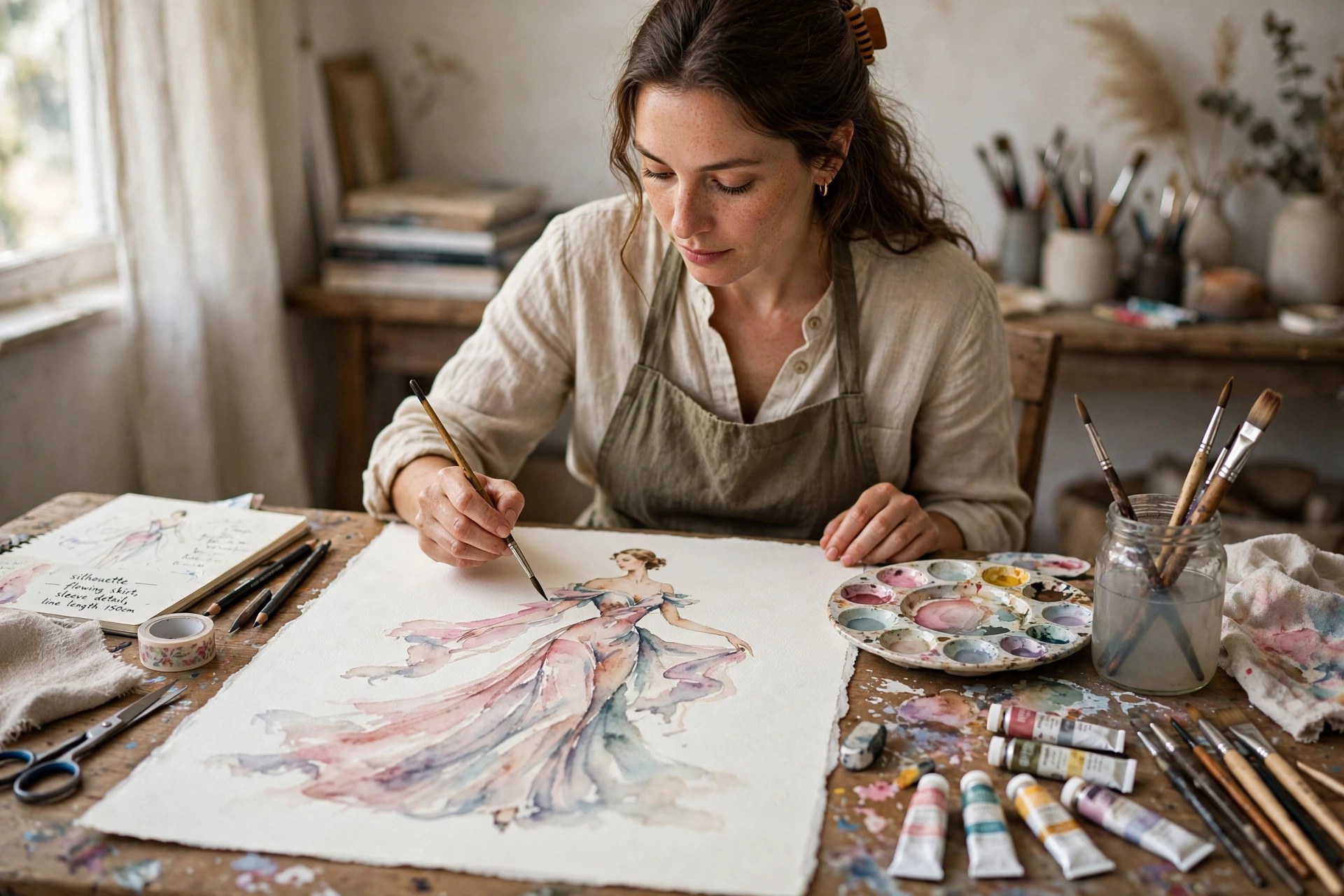
Alcohol markers are the working illustrator’s default. They lay down flat, streak-free color fast, build depth in layered passes, and come in the skin-tone and grey ranges fashion work constantly needs. On smooth marker paper they give the clean, confident look of studio design rendering. Watercolor is the medium of fluidity: washes bleed and pool like dye in cloth, which is why it suits eveningwear, silk and anything meant to move. It is harder to control and nearly impossible to correct, so illustrators plan the lights first and leave paper white for highlights.
Gouache — opaque watercolor — covers decisively and dries matte, making it ideal for wool, denim, leather and bold prints that must sit flat and solid. Colored pencil builds texture beautifully — tweed, knit, fur — over a marker or gouache base. And digital media (tablet and stylus in apps that imitate all of the above) now finish much professional work: infinitely editable, instantly shareable, and increasingly the medium portfolios are reviewed in. Most strong illustrators are bilingual, sketching and rendering by hand, then refining digitally.
Rendering, Defined
Rendering is the stage after the line drawing: adding color, light, shadow and surface so a sketch reads as a specific fabric on a living figure. A well-drawn garment rendered carelessly looks like every other garment; a simple sketch rendered with the right folds, highlights and texture reads instantly as silk, denim or sequins. In fashion illustration, rendering is the design communication.
Rendering Fabric: Folds and Light
Fabric is drawn through its behavior. Cloth is smooth where it is supported — over shoulders, bust and hips — falls in long vertical folds where it hangs free, radiates folds from points of tension like a tucked waist or a raised arm, and bunches in compressed folds at elbows, waists and anywhere it is gathered. Draw the fold pattern correctly and the viewer’s eye supplies the fabric for free.
Light completes the illusion, and each fabric family has a signature. Satin and silk charmeuse take a sharp, bright highlight with deep shadow right beside it. Wool, flannel and knits absorb light, so their shading stays soft and gradual. Leather has a firm, medium shine that follows the body’s form. Sequins, beads and metallics break light into scattered points and short dashes. Prints are rendered by drawing the pattern through the folds — pattern bends, breaks and shadows with the cloth, never pasted flat on top. Get folds and light right, and a five-minute sketch can read more truthfully than an hour of decoration.
Movement and Attitude
What separates fashion illustration from a costume diagram is the figure’s life. Illustrators build on a moving croquis — weight shifted onto one leg, shoulders and hips tilted in opposition, a head turned, an arm doing something. Garments are then drawn responding to that movement: hems swing, trousers break over a stride, a coat opens as the figure turns. Faces and hands are usually suggested rather than detailed, keeping attention on the clothes, and backgrounds stay minimal or abstract for the same reason. The elongation of the fashion figure — roughly nine heads tall — is part of this expressive system: it lengthens lines, shows drape at its most elegant and signals at a glance that the drawing is about the garment’s ideal form, not anatomy.
Building Speed and a Personal Hand
Professional illustration is fast illustration. Studios work in reviews where ideas are judged in minutes, so illustrators practice timed sketching, keep a personal library of poses and fabric studies, and develop a recognizable line — the loose confidence that comes from drawing garments daily. The practical route in is repetition with review: draw the same jacket ten ways, render one fabric study a day, and study how established illustrators solve problems you are stuck on. Style is not a trick added at the end; it is what your hand does after a thousand honest drawings.
Keep Exploring
Common Questions
What is the best medium for fashion illustration?
There is no single best medium — there is a best medium for a purpose. Alcohol markers are the studio standard for fast, clean design rendering because they lay flat color quickly and blend in layers. Watercolor gives the softness and flow that suits eveningwear and fluid fabrics. Gouache handles opaque, matte fabrics and bold color. Most professionals mix media and finish digitally, choosing per garment rather than per career.
How do illustrators draw fabric realistically?
By drawing what fabric does, not what it is called. Every fabric is rendered through its folds: where cloth is supported it stays smooth, where it hangs it falls in vertical folds, where it is compressed it bunches. Light decides the rest — satin takes a sharp bright highlight, wool absorbs light into soft shadow, sequins break light into points. Indicating the right fold pattern and the right light behavior reads as the right fabric.
Should fashion illustration be realistic?
Fashion illustration is deliberately stylized, not realistic: figures are elongated to about nine heads tall and details are edited to what sells the design. But stylization sits on top of real observation — illustrators study how garments actually hang and move so their exaggerations stay believable. Pure decoration without that grounding quickly looks wrong, even to untrained eyes.
Is digital illustration replacing hand drawing in fashion?
Digital tools have taken over much production work — they are fast, editable and easy to share — but hand drawing remains the foundation skill. Studios still sketch by hand in design meetings because it is faster than any app for exploring ideas, and most digital fashion illustrators learned their line, proportion and fabric rendering on paper first.
Back to the Fashion Design & Illustration Guide
The Fashion Design & Illustration hub covers the full creative front end — the design process, croquis, flats, mood boards and portfolios alongside this guide.