Apparel Search · Design Guide
Building a Fashion Design Portfolio
The document that gets you into school, into internships and into design jobs — assembled the way the people who review portfolios actually read them.
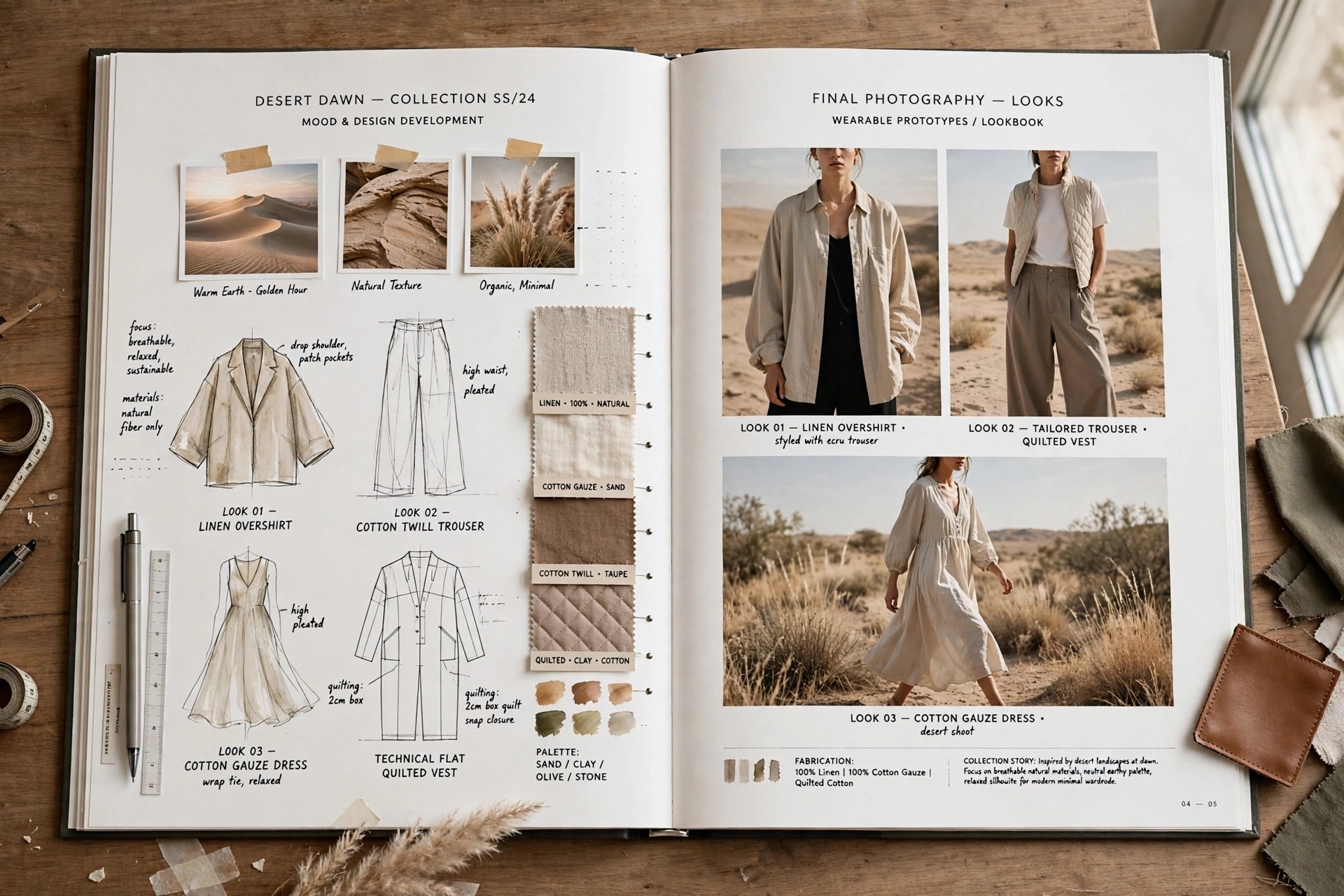
Every skill in the Fashion Design & Illustration cluster eventually has to be shown — to an admissions tutor, an internship coordinator or a head of design deciding in minutes who gets an interview. The portfolio is where that showing happens, and it is a design project in its own right. This guide covers what reviewers look for, how to structure the work, and the errors that quietly sink strong designers.
Portfolio, Defined
A fashion design portfolio is a curated body of work — physical, digital or both — that demonstrates how a designer thinks and what they can execute. “Curated” is the operative word: a portfolio is not a storage folder of everything made, but an edited argument, project by project, that this person can take an idea from research to a finished, well-drawn, buildable design.
What Reviewers Actually Look For
Admissions tutors and employers describe the same priorities. First, process: can this person develop an idea, or only decorate one? Research pages, rejected sketches and development work answer that — which is why the design process is portfolio content, not backstage clutter. Second, drawing range: expressive illustration for communication, clean technical flats for production, and croquis work showing proportion sense. Third, a point of view: work that could only be this designer’s. Fourth, craft: garments that are actually finished, pages that are clean, swatches mounted properly. A reviewer who doubts your care with the portfolio doubts your care with a garment.
Structuring the Portfolio
Organize by project, strongest first — first impressions are made in the opening spread. Each project tells its story in the order the work happened: mood board and research, development sketches (including a few that failed, honestly captioned), final illustrations, flats, fabric story, and photographs of finished garments if they exist. That sequence lets a reviewer skim the whole arc in under a minute or stop and study any stage. Between projects, keep layout, typography and captions consistent; the portfolio’s own design should demonstrate the taste its contents claim. End with your second-strongest project rather than the weakest — reviewers remember beginnings and endings.

Tailoring: School, Internship, Job
The same core portfolio is re-edited for each audience. School applications weight potential: observational drawing, experimentation and evidence of curiosity beyond fashion itself. Internships weight usefulness: clean flats, CAD competence and proof you can support a team’s real workflow. Design jobs weight relevance and results: work aimed at the employer’s market, technical competence, and garments that reached production or sale. Apparel Search’s fashion education section maps the school side of the industry, and its career pages for roles such as women’s fashion designer jobs show what employers in each category actually ask for — read them before finalizing the edit, and let the job description choose which project leads.
Common Mistakes
Four recur constantly. All outcome, no process — the fatal one, covered in the questions below. Volume over editing — thirty mediocre pages argue against the five excellent ones buried among them. Copying a famous designer’s hand — reviewers have seen the originals and recognize imitation instantly; borrow methods, never identities. And neglecting the container — scuffed boards, dead links in the digital version, misspelled captions. The portfolio is itself a designed object; treat it with the same care as the garments inside it, and update it every season, because a portfolio is a living document for as long as you are designing.
Common Questions
What should a fashion design portfolio include?
Two to four complete projects, each shown as a story: the research and mood board, development sketches, illustrations, technical flats, fabric choices and — where they exist — photographs of finished garments. Around the projects, a small selection of drawing and croquis work shows foundational skill. Reviewers consistently rank evidence of process and thinking above a larger pile of polished final images.
How many pages should a fashion portfolio be?
Enough to tell each project’s story and no more — typically 15 to 30 pages or spreads for a school or job application, covering two to four projects. Reviewers spend minutes, not hours, on a first pass, so density of relevant, well-organized work beats volume. Every weak page included dilutes the strong ones beside it; editing a portfolio is the same discipline as editing a collection.
Should a fashion portfolio be physical or digital?
Both, serving different moments. A clean digital portfolio (PDF or portfolio site) is what gets you shortlisted — it is what is emailed, uploaded and screened. A physical portfolio still matters at in-person interviews, where large-format pages and real fabric swatches make an impression screens cannot. Serious applicants maintain the same content in both forms and tailor each version to the school or employer receiving it.
What is the biggest mistake in fashion design portfolios?
Showing only finished, polished outcomes with no evidence of how they were reached. Admissions tutors and employers are hiring a way of thinking: they want the research, the rejected sketches, the development and the problem-solving, because that is the work the candidate will actually do daily. A portfolio of nothing but final illustrations can look impressive and still fail, because it proves rendering skill while hiding design skill.
Back to the Fashion Design & Illustration Guide
The Fashion Design & Illustration hub maps the whole creative front end — the design process, illustration, croquis, flats and mood boards alongside this guide.