Donna Karan History
Earlier company descriptions, brand line-ups, store counts and photographs from the history of Donna Karan, kept for historical reference.
← Back to the current Donna Karan profile
The Company Description of Its Time
The Donna Karan filing is the biography in this letter - written as a life-and-work profile. It opens with the designer(?:'|')s own words, as recorded: 'Everything I do is a matter of heart, body and soul,' says Donna Karan, chief designer of the international company that bears her name. 'For me, designing is an expression of who I am as a woman, with all the complications, feelings and emotions.' The company facts sit inside that frame: the company she founded in 1984 with her late husband Stephan Weiss became a publicly-traded enterprise in 1996 and, five years later, was acquired by its present owner as recorded, the French luxury conglomerate LVMH Moët Hennessy Louis Vuitton.
DKNY, Menswear, Beauty and Home
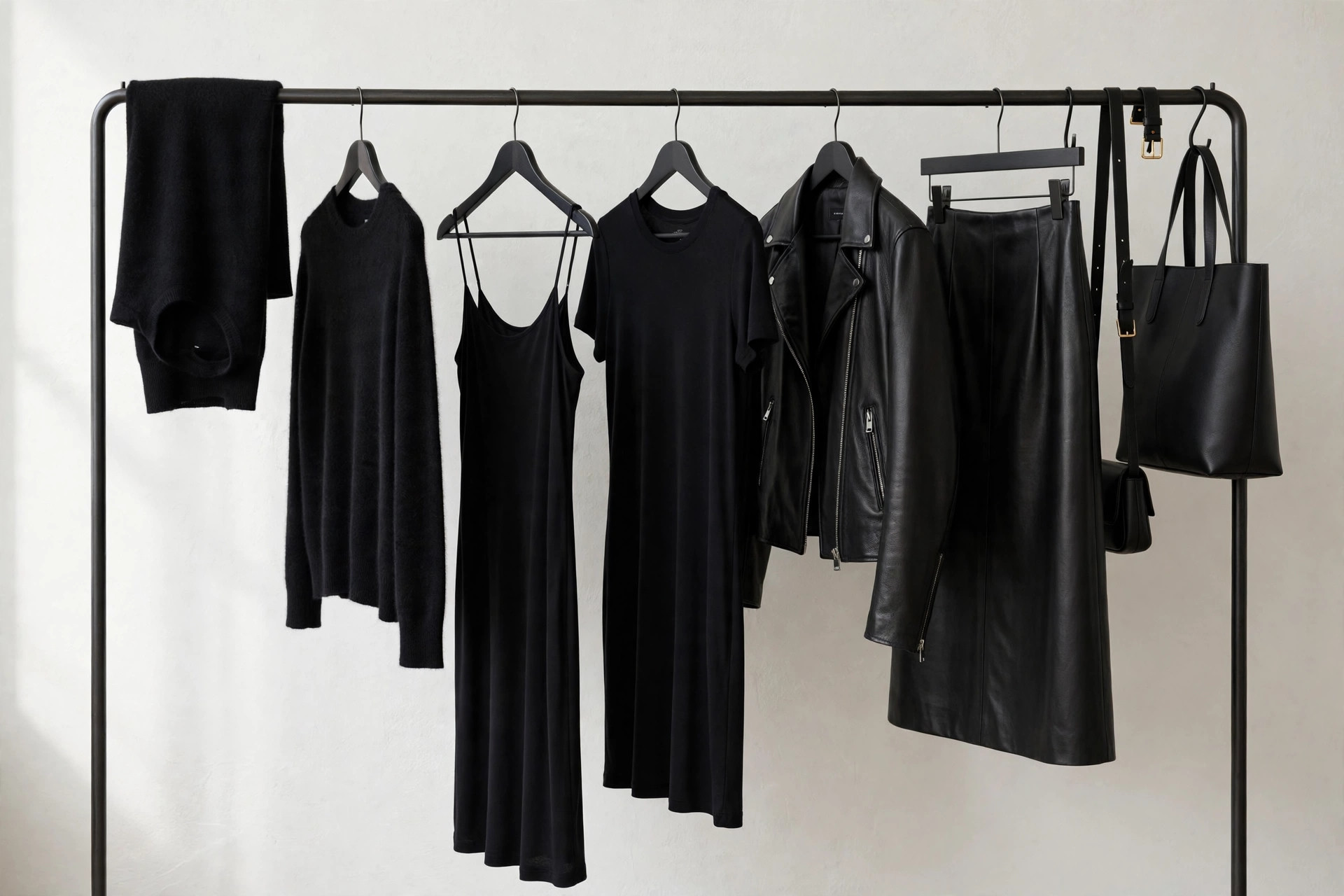
The lifestyle logic extends line by line, and the record follows Karan(?:'|')s own questions: 'How do I dress the leg?' inspired Donna Karan Hosiery; 'The right bra, T-shirts and sleepwear?' Donna Karan Intimates; 'The perfect glasses?' Donna Karan Eyewear - the list continuing to shoes, belts and accessories, everything needed, in her phrase, to pull yourself together. Quintessential hallmarks as recorded include black cashmere, leather, jersey stretch and molded fabrics, and silhouettes that wrap and sculpt the body. Karan's quest for the perfect jeans, and her desire to dress her daughter Gabby, resulted in the 1989 birth of DKNY - fast fashion with an urban mind-set, DKNY being, in her comparison, 'the pizza to Collection's caviar'. DKNY grew so popular and diverse that other brands spun from it, including DKNY Jeans, Pure DKNY, DKNY Active, DKNY Underwear, DKNY Juniors, DKNY Kids and DKNY Baby.
Menswear followed from family as much as strategy: considering Karan's father was a custom tailor, a menswear collection was inevitable, and it was founded in 1992; DKNY Men emerged a year later for his casual, sport side. In 1992 she also took on beauty, under the business and creative leadership of her husband, who designed the bottles and jars - the division introducing an award-winning skincare line and best-selling fragrances including Cashmere Mist and DKNY scents for men and women. Completing the lifestyle approach, in 2001 Karan introduced a Donna Karan New York Home collection, 'all about touch and feel', from luxe bedding and candles to cashmere throws, with DKNY Life accenting the contemporary city home. The store record as recorded: seventy company-owned and licensed freestanding Donna Karan Collection and DKNY stores worldwide, the first flagships opening in London (DKNY in 1997, Collection a year later), the uptown New York DKNY flagship at 60th and Madison in 1999, the downtown SoHo flagship on West Broadway two years later, and in 2001 the Donna Karan New York flagship at 819 Madison Avenue, designed as a serene escape from the city's chaos with a dramatic indoor/outdoor river rock garden.
Born Into Fashion: Anne Klein to Her Own Label
The biography proper runs backwards from the label to the childhood. Karan was born into fashion on Long Island: her father Gabby Faske, who died when Karan was three, was a tailor; her mother Helen was a showroom model and fashion sales rep; her stepfather Harold Flaxman was also in the fashion business. While still in high school she designed her first collection and staged her first show. Following her second year at Parsons School of Design, Karan was hired by Anne Klein for a summer job - an association that would shape the rest of her life. After three years as associate designer, she was named successor following Klein's death in 1974; Louis Dell'Olio, a Parsons friend, joined her a year later, and together they designed the Anne Klein Collection. In a foreshadow of DKNY, Karan created Anne Klein II in 1982, originating the concept of bridge and lifestyle dressing in fashion.
Ten years after Klein died, Karan was ready to go out on her own, with the support of Weiss and partner Takihyo, Inc., the owner of Anne Klein & Co.; fall 1985 saw the first Donna Karan New York Collection, and the reaction from press and retailers proved once again that Karan made fashion history. The honours and the giving occupy the profile's close: the Council of Fashion Designers of America has saluted her an unprecedented six times; she spends time at her alma mater Parsons lecturing and critiquing students' work; as a CFDA board member she conceived and spearheaded its Seventh on Sale benefits for AIDS awareness and education; she co-chairs the annual New York Kids for Kids events for the Elizabeth Glaser Pediatric AIDS Foundation, as she has since its 1993 inception, and the yearly Super Saturday founded with the late Liz Tilberis in 1998 for the Ovarian Cancer Research Fund; and in 1999 she and Weiss established the Karan Weiss Foundation to benefit children's causes, medical research and the arts. The routes fan out to the full Apparel Search Donna Karan designer directory - collections, runway, fashion week, footwear, womenswear, news and profiles - the deepest designer coverage in this letter, reflecting the filing's place as a biography rather than a store profile.
Photos

More to Explore on Apparel Search
References & Further Reading
Looking for More Fashion Companies?
This profile is one filing in the Apparel Search company names directory. Browse the full A-to-Z listing on the Fashion Company Names directory, or shop by category in the Apparel Search shopping directory.