The North Face History
Earlier company descriptions, brand line-ups, store counts and photographs from the history of The North Face, kept for historical reference.
← Back to the current The North Face profile
The Company Description of Its Time
They are named for the coldest, most unforgiving side of a mountain, and they have helped explorers reach the most unfathomable heights of the Himalayas, but The North Face legend begins, ironically, on a beach. More precisely, San Francisco's North Beach neighborhood, at an altitude of only 150 feet above sea level, where in 1966 two hiking enthusiasts resolved to follow their passions and founded a small mountaineering retail store. The Grateful Dead played at the store during celebrations, a detail the timeline preserves because it fixes the shop in its city and its moment better than any sales figure could.
Gear That Set Standards, Decade by Decade
The product milestones are dated like expedition entries. The Morning Glory tent arrived in 1974. In 1975 the geodesic dome tent design replaced the traditional A-shaped tent with the Oval Intention, and the VE-24 tent of 1978, embodying R. Buckminster Fuller's theory of sphericity with maximum efficiency from minimum materials, remained little changed after 30 years in the filing's assessment. The early 1980s added extreme skiwear; the Mountain Jacket of 1985 set the standard for Gore-Tex weather protection; Tadpole tents and the Snow Leopard pack launched in 1987; Steep Tech ski clothing, designed by Scot Schmidt, followed in 1991; and the 1990s brought Tekware sportswear and the brand's own trekking and trail-running shoes.
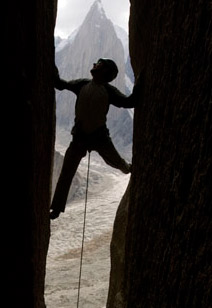
By the end of the 1980s, the filing says, The North Face was the only supplier in the United States to offer a comprehensive collection of high-performance outerwear, skiwear, sleeping bags, packs and tents. That sentence explains the expedition list that dominates the historical record page: when a company supplies the whole kit, its sponsored journeys double as product testing. The 1980s photograph from the company that the historical record carried is kept in the gallery below by reference, captioned exactly as recorded, giving this long timeline a period visual anchor amid the text.
The Expedition Record the Original Preserves
The year-by-year record runs from a 1972 Brooks Range ski traverse in Alaska and Jim Bridwell's Aquarian Wall route on El Capitan, through the 1978 Annapurna expedition whose 13-woman American team climbed under the slogan a woman's place is on top, the 1980 Karakoram ski traverse, the 1984 Iditarod sponsorship, Will Steger's 1986 unsupported dogsled expedition to the North Pole and his 1989 Trans-Antarctica dogsled crossing of 4,000 miles in seven months, to the 1990 oxygen-less ascent of K2's North Ridge and Mark Wellman's 1991 Half Dome ascent with Mike Corbett, devised by a paraplegic climber who invented his own rope ascending tactic for the wall.
The 1990s entries continue in the same register: the first snowboard descent of Denali in 1991, the Athlete Team beginning in 1992 with Greg Child, Conrad Anker, Alex Lowe and Lynn Hill, first ascents on Shipton Spire in 1996 and 1997, the 1998 Great Sail Peak expedition on Baffin Island, and the 1999 Great Trango Tower route, closing with the avalanche on Shishapangma on October 5, 1999 that took the life of Alex Lowe, recorded in the timeline without decoration. The North Face co-founded the Outdoor Industry Conservation Alliance in 1989, the entry that connects the expedition record to land protection. This page preserves a selection; the official site in the References carries the company's present products and athletes.
Photos
More to Explore on Apparel Search
References & Further Reading
Looking for More Fashion Companies?
This profile is one filing in the Apparel Search company names directory. Browse the full A-to-Z listing on the Fashion Company Names directory, or shop by category in the Apparel Search shopping directory.