Olympic Fashion · History
A History of Olympic Fashion: How Ceremony Dress Grew Up
Olympic ceremony dress did not begin as fashion. It began as whatever the athletes happened to own. The history of how the parade wardrobe grew up — from competitors marching in their own clothes, through a trading company's blanket coat and a host city's cowboy hats, to a backwards cap that became a retail phenomenon and a 2008 handover that handed the biggest team in the Games to a fashion house — is the history of the Games themselves learning what a uniform can say. Every era in this guide left one garment behind as its signature. Together they explain how the opening ceremony became the largest runway in the world, and why the designers who dress it now are only the latest in a line that runs back more than a century.
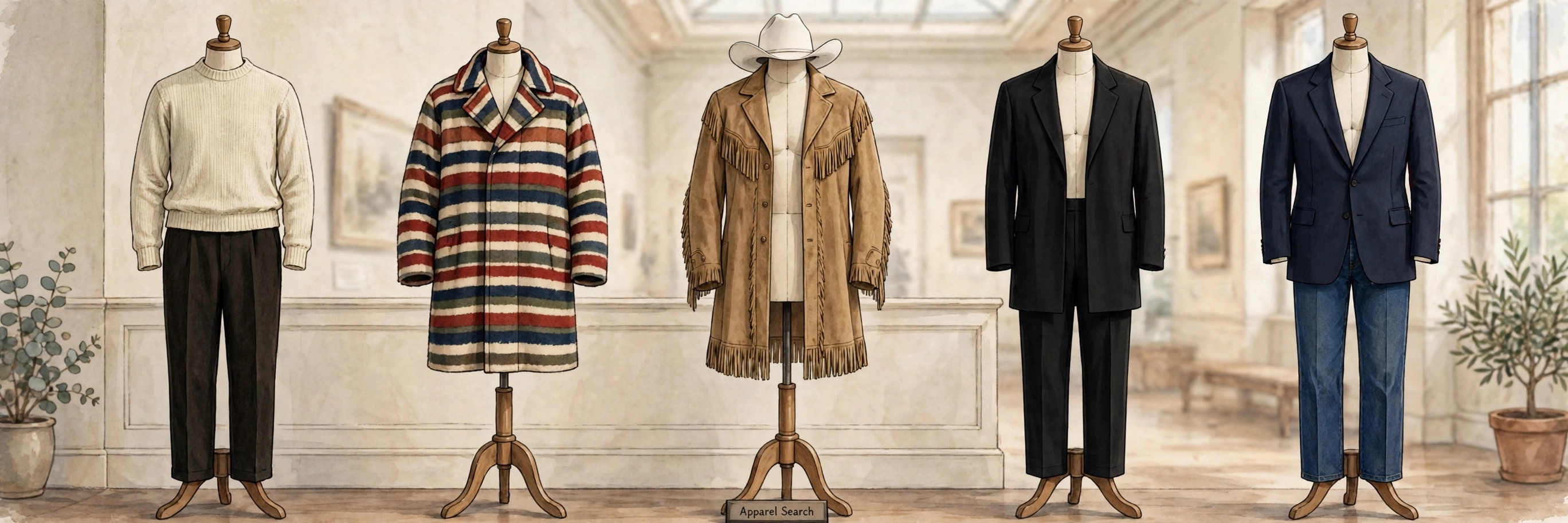
At a Glance
- The start
- In the earliest modern Games, athletes generally wore their own clothing
- 1908
- The athletes parade is introduced at the London Games, pushing teams toward a unified look
- 1936
- Hudson's Bay Company first outfits Canada, in the multistripe Point Blanket Coat
- 1998
- Roots' red poorboy cap becomes a phenomenon — a reported 100,000 caps a day at its peak
- 2008
- The United States Olympic Committee replaces Roots with Polo Ralph Lauren — the designer era begins
- By 2024
- A luxury group is a premium partner of the Games, and independent labels can win the ceremony before it starts
The Beginning
Own Clothes: The Parade Before the Uniform
For the first modern Olympians, there was no ceremony wardrobe to write about. Athletes generally wore their own clothing — the kit they trained and competed in, chosen by themselves or their clubs, with nothing in the programme that required a delegation to look like a delegation. The idea that a nation's athletes should enter a stadium dressed as a single visual unit had to wait for the ceremony itself to invent the occasion for it. That invention came at the London Games of 1908, when the athletes parade was introduced: teams marching together, behind their flags, in front of a crowd and cameras. A parade is a picture before it is anything else, and a picture of fifty people in fifty different outfits does not read as a team. The parade pushed teams toward a unified look, and everything in this guide follows from that push.
It is worth pausing on how complete the change has been. The parade created a demand — one outfit, one identity, hundreds of bodies — that no athlete's own wardrobe could meet, and meeting it created a new kind of commission: part tailoring, part national branding, part logistics. Over the following century that commission would be held by trading companies, national retailers, sportswear giants and couture houses, and the garments it produced would become some of the most widely seen clothes on earth. But the logic was set in 1908. Once teams marched as pictures, someone had to design the picture.
The parade also changed who a uniform was for. Clothing chosen by an athlete answers to the athlete; clothing designed for a marching delegation answers to the crowd, the camera and the country behind them, in that order. That is why ceremony dress developed its own grammar so quickly — bold colour over fine detail, silhouette over surface, symbols large enough to read at a distance — and why it has kept that grammar ever since, through every change of maker and era. The garments in the sections that follow look nothing alike. The job they were designed to do has never changed.
1936
The Point Blanket Coat: Canada Finds Its Stripe
The first great ceremony outfitter was not a fashion house at all. In 1936, Hudson's Bay Company — the Canadian trading company whose striped point blankets were already a national material — first outfitted Canada at the Winter Games in Garmisch-Partenkirchen, dressing the team in the Point Blanket Coat: a heavy wool coat carrying the blanket's bold multistripe. It was a shrewd piece of identity design decades before the term existed. The coat took a fabric every Canadian recognised, cut it as a uniform, and made the team identifiable from the back of a stadium by colour pattern alone — exactly the test a ceremony garment still has to pass.
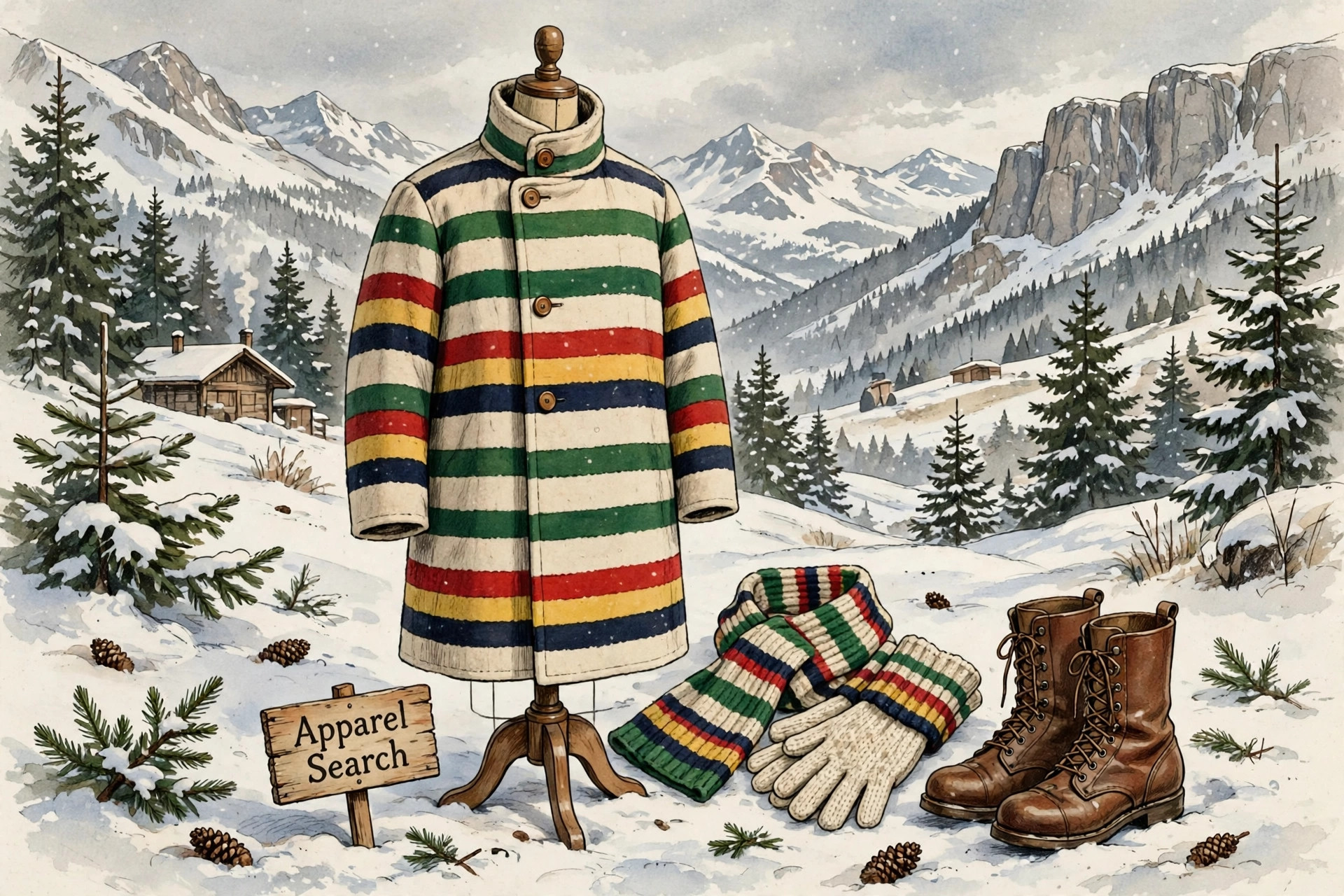
The multistripe coat became the official Canadian winter uniform at a number of later Games, and Hudson's Bay's relationship with the team proved to be one of the longest in Olympic dress — the company would return to outfit Canada again in the modern era, and its red mittens would become a lasting Team Canada staple. The 1936 precedent matters for a second reason, too: it established that the outfitter of a national team could be a company woven into that nation's own history, dressing the team in the country's material culture rather than in generic sportswear. Every later argument about who should dress a team — a heritage firm, a retailer, a designer — is an argument Hudson's Bay started, with a blanket.
1988 and 1992
Fringe, Stetsons and a Designer in Barcelona
By the second half of the century, host cities had learned that a home Games is a chance to dress the whole event in local character — and no home team wore its character louder than Canada at Calgary 1988. The Canadian uniform, made by Sunice, paired western-fringe coats with white Stetson cowboy hats: the dress of the host region, worn as a uniform, in a winter stadium. It remains one of the most memorable team looks in Olympic history, and its lesson is the opposite of restraint. A ceremony outfit can carry a whole regional story — ranching, the frontier, the host city's self-image — in two garments, provided it commits completely. Fringe and a Stetson are not subtle, and Calgary is remembered precisely because subtlety was never the plan.
Four years later came the moment that pointed at the future. At Barcelona 1992, Issey Miyake — one of the most original designers alive — outfitted Lithuania's team. A small delegation, a great designer, a wardrobe treated as a work of design in its own right: the combination was unusual enough that it set the reference point for every unlikely outfitting story that followed. Nearly three decades later, when Telfar Clemens dressed the entire Liberian delegation at Tokyo 2020, commentators reached back to Miyake's Lithuania as the comparison — the most unusual Olympic outfitting since 1992. The designer era is usually dated to 2008, and the next sections will show why. But 1992 is its proof of concept: the Games had already shown, once, what happened when a serious designer was handed a whole team.
1998
The Poorboy Cap: A Uniform Becomes a Phenomenon
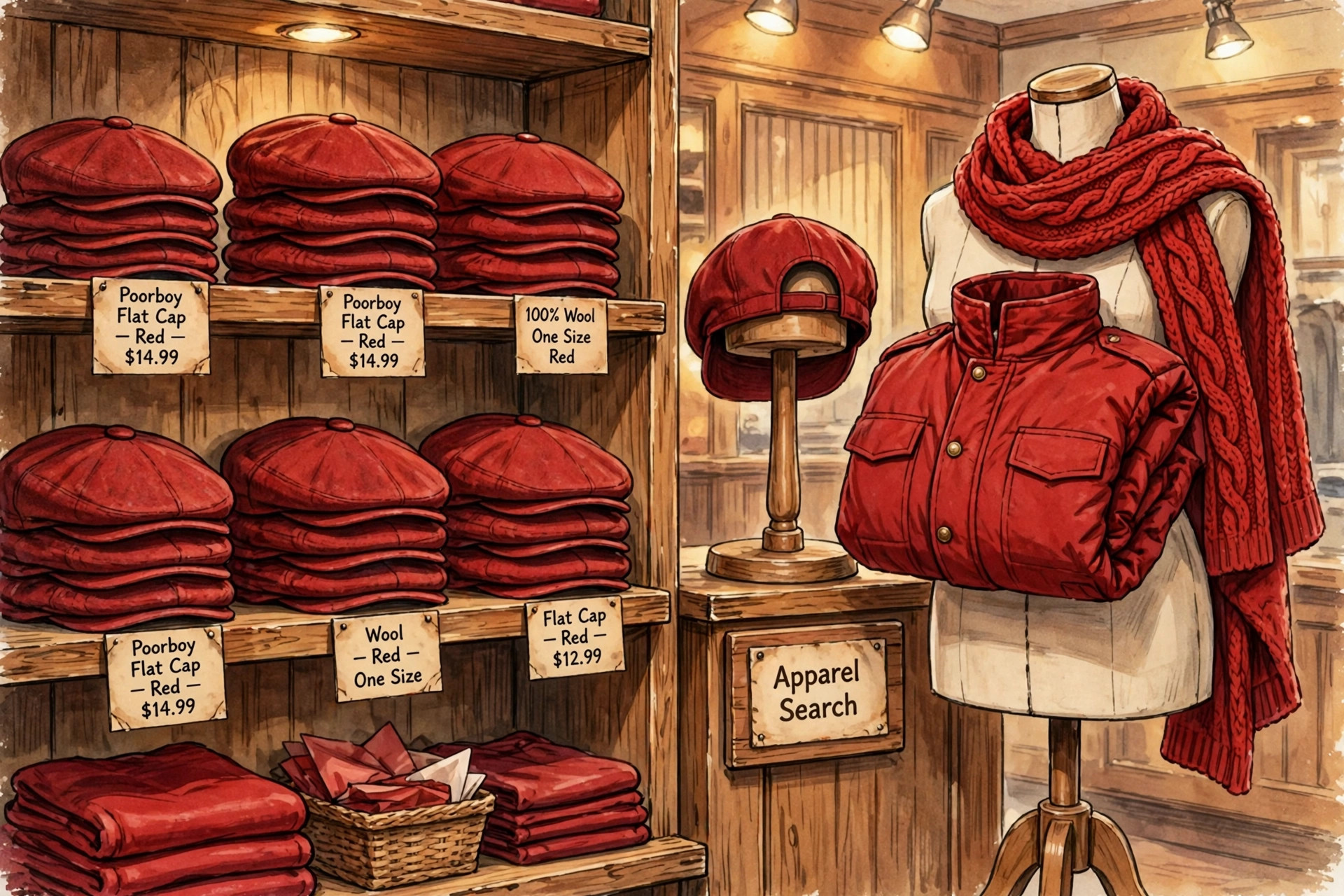
The strangest success in Olympic dress history is a cap. At the 1998 Nagano Winter Games, Roots — the Canadian leisurewear company — outfitted Canada, and the team's red "poorboy" cap, worn backwards, escaped the stadium entirely. At its peak, Roots sold a reported 100,000 caps a day at US$19.95, and more than half a million in total. The cap was seen on Prince William, Celine Dion and Spike Lee. No ceremony garment before it had demonstrated so plainly that a uniform is also a product — that the public, watching a team march in clothes it could actually buy, would buy them in numbers most fashion launches never approach.
Roots was no one-Games wonder. The company went on to outfit Canada through the 2000 to 2004 cycle, and then crossed the border in the most telling commission of the era: Roots dressed the UNITED STATES teams at the 2002, 2004 and 2006 Games. For a few years, in other words, the outfitter of the two North American giants was a Canadian retailer built on caps and casual clothes — the high-water mark of the pre-designer era, when the ceremony wardrobe belonged to national retailers rather than fashion houses. The poorboy cap had shown everyone the commercial size of the parade. What changed in 2008 was who would be collecting on it.
2008
The Handover: Roots Out, Ralph Lauren In
In 2008, the United States Olympic Committee replaced Roots with Polo Ralph Lauren — and with that single appointment, the modern designer era of Olympic fashion began. Ralph Lauren started with Team USA at Beijing 2008 and has designed the team's opening and closing ceremony parade outfits and village wear at every Games since, becoming the exclusive official parade outfitter of the American teams. The significance was not only the name. It was the model: a fashion house, with a designer's point of view and a retail empire behind it, treating the national wardrobe as a collection — designed years ahead, unveiled like a launch, and sold to the public as one. The parade had been a uniform commission. From 2008, for the biggest team at the Games, it was a fashion commission.
The rest of the field moved within four years. In 2010, adidas appointed Stella McCartney as creative director for Team GB at London 2012 — the first time a leading fashion designer had designed a country's apparel across all competitions for both the Olympic and Paralympic teams. The pattern was now set from both directions: fashion houses taking over national teams outright, and sportswear giants hiring fashion designers to lead them. By Paris 2024 the transformation was complete at every level of the event: a luxury group, LVMH, stood as a premium partner of the Games themselves, and the ceremony's most celebrated outfits came from a two-sister couture label in Ulaanbaatar whose unveiling won the night on social media before the parade had even begun. The distance from a trading company's blanket coat to that moment is the distance this guide has travelled — and it was covered, in the end, very fast.
The Thread That Never Broke
Traditional Dress Never Left the Parade
One thread runs underneath the whole designer story, and it would be a mistake to let the famous names hide it. Through every era in this guide — own clothes, national retailers, fashion houses — teams have also walked the parade in the traditional dress of their own countries, and they never stopped. At Tokyo 2020, to take one recent Games, teams such as Cameroon and Tuvalu wore traditional dress in the ceremony: garments that answer the parade's question — who are you, in cloth, at fifty metres — with the oldest vocabulary there is. The deel reimagined by a couture label in Paris and the traditional dress worn unchanged in Tokyo are not opposites. They are the same instinct at different points on the dial, and the parade has always made room for both.
That is the real shape of the history. Olympic ceremony dress did not move in a straight line from plain to designed; it accumulated. The unified look of 1908, the national material of 1936, the host-city character of 1988, the designer experiment of 1992, the retail phenomenon of 1998 and the fashion-house era from 2008 are all still present in a modern parade, layered over the traditional dress that predates them all. To read a contemporary opening ceremony well — the subject of every other guide in this section — is to read those layers at once: a century of answers to the question the parade first asked in London, worn past the cameras in a single evening.
It also explains why the history keeps mattering to the present. When a modern outfitter deconstructs a flag, revives a heritage coat or puts a team's symbol into a print, it is working — knowingly or not — inside precedents set by a blanket coat in 1936 and a cap in 1998. And when a small delegation in traditional dress or an independent label outshines the giants, that too is an old pattern: the parade has rewarded conviction over budget since the day it began. The designer era did not replace this history. It joined it, as the newest layer in the longest-running conversation in sports clothing.
Common Questions
Questions & Answers
When did Olympic teams start dressing alike for the opening ceremony?
In the earliest modern Games, athletes generally wore their own clothing. The introduction of the athletes parade at the London 1908 Games pushed teams toward a unified look, because a delegation marching together reads as a team only when it dresses as one. National outfitters and standard team uniforms developed from that moment on.
What was the Roots poorboy cap phenomenon at Nagano 1998?
Roots outfitted Canada at the 1998 Nagano Winter Games, and the red poorboy cap, worn backwards, became a retail phenomenon. At its peak Roots sold a reported 100,000 caps a day at US$19.95, and more than half a million in total. The caps were seen on Prince William, Celine Dion and Spike Lee, and Roots went on to outfit Canada from 2000 to 2004 and the United States teams at the 2002, 2004 and 2006 Games.
When did the modern designer era of Olympic fashion begin?
The turning point came in 2008, when the United States Olympic Committee replaced Roots with Polo Ralph Lauren as the outfitter of the United States teams. Ralph Lauren has dressed Team USA at every Games since Beijing 2008. In 2010 adidas appointed Stella McCartney as Team GB creative director for London 2012, and by Paris 2024 a luxury group was a premium partner of the Games and independent labels could win the ceremony on social media before it began.
Olympic Fashion
The section hub and the Games guides where this history comes alive: McCartney's London, Tokyo's designer stories, and the winter thread.
Search Apparel Search