Olympic Fashion · Tokyo 2020
Tokyo 2020: Fashion in an Empty Stadium
Tokyo 2020 was held in 2021, a year late, in front of empty stands — and it produced some of the most instructive fashion of any Games in this series. Japan's official uniform came from the suit retailer AOKI. Liberia's entire wardrobe — ceremony, competition and village wear — was designed by Telfar Clemens, who was also the team's sole sponsor. The American flag bearers marched with a self-regulating cooling device built into their jackets. And on a quiet stage, a rainbow-dipped tulle ballgown by Tomo Koizumi supplied the ceremony's burst of joy. This guide covers the postponed Games garment by garment.
At a Glance
- The Games
- Tokyo 2020, postponed a year by the pandemic and held in 2021 — the opening ceremony took place on July 23, 2021, in a stadium without spectators
- Japan
- AOKI, the suit retailer, made the official opening ceremony uniform and official-function wear; ASICS provided the competition sportswear
- Liberia
- Telfar Clemens designed the entire delegation wardrobe — ceremony, competition and village wear — and was the team's sole sponsor
- United States
- Ralph Lauren, with RL COOLING, a self-regulating cooling device integrated into the flag bearers' jackets
- Ceremony fashion
- Singer Misia performed the Japanese anthem in a rainbow-dipped tulle ballgown by Tomo Koizumi
- The scale of Telfar
- About 70 pieces, produced in roughly four months, for one of the Games' smallest stories and largest reactions
The Setting
The Empty-Stadium Games
Tokyo 2020 was postponed a year by the pandemic, and when the opening ceremony finally took place on July 23, 2021, it did so in a stadium without spectators. Every assumption behind ceremony fashion was built for a crowd: a uniform is designed to read from the back of a stadium, to be cheered as it passes, to be photographed against a wall of people. In Tokyo the crowd was absent, the stands were desolate, and the garments had to do their work almost entirely through the camera.
That change of audience changed what succeeded. A parade uniform in an empty stadium is, in effect, a television and phone-screen garment — seen closer, held longer in frame, and shared afterwards as still images rather than remembered as a passing moment in a roar of noise. The designs that travelled furthest from Tokyo were the ones with a clear idea that survived being screenshotted: a single tilted star, a cooling device hidden inside a white jacket, a rainbow-dipped gown on an otherwise quiet stage.
Tokyo also proved that the new economics of Olympic fashion do not require a giant supplier or a giant team. The most discussed wardrobe of these Games belonged to one of its smallest delegations, designed by an independent New York label that was also the team's sole sponsor. In an empty stadium, scale stopped being the story. The idea became the story — and ideas are something fashion, at every size, knows how to supply.
The Host Team
Japan: AOKI and the Formal Uniform
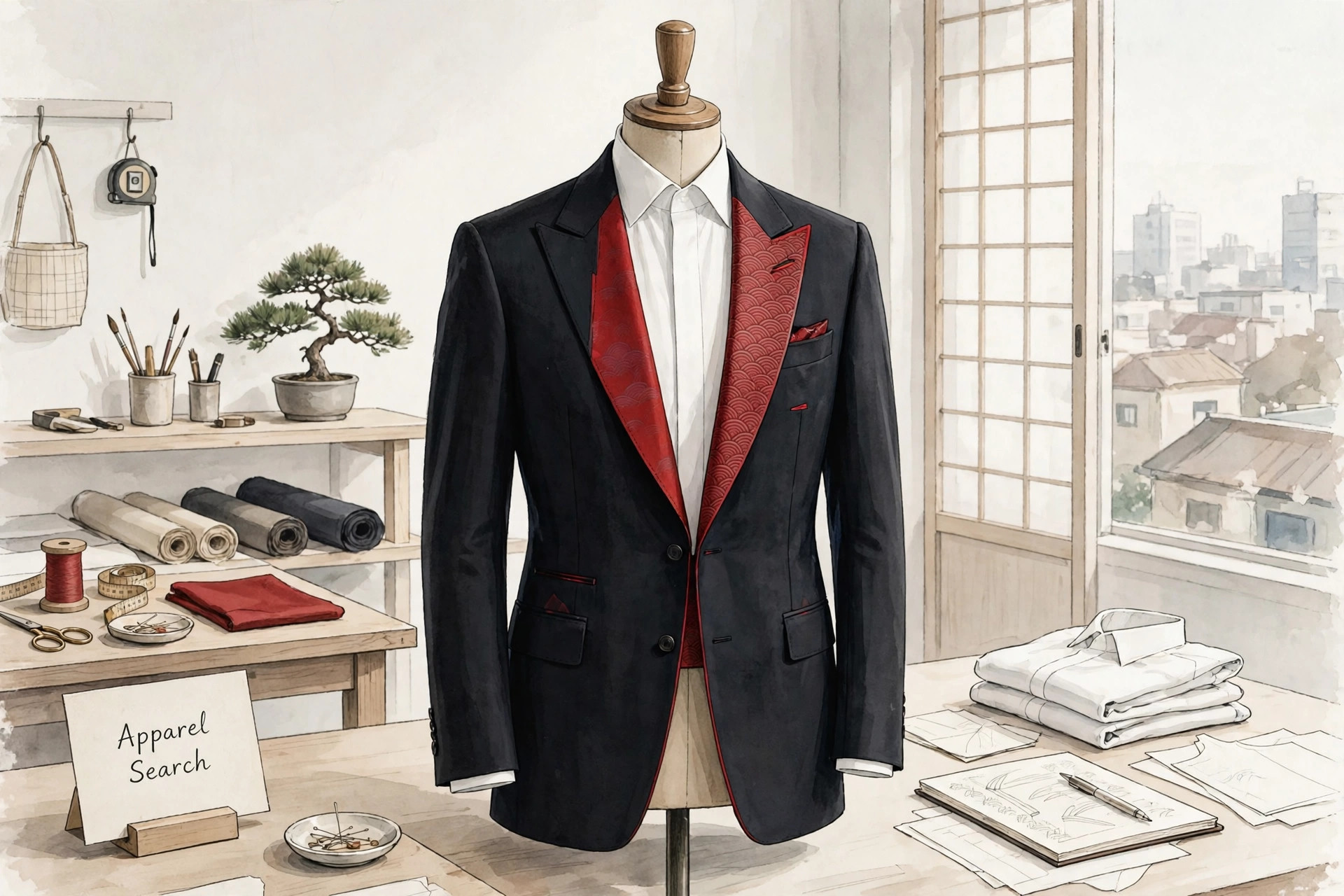
The host team's official dress came from AOKI, the Japanese suit retailer, which made the Japanese team's official opening ceremony uniform and its official-function wear — the clothing for the formal occasions around the competition, where a host nation presents itself to the world it has invited. Competition sportswear, the technical side of the wardrobe, was provided separately by ASICS.
That division of labour is a pattern worth noticing, because it appears at Games after Games in different forms. The ceremony and function wardrobe is a tailoring and presentation problem: fit, formality, national presentation, and comfort through hours of waiting and marching. The competition wardrobe is a performance problem: fabrics, aerodynamics, heat, and the rules of each sport. Hosts in particular tend to feel the distinction, because their formal clothing carries an ambassadorial duty on top of the athletic one — it is worn at the moments when the host is, in the fullest sense, receiving guests.
Choosing a domestic suit retailer for that role is also a statement about where formal dressing lives in Japan. The official uniform was not imported couture; it came from a home-grown specialist in the everyday formal wardrobe of Japanese business and ceremony, scaled up to the most watched formal occasion in the country's modern sporting history. In a Games stripped of crowds, that quiet, correct, home-made formality was the host's chosen register — and it set off, by contrast, the more theatrical fashion moments that other teams and performers brought to the same ceremony.
The split between the two suppliers is also a reminder of how much of an Olympic wardrobe is never seen in competition at all. Official-function wear — the clothing for receptions, formal appearances, and the ceremonial duties that surround the sport — has its own brief: it must present a nation politely, photograph formally, and stay immaculate through long days of standing, travelling, and being received. A suit specialist is exactly the right maker for that layer of the wardrobe, and Tokyo's host team is a clean example of a Games assigning each layer to the kind of company that makes it best, rather than asking one supplier to be good at everything.
The Breakout Story
Liberia: Telfar Designs Everything
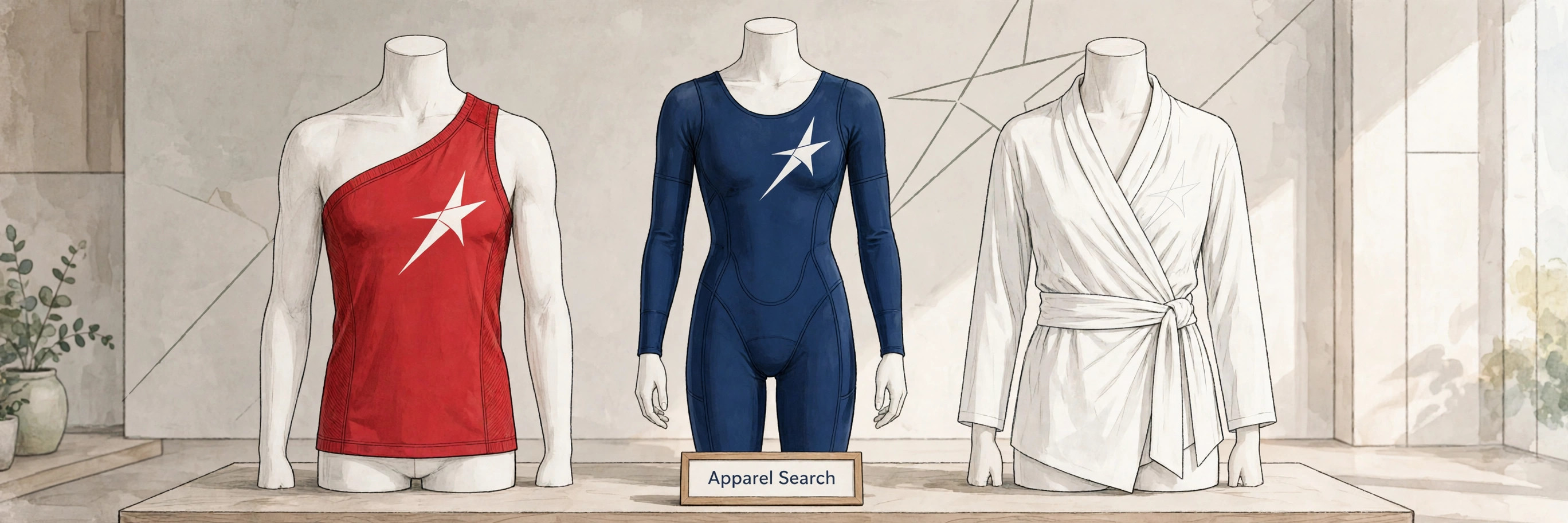
Telfar Clemens designed the entire Liberian delegation's wardrobe for Tokyo — ceremony, competition, and village wear — and his label was the team's sole sponsor. It is hard to overstate how unusual that combination is. Olympic wardrobes are normally divided among suppliers: one company for ceremony, another for competition, sponsors at a careful distance. For Liberia, one independent designer took responsibility for the whole of it, and underwrote it as well.
The production was fast and lean: about 70 pieces, produced in roughly four months. The designs were unisex — one-shoulder tanks, unitards, and lappa-inspired wrap pieces that drew on Liberian dress — and they carried one unforgettable graphic idea: the Liberian flag's single star, printed deliberately atilt, as if blown sideways in a sprinter's wake. A national symbol, edited with a fashion designer's confidence, became a picture of speed itself.
Clemens was born in Queens to Liberian parents, and the project was personal as well as professional: he walked in the ceremony with the team as a flag bearer. Afterwards, the brand sold an Olympics-informed collection to the public, extending the wardrobe's life beyond the Games in the retail mirror that now accompanies most ceremony design. The moment was compared at the time to Issey Miyake's outfitting of Lithuania in 1992 — described as the most unusual Olympic outfitting since then — and the comparison is apt: in both cases, a designer with a distinct point of view treated a small delegation's wardrobe as a complete artistic brief, and the result outshone wardrobes many times its size.
Team USA
RL COOLING and a Wardrobe Made in America
The United States team's Tokyo wardrobe carried the most literal piece of climate engineering of the Games. RL COOLING was a self-regulating cooling device integrated into the flag bearers' white denim jackets, using technology adapted from computer cooling — a small machine for moving heat away from a body, sewn into ceremony dress for a hot, humid Tokyo summer. Every athlete later received the device for their own blazer, so a piece of flag-bearer technology became part of the whole team's kit.
The parade uniform around that device was a study in considered materials. The navy blazer was made of United States-grown wool. The striped T-shirt was dyed with ECOFAST Pure, a process using less water, chemicals, and energy. The printed scarf, the shoes, and the mask were made of verified United States-grown cotton; the belt was made of Repreve recycled polyester from plastic bottles; and the denim carried a MIRUM patch, a plant-based leather alternative. Every item was manufactured in the United States — the supply-chain reset that followed the London 2012 manufacturing controversy, carried through into a summer wardrobe where the provenance of each component was part of the design brief.
Read together, the Tokyo American wardrobe makes a point about where ceremony design had arrived by 2021. The garment was expected to perform — to cool its wearer in real heat, over the long hours ceremonies demand — and to document its own materials, fibre by fibre, at the same time. A flag bearer at Tokyo noted that ceremonies keep athletes on their feet for four, five, six hours; clothing for that reality has to be engineered, not just styled. RL COOLING was the headline, but the blazer, belt, and denim tell the same story in quieter ways.
Beyond the Kits
Misia, Tomo Koizumi, and the Ceremony Gown
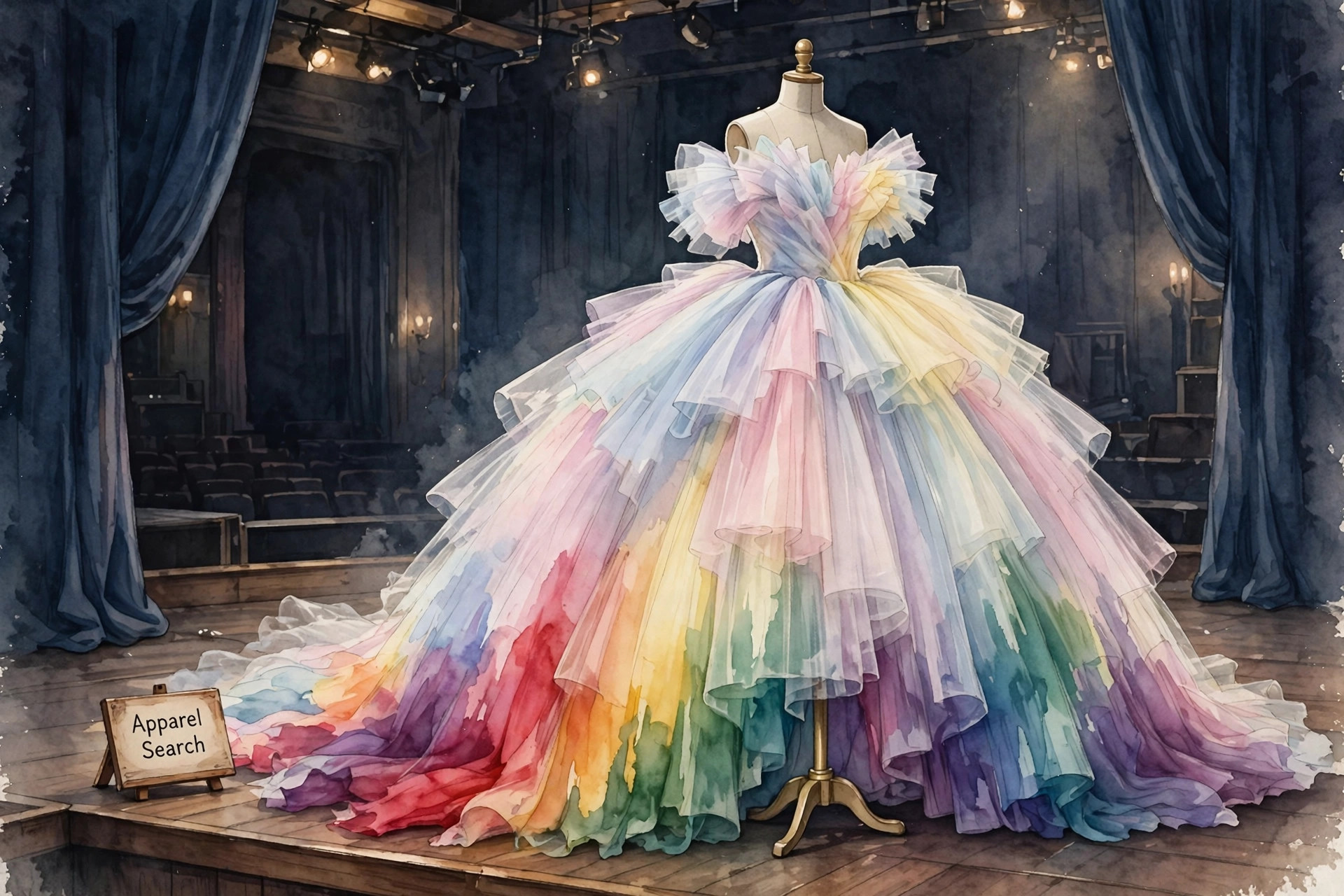
Olympic fashion is not only what the teams wear. The ceremonies themselves are staged performances, and their costumes can become the most remembered garments of the night. At Tokyo, singer Misia performed the Japanese anthem wearing a rainbow-dipped tulle ballgown by Tomo Koizumi — a voluminous confection of tulle shading into rainbow colour, worn on an otherwise restrained and quiet stage.
In a stadium without spectators, that gown did a particular kind of work. The ceremony's emotional register was necessarily subdued: no crowd to lift it, no roar to answer a performance. A single, exuberant, colour-saturated garment became a focal point the cameras could hold — joy, expressed in cloth, at a Games that had waited an extra year to happen at all. It is a reminder that the fashion of a Games includes the performers and presenters as well as the delegations, and that a designer dress can carry a ceremony's feeling as surely as a team's uniform carries its identity.
Traditional and national dress were present in the parade as well — teams such as Cameroon and Tuvalu wore traditional dress at Tokyo — a continuity that runs through the whole history of ceremony fashion. The parade has never been only a sportswear show. It is a procession of nations, and nations keep choosing, alongside the designed kits, the garments that carry their heritage most directly. Tokyo, for all its technology, kept that older layer in view.
The Lesson
What Tokyo Proved
Tokyo 2020 rearranged the hierarchy of Olympic fashion. The host's formal uniform came from a domestic suit specialist. The American wardrobe's talking point was a cooling device adapted from computers. The ceremony's most joyful image was a pop singer's tulle gown. And the wardrobe that defined the Games in fashion conversation belonged to Liberia — a small delegation, one independent designer, about 70 pieces, four months, and a single star tilted as if in a sprinter's wake.
None of that required the largest budget or the largest team. It required a clear idea, completely executed: Telfar did not design a Liberian ceremony outfit, it designed the Liberian wardrobe, all of it, as one unisex system in which ceremony, competition, and village wear spoke the same language. Completeness at small scale beat partial design at large scale — the same lesson Stella McCartney's appointment had taught at London 2012, from the opposite end of the size chart.
Tokyo also closed a loop in the American story. The team whose London uniforms had caused a manufacturing firestorm in 2012 marched in 2021 in a wardrobe manufactured entirely in the United States, with its fibres and processes documented garment by garment, and with wearable cooling technology in the flag bearers' jackets. Provenance and performance, argued about for a decade, arrived in the same blazer. The empty stadium made it a strange Games; the clothes, improbably, made it one of the most instructive ones in this whole series.
One garment in the American wardrobe dates the Games more precisely than any other: the mask, made of verified United States-grown cotton, listed among the parade uniform's considered materials alongside the scarf and the shoes. No previous Olympic wardrobe in this series had included a face covering as a designed component, and its presence in the official kit — specified, sourced, and manufactured like every other piece — is a small, telling record of the moment. Future historians of Olympic dress will be able to date Tokyo's parade photographs to a single year from that one accessory alone, in a way that even the cooling device, hidden inside a jacket, does not allow. Fashion is often how an era leaves its fingerprints on ceremonial clothing, and Tokyo left its clearest fingerprint in cotton.
Common Questions
Questions & Answers
Who designed Liberia's Tokyo 2020 wardrobe?
Telfar Clemens designed the entire Liberian delegation wardrobe, covering ceremony, competition and village wear, and the label was the team's sole sponsor. About 70 pieces were produced in roughly four months, including unisex one-shoulder tanks, unitards and wrap pieces.
What was RL COOLING at Tokyo 2020?
RL COOLING was a self-regulating cooling device integrated into the flag bearers' white denim jackets, using technology adapted from computer cooling. Every athlete later received the device for their own blazer.
Who made Japan's Tokyo 2020 opening ceremony uniform?
AOKI, the suit retailer, made the Japanese team's official opening ceremony uniform and official-function wear. ASICS provided the team's competition sportswear.
Olympic Fashion
More guides in this series — the section hub, the Paris 2024 Games, the long history of ceremony dress, and the craft of designing a ceremony uniform.
Search Apparel Search