Olympic Fashion · The Craft of the Ceremony Uniform
The Craft of Ceremony Uniform Design: Fashion's Impossible Brief
Every design job has constraints, but the Olympic opening ceremony uniform has all of them at once. It must announce its country from the back of a stadium and inside a two-second television shot. It must fit a gymnast and a weightlifter with the same design. It must keep its wearer comfortable through hours of waiting in a tunnel and marching in whatever weather the host city serves that night. And it must do nearly all of this without logos, because Olympic rules tightly limit the commercial marks allowed on athlete clothing. This guide is about how designers solve that brief: the years of lead time, the industrial scale, the climate engineering, the identity systems built from colour and symbol — and the retail collections that turn one night's uniform into a season of sales.
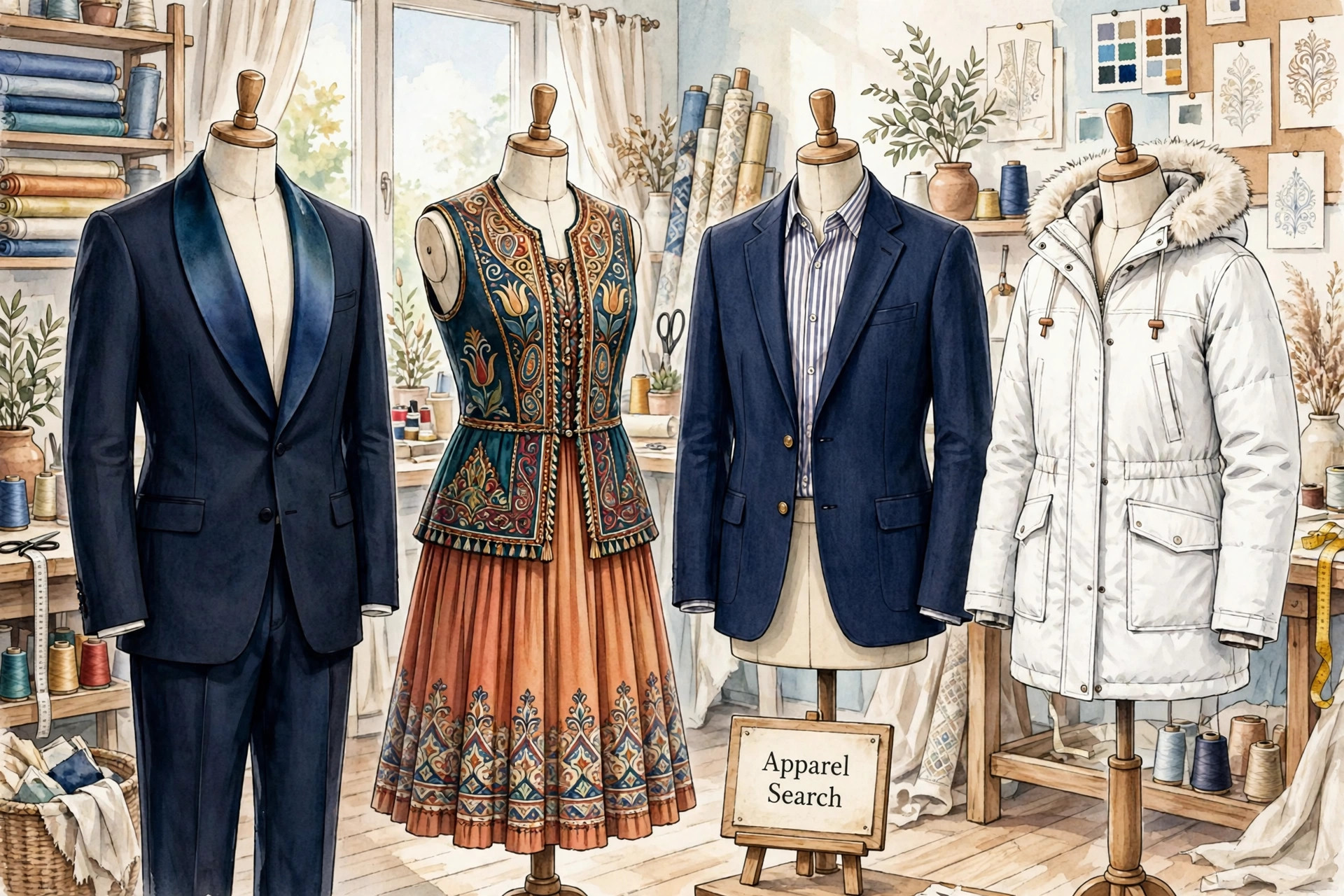
At a Glance
- The test
- To be read as its country from the back of a stadium and in a two-second television shot
- The timeline
- Ralph Lauren starts each Team USA wardrobe about two and a half years before the Games
- The range
- Berluti's Paris 2024 wardrobe ran to 14 sizes, 3XS to 6XL, with shoe sizes 1 to 22
- The volumes
- About 150,000 items for France's full kit program; about 175,000 items for Team GB in 2012
- The constraint
- Olympic rules tightly limit commercial marks on athlete clothing — design works through colour, cut and symbol
- The afterlife
- Ceremony wardrobes anchor public retail collections sold from unveiling day
The Brief
Read as a Country in Two Seconds
Start with the audience. A ceremony uniform is not judged the way a runway collection is judged, at arm's length by people who know the references. It is judged by hundreds of millions of viewers who see each team for seconds, often in a wide shot, often while a commentator is still finishing the previous delegation's name. The garment's first job is therefore pure signalling: national identity carried in colour and symbol, legible at distance, unmistakable in a crowd of more than two hundred other teams making the same claim at the same time. Paris 2024 made the problem harder and more cinematic at once — for the first time in Olympic history the Parade of Nations travelled by boat along the Seine rather than marching through a stadium, so the uniforms had to read from riverbanks and bridges as much as from seats.
The second job is endurance, and it is the one television never shows. A flag bearer at the Tokyo Games noted that ceremonies keep athletes on their feet for "four, five, six hours" — waiting in holding areas, standing in tunnels, then marching. A beautiful jacket that punishes its wearer by hour three is a failed design, whatever it looks like in photographs. Shoes matter as much as tailoring; layers must cope with an evening that cools as it goes; nothing can pinch, ride up or wilt, because the athlete wearing it has a competition to think about and the whole world is watching them not think about their clothes.
A ceremony uniform is a capsule collection with the largest audience in fashion — and the least forgiving fitting room.
The third job is unity. A delegation is not a model casting. It is gymnasts and weightlifters, teenagers and veterans, athletes and coaches and staff, all required to look like one team in one design. Most fashion is designed for a narrow band of bodies and then graded a few sizes either way. A ceremony wardrobe is designed for the full range of human builds from the first sketch, because there is no version of the photograph in which the shot-putter wears something else. Everything else in this guide — the timelines, the size ranges, the factories — follows from those three jobs: be recognised instantly, be wearable for hours, and be one design on every body that wears it.
The Timeline
Two and a Half Years Before the Torch
The established houses treat a Games wardrobe as a long campaign, not a collection. Ralph Lauren's design team starts each Team USA wardrobe about two and a half years before the Games, with athlete consultation built in from the first sketches — the people who will stand in the tunnel for six hours get a voice while the design can still change. That long runway is what makes the engineering later in this guide possible: fabrics can be developed rather than merely bought, supply chains can be built (the American one assembled for Sochi 2014 ran to about 40 vendors, from an Oregon wool ranch to a North Carolina dye house), and fitting programs can cover an entire delegation rather than a sample size.
But the long campaign is a privilege of incumbency, and some of the most celebrated ceremony wardrobes of recent Games were made at sprint speed. For Tokyo 2020, Telfar Clemens designed the entire Liberian delegation's wardrobe — ceremony, competition and village wear, about 70 pieces — in roughly four months, as the team's sole sponsor. Mongolia's Michel and Amazonka, the Ulaanbaatar couture label run by sisters Michel and Amazonka Choigaalaa, produced 120 sets for Paris 2024 in three months with a team of 42 people, with a reported 20 hours of work in each outfit. The lesson cuts both ways: time buys engineering, but it does not buy ideas. The Mongolian ensembles — deel-inspired, dense with national motifs — won the Paris ceremony's attention before it began, their unveiling going viral weeks ahead of the night itself.
What the timeline really determines is where the risk sits. A two-and-a-half-year program risks staleness: the design must still feel current on a night years after it was sketched. A four-month sprint risks capacity: every hour of embroidery is an hour that cannot be recovered if anything slips. Both models end at the same fixed deadline, the one date in fashion that cannot move — the ceremony starts when it starts, and the team walks in whatever is ready.
Scale and Range
One Design, Every Body: 14 Sizes and 150,000 Pieces
The numbers behind a ceremony wardrobe belong to industry, not ateliers. For Paris 2024, Berluti made 1,500 outfits for the French Olympic and Paralympic teams, athletes and coaches and staff together — and to make one midnight-blue tuxedo design fit all of them, the house expanded its size range to 14 sizes, from 3XS to 6XL, with shoe sizes running from 1 to 22. That is the craft in a single statistic: a luxury house whose ordinary business is a narrow slice of the population re-engineering its patterns so the same silhouette works on every body in a national delegation.
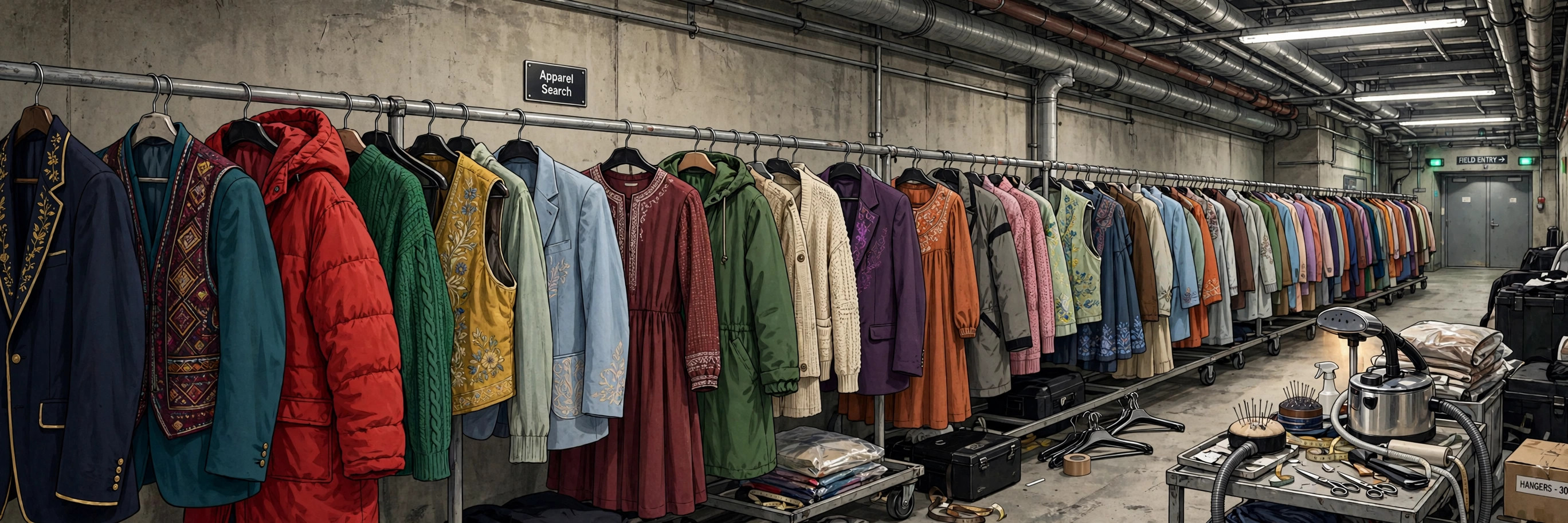
Ceremony outfits are only the visible tip. France's full program for Paris 2024 — competition kit, podium wear and village wear, designed by Le Coq Sportif under artistic director Stéphane Ashpool — ran to about 150,000 items for 560 Olympians, 280 Paralympians and 2,400 coaches and support staff. In London in 2012, adidas supplied more than 900 British athletes with about 175,000 items of clothing. At those volumes, a ceremony wardrobe is a logistics operation with a design department: production spread across factories, deliveries sequenced to training camps and villages, spares and replacements planned for garments that will be worn hard for a fortnight.
And at the far end of the range, standard sizes simply stop. When Christian Louboutin designed Cuba's closing ceremony outfits for Rio 2016, the shoes were made to measure up to size EU 51.5 — the feet in question belonged to wrestler Mijaín López. Made-to-measure inside a mass program is the whole discipline in miniature: industrial scale for the many, bespoke attention for the extremes, and no visible seam between the two when the team walks out together.
Climate Engineering
Dressing for Weather That Fights Back
Every Games hands its designers a climate problem, and the recent history of ceremony dress is largely a history of solving them in cloth. PyeongChang 2018 was cold — reported temperatures as low as 11°F with Siberian winds during the Games period — and Ralph Lauren answered with heated opening-ceremony parkas: conductive silver and carbon inks, printed in the shape of the American flag on the jacket's interior, powered by a slim battery that delivered up to 11 hours of heat on the lowest setting and about 5 hours on high. The flag was not decoration there; it was the heating element.
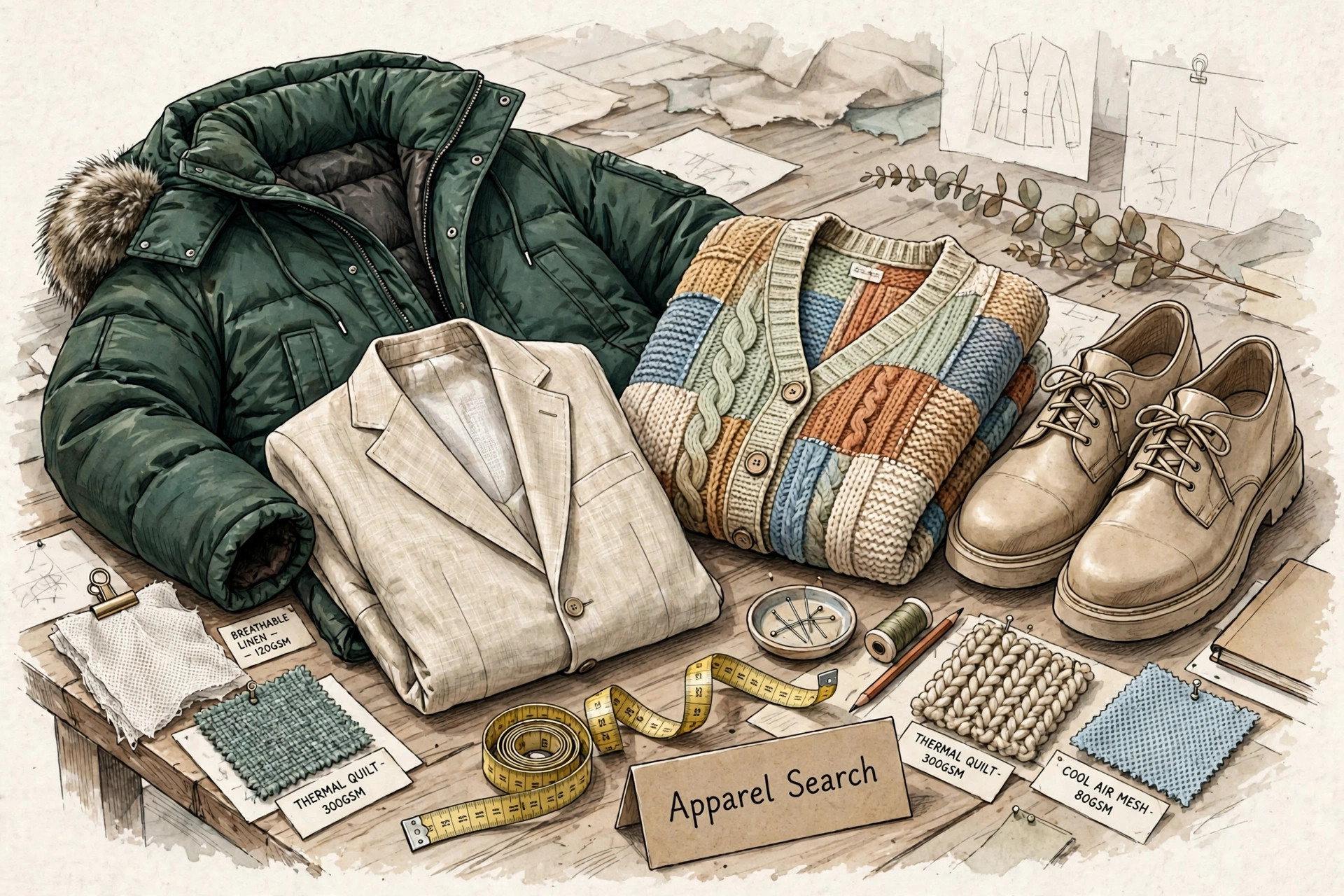
Tokyo inverted the problem. For flag bearers marching in summer heat, Ralph Lauren integrated RL COOLING, a self-regulating cooling device adapted from computer-cooling technology, into the white denim jackets — and afterwards every athlete received the device for their own blazer. Beijing 2022 asked for adaptability rather than a single temperature: the opening anorak used Intelligent Insulation, a fabric that expands or contracts in response to temperature, changing its loft as conditions change. Rio 2016 was a weight problem — Team GB's kit under Stella McCartney and adidas was about 10 percent lighter than the 2012 kit, engineered down for the tropical climate. Even sustainability has been climate-adjacent craft: Sweden's flag bearer at Rio wore a dress incorporating fabric made from recycled garments collected through H&M's Garment Collecting Initiative.
The pattern across all five solutions is the same. None of them reads as technology from the audience's side of the camera. A heated parka looks like a parka; a cooling jacket looks like a summer blazer. The engineering is hidden inside garments that still have to pass the two-second test — which is precisely what makes ceremony design a distinct craft rather than a branch of sportswear. Performance clothing can look like equipment. Ceremony clothing cannot.
Identity Systems
Colour, Cut and Symbol: Building a Country Into Cloth
Strip away the logos — the next section explains why they are mostly absent — and a designer is left with three tools: colour, cut and symbol. The great ceremony wardrobes are identity systems built from those three, coherent enough to survive being scattered across hundreds of different bodies and still read as one idea.
Colour first. When Stella McCartney took on Team GB for London 2012 — the first time a leading fashion designer had designed a country's apparel across all competitions for both the Olympic and Paralympic teams — she started from the Union flag and deconstructed it: predominantly blue and white with red accents. The blue-heavy reading of the flag drew public debate at the unveiling, which was itself a kind of proof: the colour alone was doing national-identity work strongly enough for a country to argue about. Berluti's Paris 2024 tuxedo made the same move in miniature, its shawl collar carrying a motif inspired by a new "French flag" patina in blue and red — the flag dissolved into a surface finish, present everywhere and literal nowhere.
Symbol second. For Rio 2016, McCartney's second Games with adidas, a new Great Britain coat of arms was developed with the College of Arms and used across the kit — heraldry created for clothing, a national symbol that existed because a uniform needed one. Haiti's Paris 2024 outfits turned a painting into cloth: Haitian painter Philippe Dodard's artwork printed across the women's skirts and men's trousers, under chambray shirts woven and made in Haiti, in a collaboration with designer Stella Jean that she framed as combining Haitian fabrics and motifs with Western silhouettes.
And cut third — the deepest tool, because it can carry a whole garment tradition. Mongolia's deel-inspired ensembles for Paris 2024, with their embroidered vests, pleated skirts, draped capes and motifs drawn from the Soyombo symbol, the mythological Gua Maral deer and Naadam festival references, modernised a traditional garment rather than decorating a Western one; our guide to the Mongolian deel tells that garment's own story. Telfar's Liberia wardrobe for Tokyo worked the same seam, building unisex ceremony pieces from the lappa wrap tradition and printing the Liberian flag's single star deliberately atilt, as if blown sideways in a sprinter's wake. A flag can be worn. A tradition can be worn better.
Branding Restraint
Designing With the Logos Turned Off
Modern fashion runs on visible branding, and ceremony design is the one arena where that engine is switched off. Olympic rules tightly limit the commercial marks that may appear on athlete clothing at the Games — a general rule of the event that shapes everything about how these wardrobes are designed. A house that dresses a team cannot rely on its name being read by the audience. It has to be recognised the way nations are recognised: by colour, by cut, by symbol.
The restraint explains the craft's distinctive look. It is why so much ingenuity goes into surfaces a logo would normally cover — a patina collar, an embroidered motif, a print built from a maple leaf or a flag's geometry. It is why the silhouette matters so much: Berluti's tuxedo, Louboutin's tailored military-style jackets for Cuba, Dsquared2's cropped blazers for Canada at Rio are all arguments made in cut, identifiable without a single wordmark. And it quietly disciplines the design toward the wearer. With branding suppressed, what remains is the athlete, the country and the clothes — in that order.
There is a commercial irony underneath, and the designers know it. The houses gain enormously from these commissions — in prestige, in the retail collections the next section describes — precisely because the work has to speak without their names on it. The uniform that cannot carry a logo becomes the most eloquent advertisement a fashion house owns.
The Retail Mirror
The Uniform Is a Capsule Collection
Almost every ceremony wardrobe has a second life hanging on shop rails. Ralph Lauren's each-Games Team USA collection is sold to the public from unveiling day — the ceremony wardrobe anchors a retail range that lets supporters wear what the team wears. Team GB sold replica kits for six sports, including football, tennis, athletics and swimming, from April 2012, months before the London ceremony. H&M built its companion line for Rio 2016 under the name "For Every Victory". Telfar sold an Olympics-informed collection to the public after the Tokyo Games, carrying Liberia's moment into the brand's own stores.
The extreme case predates the designer era and still has no rival. At the 1998 Nagano Winter Games, Roots outfitted Canada, and the team's red "poorboy" cap, worn backwards, became a retail phenomenon: at its peak Roots reportedly sold 100,000 caps a day at US$19.95, and more than half a million in total. One accessory, caught on camera on the right heads, outsold entire collections. It remains the purest demonstration of what a ceremony wardrobe is commercially: a capsule collection launched in front of the largest audience fashion ever gets, with the product already modelled by the most admired people on earth that week.
The mirror runs both ways. Retail demand rewards the designs that read best at distance — bold colour, one strong motif, a silhouette that survives a small screen — which are exactly the qualities the ceremony brief demands anyway. The craft and the commerce want the same garment. That alignment, more than any single sponsorship, is why the biggest names in fashion now compete for a job whose rules forbid them to sign their work.
Common Questions
Questions & Answers
How long does it take to design an Olympic ceremony uniform?
Ralph Lauren starts each Team USA wardrobe about two and a half years before the Games, consulting athletes from the first sketches. At the other extreme, Telfar Clemens produced about 70 pieces for the entire Liberian delegation in roughly four months, and the Michel and Amazonka team in Mongolia made 120 sets in three months with 42 people.
How many sizes does a ceremony uniform need?
Berluti expanded its range for Paris 2024 to 14 sizes, from 3XS to 6XL, with shoe sizes from 1 to 22, so that one design could fit every athlete and staff member. Christian Louboutin's closing-ceremony shoes for Cuba in 2016 were made to measure up to size EU 51.5 for wrestler Mijaín López.
Why do ceremony uniforms carry so few logos?
Olympic rules tightly limit the commercial marks that may appear on athlete clothing at the Games. With logos restricted, designers work through colour, cut and symbol instead: a deconstructed flag, a new coat of arms, a modernised traditional garment or a painter's artwork turned into cloth.
Olympic Fashion
The ceremony wardrobes this craft produced — the river parade at Paris, the empty-stadium Games at Tokyo, and the carnival homecoming at Rio.
Search Apparel Search