Traditional Dress by Country · Mongolia
The Deel of Mongolia
The deel is the working coat, the festival costume and the formal dress of Mongolia in a single garment: a long, wrap-front robe with a high collar, worn by herders on the steppe and by wrestlers at Naadam, fastened with a sash that doubles as a tool belt and a back support. This guide explains the whole outfit — the robe, the sash, the upturned boots and the hat — the differences between Mongolia's ethnic groups, and how the deel is still worn, made and bought today.
The Garment
What a Deel Is
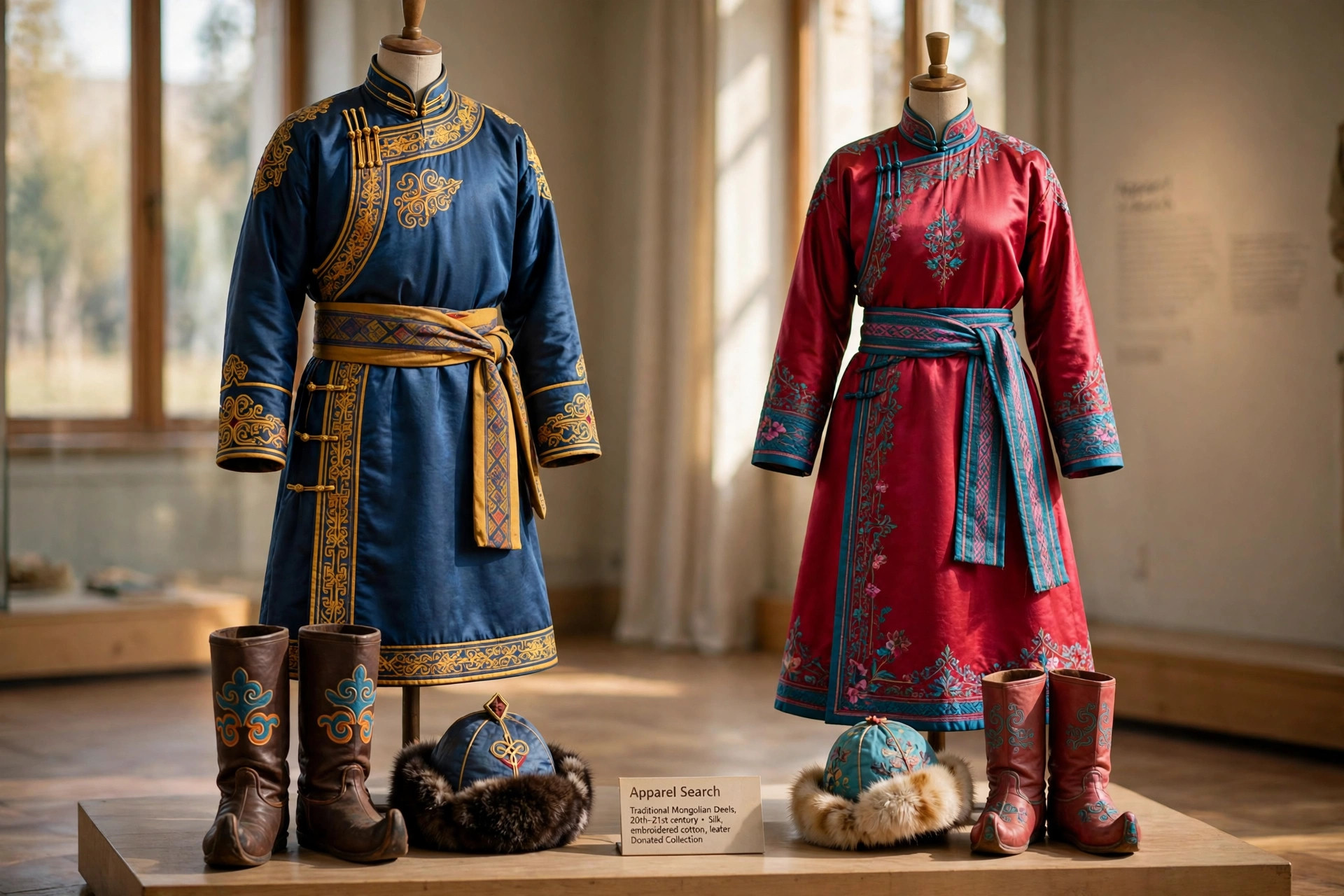
The deel is a long robe-coat, cut generously straight, with a stand collar, long sleeves that extend past the hands, and a broad front flap that wraps across the chest and fastens at the shoulder and side with knotted frog buttons. It is worn by men and women alike, and its design is old: robes of this wrap-front, side-fastened form were worn across the Mongol world centuries ago, shaped by the demands of a nomadic, horse-riding life in a climate of extremes — bitter winters, hot dry summers and constant wind.
Everything about the deel answers that life. The overlapping front and the long sash wound round the waist seal out the wind. The extra sleeve length covers the hands when reins are held. The loose body layers over felt and fur in winter and vents air in summer, and the wide chest of the robe, above the sash, forms a natural pocket where herders carry lambs, tools and provisions. A deel is traditionally made by the women of a family, and a well-made one — especially the silk deel kept for festivals — is an heirloom, presented at weddings and handed down.
Mongolia's ethnic groups each cut and trim the deel their own way, and a knowledgeable eye can place a wearer's group by the collar, the sleeve and the edging — the variations are set out below. The majority Khalkha deel, with its stand collar and contrasting trim, is the form most visitors meet first, in the capital Ulaanbaatar and at the Naadam festival.
Anatomy
The Parts of the Outfit
A deel is an ensemble, and on formal occasions every part of it is present and correct. From the robe out:
- The deel itself
- The wrap-front robe, ankle or calf length. Everyday deels are cotton, wool or modern synthetics; winter deels are lined with sheepskin or fur; festive deels are silk or brocade, edged with contrasting trim along the collar, flap and cuffs.
- Bus — the sash
- A very long sash of silk or cotton, wound several times around the waist and tied or tucked. It supports the back, closes the robe and serves as a belt for carrying small essentials.
- Malgai — the hat
- Men's and women's hats vary by group and season: pointed and fur-trimmed winter hats, brimmed summer hats, and formal hats with a knob and tassel. A hat is treated with respect and never placed on the ground.
- Gutul — the boots
- Heavy leather boots with the famous upturned toe, worn over felt socks. Festive pairs are tooled, appliquéd and stitched in bright patterns; the boot's height protects the deel's hem in grass, mud and snow.
- Under-layers and trousers
- Beneath the deel go a shirt or light inner deel and trousers; in winter, fur or sheepskin layers turn the outfit into serious cold-weather equipment.
- Accessories
- A man's sash traditionally carried a knife (khutga) in a decorated sheath, chopsticks in a case, and a snuff bottle exchanged in greeting. Women's festive dress adds silver and coral jewellery — earrings, and for some groups elaborate headdresses with coral, turquoise and silver.
Variations
One Robe, Many Peoples
Mongolia is home to many ethnic groups, and the deel is their shared garment spoken in different dialects. The differences sit in the collar, the sleeve, the trim and the women's dress that goes with it:
| Group | Deel character | Notes |
|---|---|---|
| Khalkha | Stand collar, straight wrap flap, contrasting edge trim | The majority group; their deel is the national standard seen at Naadam |
| Buryat | Rounded collar line, distinctive chest flap shaping | Buryat women traditionally wear a two-part dress — blouse and skirt — rather than a one-piece deel |
| Oirat (western groups) | Squared collar details and different trim colours | Western Mongolian groups, including Dörvöd and Torgut, keep distinct cuts and headdress forms |
| Kazakh (Bayan-Ölgii) | Embroidered and appliquéd dress, fur hats | Kazakh Mongolians in the far west add rich embroidery and their own eagle-hunting festival dress |
| Dariganga | Fine silversmithing worn with the deel | Renowned for the silver accessories — knives, cups and jewellery — that complete festive dress |
Colour speaks as well. Blue, the colour of the eternal sky, is the most honoured colour in Mongolia and a classic deel colour; red stands for joy and fire, white for purity and milk, and gold-yellow for wealth and the sun. A festive deel combines a rich ground colour with trim in a contrasting, often symbolic, pairing.
Cloth and Pattern
Cloth, Trim and Making
The oldest deels were made from what the herds provided: sheepskin and felted wool for winter, leather, and traded cotton and silk for the rest. Silk — imported along the trade routes from China — was the prestige cloth, reserved for festival and formal deels and for the sash, and a silk deel announced a family's standing at a glance. Today the range runs from hand-tailored silk brocade to hard-wearing modern fabrics, and cashmere — Mongolia's famous fibre — appears in fine contemporary deels and coats.
Decoration concentrates where the eye lands: the collar, the long diagonal edge of the wrap flap, the cuffs and the hem are bound with trim, often in a sharply contrasting colour, and the frog buttons are knotted by hand. Patterns are mostly geometric and symbolic — the khee scroll, endless knots and meanders worked into woven bands and appliqué. Deels are still made to measure by tailors in Ulaanbaatar and provincial towns, cut from a customer's chosen cloth; choosing the cloth, the trim and the buttons is part of the pleasure of ordering one.
Living Dress
When the Deel Is Worn Today
In the countryside the deel never went away: it is the daily dress of many herding families, chosen because it works — on horseback, in the cold, around the ger. In the cities it is occasion dress, and the occasions are major. At Tsagaan Sar, the lunar new year, families visit elders in their best deels and exchange snuff bottles in the traditional greeting. At the Naadam festival each July — the 'three games of men': wrestling, horse racing and archery — wrestlers compete in a specialised open-chested jacket and briefs with deel-style boots, while spectators, officials and the winning horses' young jockeys fill the stadium and the steppe with silk deels.
Weddings, graduations and official ceremonies all call for the deel, and many workplaces and schools hold deel days celebrating it. Behind the dress stands a living craft of tailors, bootmakers, hatters and silversmiths, alongside the modern cashmere and leather industry profiled on our Mongolia clothing industry page. For the deel in modern women's fashion, see our women's deel guide.
Wearing
Wearing Basics
A deel is put on like a coat: arms into the long sleeves, then the inner flap is drawn across and the outer flap folded over it, fastening the frog buttons up the side and at the shoulder so the diagonal edge sits smooth across the chest. The collar should stand clean around the neck. Trousers and boots go on first or last by personal habit, but the sash comes after the robe: it is wound around the waist several times, snugly — it is meant to support the back — and tied or tucked at the side or back. Small essentials are tucked into the sash or the chest above it. A hat completes the outfit and is treated with care: hats are not stepped over, placed on the ground or given away lightly, and boots, likewise, are shown respect — soles are not pointed at people or at the fire.
Keeping
Care and Storage
A silk deel is aired, not washed often: spot-clean marks, air the robe after wear on a dry day, and take valuable brocades to a cleaner experienced with silk. Sheepskin and fur-lined winter deels are beaten and aired in the traditional way and stored dry, since felt, wool and skin all attract moths — cedar and camphor are the classic defences. Store deels folded along their natural lines or rolled, away from light, and keep the sash, hat and accessories together so the full outfit survives as a set. Boots should be cleaned of steppe dust, kept dry and shaped with stuffing so the upturned toes hold their form.
Acquiring
Buying and Collecting
The best deel is a made-to-measure one: tailors in Ulaanbaatar will cut a deel from your chosen cloth in days, and choosing silk, trim and buttons with the tailor is the authentic way to buy. Ready-made deels are sold in department stores and at markets such as Narantuul, where boots, hats, sashes and complete outfits can be assembled in one visit. Judge a deel by its cloth first, then by the neatness of its trim and frog buttons and the finish inside the collar and cuffs. Antique deels and old silver accessories are collected, but buy them from reputable dealers, check silk for brittleness at the folds, and remember that a festive deel is a complete outfit — budget for sash, boots and hat, not the robe alone.
Common Questions
Common Questions
What is a deel?
A deel is Mongolia's traditional robe: a long, loose coat with a high collar and a wide overlapping front, worn by both men and women and held by a long sash wound several times around the waist. It is made for steppe life — its sash carries tools and gives back support on horseback, its sleeves protect the hands, and its roomy cut layers over warm clothing in winter.
What is the sash of a deel for?
The sash (bus) is wound several times around the waist and does several jobs at once. It supports the back during long hours of riding and herding, it holds the deel's wrap front closed, and it works as a carrying belt: traditionally a man's knife, chopsticks in their case, a snuff bottle and a small bag were tucked into it. A long silk sash is also a mark of festive dress.
Why do Mongolian boots have upturned toes?
The gutul, the traditional leather boot, turns up at the toe for reasons of both respect and practicality. Mongolian tradition holds that the upturned toe avoids disturbing the earth and its spirits, and the shape also keeps the toe from catching in a stirrup or tearing the felt of a ger floor. The boots are worn with thick felt socks and are richly tooled and stitched for festivals.
When is the deel worn today?
Every day, by many rural herders, for whom the deel remains practical work clothing, and on every great occasion everywhere else: the Naadam festival in July, the Tsagaan Sar lunar new year, weddings and graduations. Urban Mongolians who wear Western dress at the office keep a good silk deel for holidays, when wearing it is a point of pride and respect.
What is the difference between men's and women's deels?
The cut is shared, but the signals differ. Women's deels traditionally have broader, puffed shoulders and sleeves, brighter colours and, for married women in some groups, a distinctive two-part outfit and pointed headdress. Men's deels are plainer in cut, worn with a hat rather than a headdress, and a man's sash traditionally carried his knife, chopsticks and snuff bottle.
Keep Exploring
More to Explore
In This Series
Traditional Dress by Country
The series hub — every country guide, from the hanbok of Korea to the kilt of Scotland, as each is published.
Visit the hub ↑Mongolia Clothing Industry
Mongolia's apparel and textile industry directory — cashmere, leather and the modern industry behind the traditional craft.
Explore ↑Go Deeper
Search Apparel Search