Olympic Fashion · Team USA and Its Outfitter
Ralph Lauren and Team USA: The Long Tenure
Since Beijing 2008, one company has dressed the United States Olympic and Paralympic Teams for every opening and closing ceremony — nine Games by Paris 2024, a tenth at Milano Cortina 2026, an eleventh to come in Los Angeles. This guide tells that tenure as a single story: the blazer that barely changes, the supply chain that was rebuilt from ranches and spinning mills after a political firestorm, and the parade garments that learned to heat, cool and adapt.
At a Glance
- The role
- Exclusive Official Parade Outfitter of the US Olympic and Paralympic Teams
- The tenure
- Since Beijing 2008: 9th Games at Paris 2024, 10th at Milano Cortina 2026, 11th at LA 2028
- The process
- Each wardrobe starts about two and a half years out, with athlete consultation from the first sketches
- The rebuild
- After London 2012, a United States supply chain of about 40 vendors by Sochi 2014
- The technology
- Heated parkas (2018), RL COOLING jackets (2020), Intelligent Insulation anorak (2022)
- The makers
- Andari Fashion (knits since Sochi), Better Team USA (winter jackets since 2018), Ferrara Manufacturing (since 2014)
The Tenure
An Outfitter Since Beijing 2008
Ralph Lauren has been an official outfitter of the United States Olympic and Paralympic Teams since Beijing 2008, designing the opening and closing ceremony parade outfits and the Villagewear the team lives in between competitions. The company is the exclusive Official Parade Outfitter, and the arithmetic of the tenure is the story in itself: Paris 2024 was its ninth consecutive Games dressing Team USA, Milano Cortina 2026 its tenth, and Los Angeles 2028 will be its eleventh — a relationship the LA28 organisers describe as nearly 20 years old by the time of the home Games. No other designer-team relationship in Olympic fashion has lasted as long, and none has been examined as closely.
Longevity changes what a ceremony wardrobe is. A one-Games outfitter designs an outfit; a standing outfitter maintains a visual identity, refining a recognisable American uniform language — the navy blazer, the striped shirt, the white denim, the knitted sweater — Games after Games, summer and winter, while the technology and the politics underneath it change completely. This guide follows that tenure through its turning points: the controversy that rebuilt its supply chain, the American workshops that now make the clothes, and the parade garments that quietly became technology demonstrations, heating, cooling and adapting themselves to the weather.
The process behind each wardrobe is methodical. The design team starts each Games wardrobe about two and a half years before the Games, with athlete consultation built in from the first sketches — the people who will stand in the clothes for hours help shape them from the beginning. Each ceremony wardrobe also anchors a public Team USA collection, sold from the unveiling day, so the parade look and the retail range are designed together: what the flag bearer wears in the ceremony, a supporter can buy that morning.
Nine Games to Paris, a tenth at Milano Cortina, an eleventh to come in Los Angeles: the longest conversation between a designer and a team in Olympic fashion.
The Turning Point
London 2012 and the Made-in-America Rebuild
The tenure's defining crisis came at London 2012, Ralph Lauren's third Games with the team. The London uniforms, it emerged, had been made in China, and the discovery set off a political firestorm in the United States: an American team's ceremonial dress, sewn abroad, became a story about manufacturing itself. Then-Senator Robert Menendez introduced the Team USA Made In America Act of 2012, which would have required United States Olympic Committee uniforms to be sewn or assembled in the United States. The bill did not become law.
What happened next matters more than the bill. Ralph Lauren followed the intent of the proposed law anyway and rebuilt a United States supply chain for the team's wardrobe — a decision that turned a public-relations disaster into the most thoroughly documented American garment supply chain in fashion. From the next Winter Games onward, where each Team USA parade garment was made, and by whom, became part of the design story itself, reported alongside the silhouette and the colours. Few fashion houses anywhere can name the ranch their wool came from. After London, this one could, and did, as a matter of policy.
The Supply Chain
Sochi 2014: Forty American Vendors
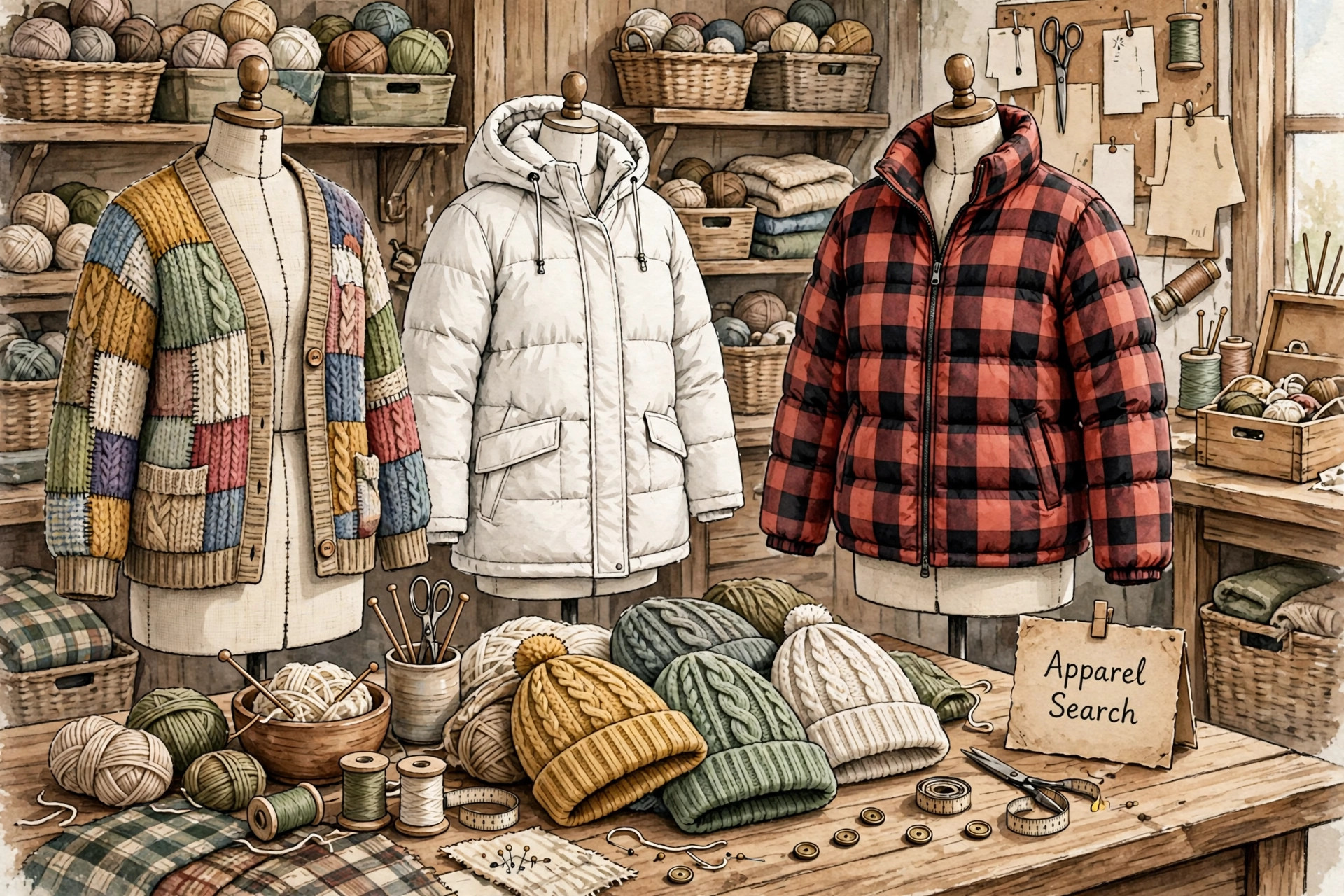
The rebuilt system showed itself at Sochi 2014. The wool for the team's knitwear came from Imperial Stock Ranch in Oregon, run by ranch owner Jeanne Carver. Kraemer Textiles spun about 6,000 pounds of merino yarn; Longview Yarns in North Carolina dyed it; assembly included Ball of Cotton in California — about 40 American vendors in all stood behind the Sochi wardrobe. The opening look's knitted patchwork cardigan became the most talked-about American garment of those Games, and for once the talk behind the talk was about spinning, dyeing and assembly rather than styling.
Parts of that network have endured as institutions of the tenure. Andari Fashion, in El Monte, California, has made the Olympic knit sweaters and beanies since Sochi. Ferrara Manufacturing in New York City has also made uniform pieces since 2014. Better Team USA, in Clifton, New Jersey, made the winter jackets from 2018 onward — a thread this guide picks up again at Milano Cortina 2026, below. The supply chain is the real Ralph Lauren Olympic legacy: not a blazer, but a standing list of American workshops that a Games deadline calls on every two years, and that a home Games in Los Angeles will call on again — Andari Fashion is already laying groundwork for the 2028 ceremonial items.
Technology in the Parade
Heated, Cooled and Adaptive: 2018 to 2022
From PyeongChang onward, the Team USA parade wardrobe doubled as a technology platform. For the cold of the 2018 Winter Games — temperatures during the Games period were reported as low as 11 degrees Fahrenheit, with Siberian winds — the opening-ceremony parkas carried heating built into the garment itself: conductive silver and carbon inks, using DuPont technology, printed in the shape of the American flag on the jacket's interior by Butler Technologies of Butler, Pennsylvania, and powered by a slim battery. The system delivered up to 11 hours of heat on its lowest setting and about 5 hours on high. The jackets were made by Better Team USA of Clifton, New Jersey, and the wardrobe as a whole outfitted more than 700 athletes and staff.
Tokyo 2020 inverted the problem. For the flag bearers' white denim jackets, the company built in RL COOLING, a self-regulating cooling device using technology adapted from computer cooling; after the ceremony, every athlete received the device for their own blazer. The rest of the Tokyo parade uniform was a sustainability specification as much as a design: a navy blazer of United States-grown wool, a striped T-shirt dyed with ECOFAST Pure, using less water, chemicals and energy, a printed scarf, shoes and a mask of verified United States-grown cotton, a belt of Repreve recycled polyester made from plastic bottles, and denim carrying a MIRUM plant-based leather-alternative patch — every item manufactured in the United States.
Beijing 2022 completed the trilogy. The opening anorak used Intelligent Insulation, a fabric that expands or contracts in response to temperature, and polyester fill made from recycled post-consumer plastic bottles ran throughout the kit. The closing look traded technology for Americana: buffalo-plaid puffer jackets over flag intarsia turtlenecks. Heating, cooling, adapting — across three Games the parade garment had become a wearable climate system, each version answering the host city's weather with a different piece of engineering.
The Summer Language
Paris 2024: The Ninth Games
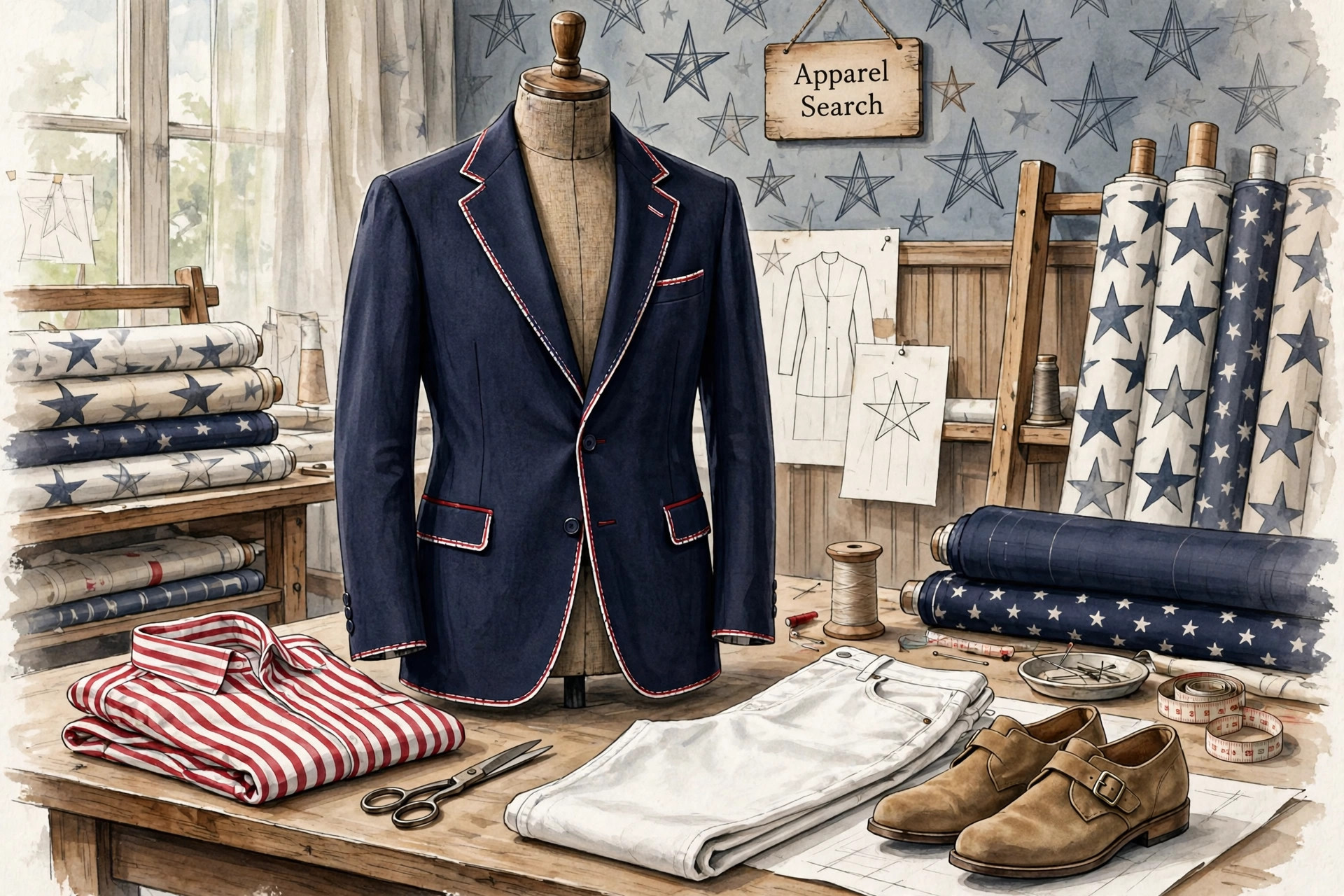
The summer wardrobe settled, over the same years, into a recognisable language. At Rio 2016, the company's fifth Games, the opening look was a navy blazer, white selvedge denim jeans and boat shoes. Paris 2024, the ninth Games, refined the formula: a single-breasted wool blazer with red-and-white tipping, a striped shirt, jeans and suede buck shoes for the opening ceremony on the Seine, and for the closing a moto-style racer jacket with white denim and a Polo shirt from the Create Your Own program. Between ceremonies, the Villagewear collection carried the team's off-duty identity, and the Paris collection launched the brand's first 100 percent recycled cotton Polo shirt.
Read across nine Games, the pattern is a deliberate conservatism of silhouette against a radicalism of construction. The blazer barely changes; everything inside it does — where it is made, what it is made from, what it can do to heat, cool or adapt. That is a defensible reading of what a national uniform should be: the image stays stable enough for a country to recognise itself in it, while the making keeps pace with the times. Critics who find the look predictable and defenders who find it reassuring are describing the same design decision from opposite sides.
The retail mirror reinforces the stability. Because each ceremony wardrobe anchors a public Team USA collection sold from the unveiling day, the parade look has to work twice: as a uniform photographed once, on one night, and as clothing a supporter can wear for years afterwards. A radical silhouette might win a headline; a durable one wins a wardrobe, and the tenure has consistently chosen the wardrobe.
The Tenth Games
Milano Cortina 2026: The Deep Dive Lives Elsewhere
Milano Cortina 2026, Ralph Lauren's tenth consecutive Games dressing Team USA, is treated in full in Apparel Search's dedicated feature, Team USA at Milano Cortina 2026, and this guide deliberately leaves the telling of it there rather than repeat it. One fact from that wardrobe belongs in this tenure story, because it closes a thread opened at Sochi: Better Team USA, in Clifton, New Jersey, made all 232 closing ceremony puffer jackets for 2026, as it has made the team's winter jackets since 2018 — the American supply chain rebuilt after London 2012, still cutting and sewing the team's winter ceremony coats three Games later. For the 2026 looks themselves, the designers' intent and the full uniform-by-uniform account, read the feature.
What Comes Next
Los Angeles 2028: The Eleventh Games, at Home
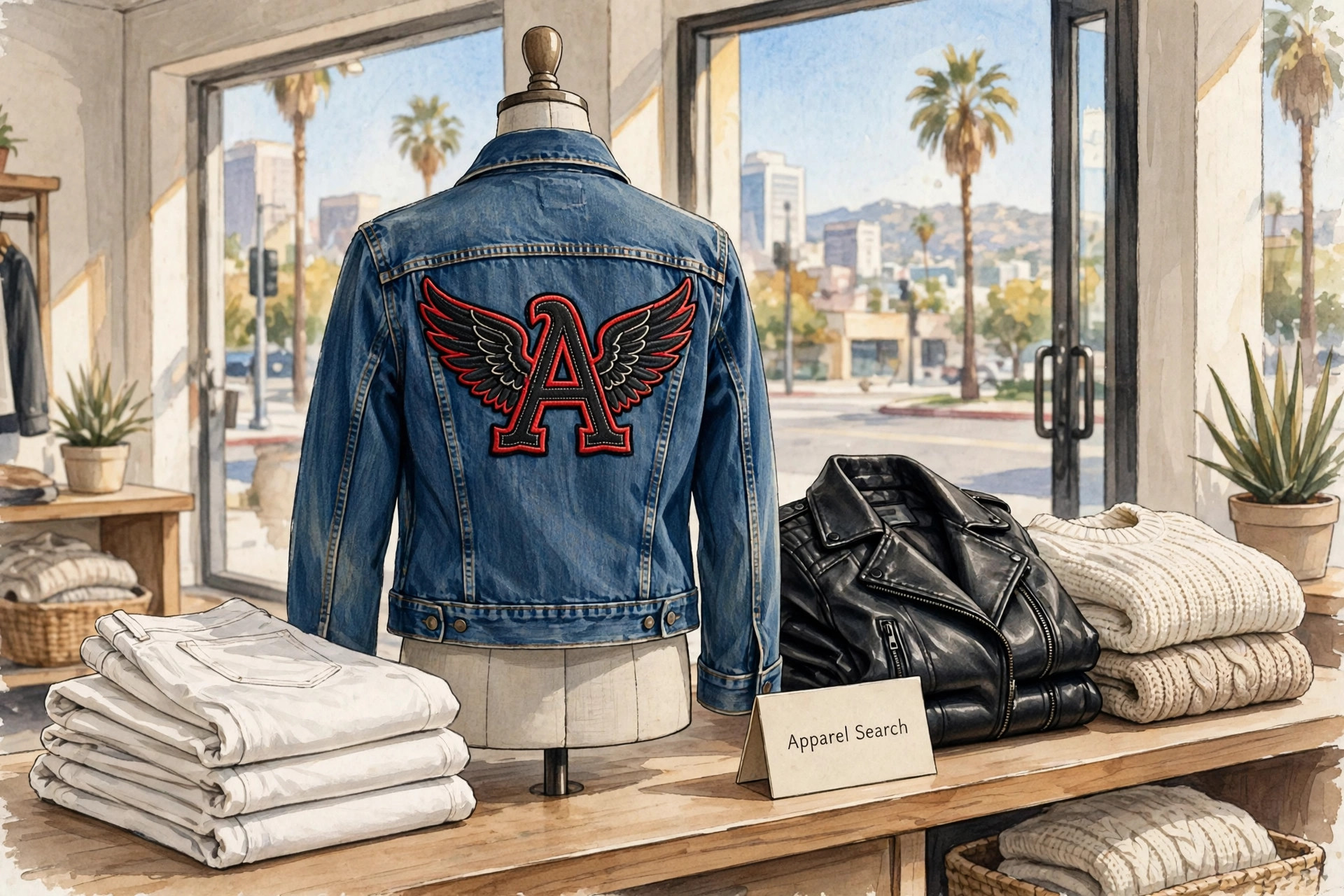
The tenure's next chapter is already dated. The company states it will be dressing the team for the 2028 Summer Olympic and Paralympic Games in Los Angeles — its eleventh consecutive Games — and the first products have already appeared. On July 26, 2023, LA28 and Ralph Lauren launched a custom LA28 emblem: a black and red winged A reimagining the brand's 1990s P-Wing symbol. It was only the second time in Olympic and Paralympic history that a commercial brand had customised a Games emblem. The first product carrying it was an LA28 jean jacket at 298 dollars, sold through the brand's app and its Beverly Hills flagship, with further capsule releases planned in the run-up to the Games.
Given the two-and-a-half-year design cycle, the LA28 wardrobe is in development now, and its making already has a local address: Andari Fashion, the El Monte knitwear factory in Los Angeles County that has made the team's Olympic sweaters and beanies since Sochi, is laying groundwork for the 2028 ceremonial items. A home Games, a supply chain rebuilt to be American, and a knitwear factory twenty miles from the stadium — whatever the eleventh wardrobe looks like, its story is positioned to be the fullest expression of the system London 2012 forced into being. Our LA 2028 guide in this section follows the build-up and the open questions it raises.
Common Questions
Questions & Answers
How long has Ralph Lauren dressed Team USA?
Ralph Lauren has been an official outfitter of the United States Olympic and Paralympic Teams since Beijing 2008, designing the opening and closing ceremony parade outfits and Villagewear as the exclusive Official Parade Outfitter. Paris 2024 was the company's ninth consecutive Games, Milano Cortina 2026 its tenth, and Los Angeles 2028 will be its eleventh, a relationship LA28 describes as nearly 20 years by 2028.
What happened after the London 2012 made-in-China controversy?
The London 2012 uniforms were made in China, and the discovery set off a political firestorm. The Team USA Made In America Act of 2012, introduced by then-Senator Robert Menendez, would have required United States Olympic Committee uniforms to be sewn or assembled in the United States. The bill did not become law, but Ralph Lauren followed its intent and rebuilt a United States supply chain, which by Sochi 2014 involved about 40 American vendors.
What technology has Ralph Lauren put in Team USA parade uniforms?
For PyeongChang 2018 the opening parkas carried printed conductive silver and carbon ink heating, powered by a slim battery for up to 11 hours of heat on the lowest setting. For Tokyo 2020 the flag bearers' jackets carried RL COOLING, a self-regulating cooling device adapted from computer cooling technology. For Beijing 2022 the opening anorak used Intelligent Insulation, a fabric that expands or contracts in response to temperature.
Olympic Fashion
The tenure in its section: the hub, the Paris Games, the Winter Games story, the Los Angeles Games ahead — and the 2026 deep dive.
Search Apparel Search