Is It OK to Tuck a Tie Into Your Pants?
As fashion, almost never. As a practical, uniform tuck, it has its place — if you do it on purpose.
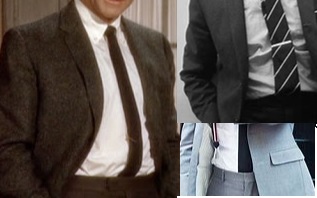
Typically, the answer is no — tucking a tie into your pants is not a recommended style move, and worn openly with a dress shirt it usually looks like an accident rather than a decision. But the honest answer has exceptions. A deliberate, functional tuck at the waistband belongs to uniform and working dress, where keeping the tie flat, still, and out of the way matters more than displaying it, and a tie hidden under a long sweater or jacket is a different case again.
This page separates those cases: when the waistband tuck reads as neat and intentional, when it simply reads as a mistake, and why confidence is the deciding ingredient if you wear it visibly at all.
More Tie Questions
The Standard Answer: Usually No
A necktie is designed to hang: knotted at the throat, draped down the chest, and finished with its tip at the belt line. That hanging line is part of how a suit or a shirt-and-tie outfit is supposed to look, and it is also how tie length is judged. Disappearing the end into your trousers interrupts the line, shortens the tie visually, and draws the eye straight to your waistband — the one place the outfit was never meant to feature.
There is also a practical styling cost. The waistband is a working part of your clothing that flexes as you sit, stand, and move, so a tucked tie rarely stays put the way its wearer hopes. It works loose, bunches, or emerges at an angle, and each small failure makes the arrangement look less like a choice and more like something that happened to you on the way to the meeting.
The Functional Exception: Uniform and Working Dress
The tuck earns its keep where a loose tie is a genuine problem. In uniform-style dressing — service roles, security, hospitality, and other jobs where a tie is worn all day around food, machinery, documents, or the public — a free-swinging tie gets in the way, dips where it should not, and looks untidy within the hour. Tucking the blade into the waistband of the trousers holds it flat against the body, keeps it clean, and produces the squared-away, uniform neatness those dress codes are aiming for.
Read in that context, the tuck does not look like a fashion error; it looks like discipline, in the same family as the military habit of keeping every element of dress flat, secured, and inspection-ready. The key is consistency: the uniform tuck works because the whole outfit is functional and tidy, the shirt is properly fitted, and the tie sits centered and flat. The same tuck under a blazer at a wedding borrows none of that context and reads entirely differently.
When Nobody Can See Your Waistline
There is one purely private version of the tuck that raises no style question at all. If you are wearing a long sweater or jacket so that no one can see your waistline, it is possibly fine to keep your tie tucked into your pants underneath. It can help keep the necktie stable and laying flat instead of swinging, twisting, or working its way sideways under the layer where you cannot easily fix it.
Think of that as storage rather than styling: the tie is secured, protected from catching and creasing, and ready to present correctly the moment the outer layer comes off. It says nothing about your taste because it is not part of the visible outfit. Many small dressing decisions are like this — sensible mechanics hidden inside a look, judged only by whether the visible result stays neat.
Confidence Decides Whether It Works
Style and dressing techniques do change from time to time, and if the waistband tuck happens to be the style in a given season, a blanket prohibition would be foolish. Trends have revived stranger details than this one. But a visible tuck worn as fashion only succeeds when it is unmistakably deliberate: the tie is the right length to sit flat, the trousers sit at a natural waist, and the rest of the outfit is sharp enough that nobody mistakes the tuck for carelessness.
So the working rule is simple: do not tuck your tie into your pants unless you are confident in doing so. If your reason is functional — a uniform, a working day, a hidden layer — tuck away without a second thought. If your reason is fashion, wear it like you mean it, check it when you sit and stand, and be ready for it to be the first thing people notice about your outfit.
Photos
Common Questions
Can tucking a tie into my pants fix a tie that is too long?
It hides the extra length, but it is a workaround rather than a fix. A tie that finishes far past the belt line usually just needs retying with a different starting position for the wide blade, or a knot that uses more length. If you tuck a long tie away, the waistband bulk and the interrupted line tend to look like a repair. Retie first; reserve the tuck for functional, uniform-style wear.
Why do uniform dress codes allow the tie tuck?
Because in uniform and service settings the priorities are neatness, safety, and staying tidy through a full working day. A loose tie swings, dips into food or equipment, and looks disordered quickly. Tucking the blade into the trousers' waistband pins it flat against the body, keeps it clean, and gives the squared-away, consistent appearance a uniform is meant to project. The same logic explains other secured, flat-lying details in disciplined dress.
Will tucking my tie into my waistband damage the tie?
Occasional, gentle tucking will not harm most ties, but the waistband is a high-friction spot. Repeatedly forcing a tie under a belt or tight waistband can crease the blade, wear the fabric at the fold, and distort the tie's shape over time. Tuck smoothly without cramming, avoid catching silk under a belt buckle, and untuck and hang the tie after wear so any crease can relax out.
If You Have More Questions About Fashion
You may want to try these sections here on Apparel Search: