Is It OK to Tuck a Tie Into Your Shirt?
The between-the-buttons tuck: part practical trick, part deliberate style detail.
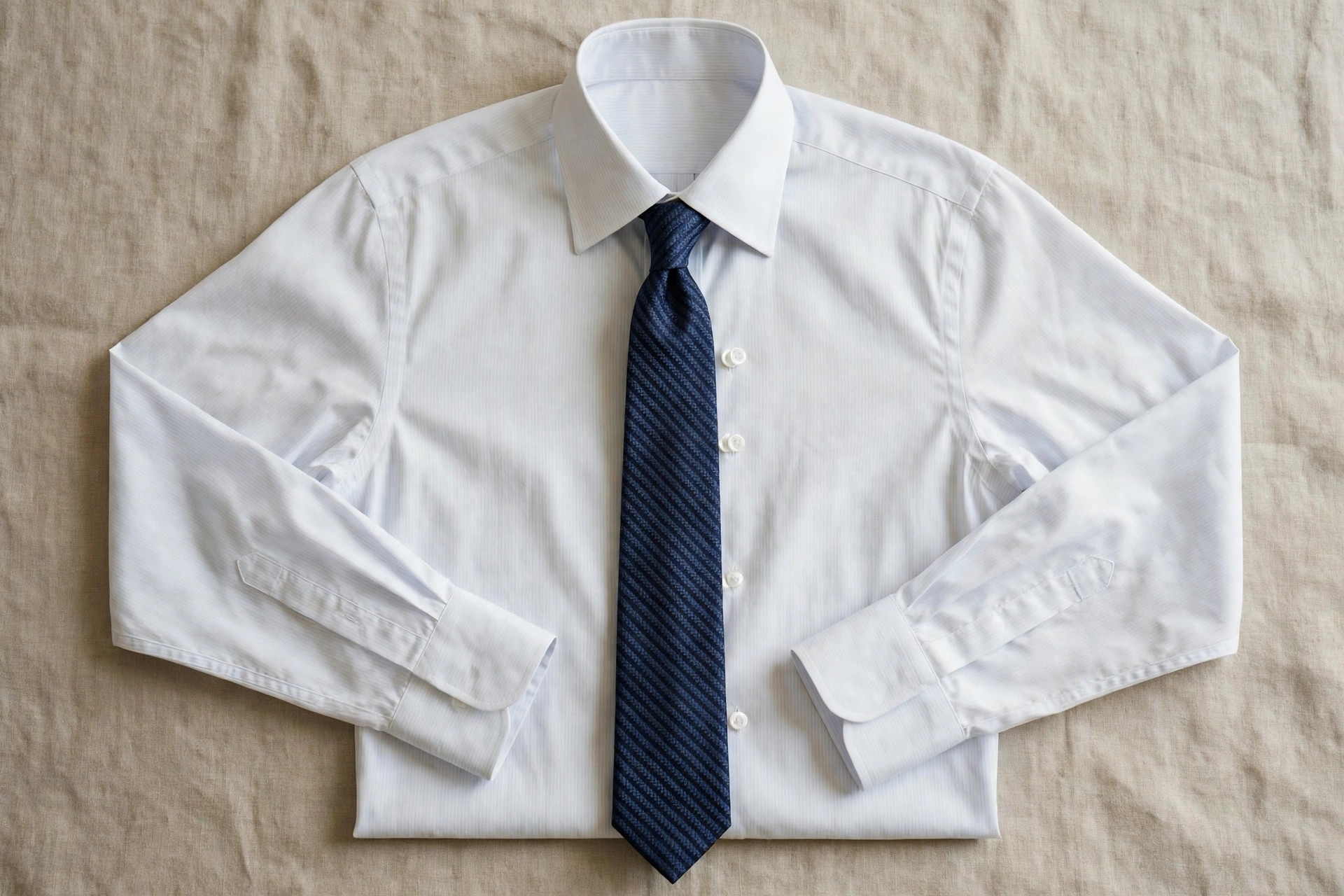
The first instinct is to say no — and then you notice how many men carry the look off completely. Tucking your tie into your shirt means slipping the blade into the shirt front, through the placket between two buttons, so the tie lies flat against your chest instead of hanging free. Done casually it can look like a wardrobe malfunction; done deliberately it keeps the tie clean, still, and out of harm's way, and plenty of trendy wearers look very sharp with it.
This page looks at how the shirt tuck actually works, the everyday situations where it earns its place, and the confidence it takes to make the look read as a choice instead of an oversight.
More Tie Questions
How the Shirt Tuck Actually Works
Unlike a hanging tie, which is secured only at the knot and by the small keeper loop at its back, a shirt-tucked tie is anchored along the chest. You open the shirt front slightly at a button below the chest, slide the blade inside against your undershirt or chest, and let the shirt close over it. The visible result is a tie that emerges from the knot, runs a short distance down the placket, and then vanishes neatly into the shirt — flat, centered, and unable to swing.
Placement is the craft of it. Tuck too high and barely any tie shows, which looks like the tie has been amputated; tuck at a natural point partway down the buttons and the proportions stay believable. The blade should sit centered on the placket, not dragged to one side, and the knot should still sit properly at the collar. Get those details right and the tuck looks engineered; get them wrong and it looks like dressing in the dark.
The Practical Case: Meals, Workshops and Workdays
The strongest argument for the shirt tuck has nothing to do with fashion. A free tie is a hazard and a nuisance in half the situations of an ordinary day: it leans toward soup and coffee, trails across desks and paperwork, swings toward machinery and tools, and generally behaves like a silk pendulum aimed at whatever you are trying to keep clean. Tucking the blade into the shirt front removes the problem completely for the length of a meal, a task, or a shift.
That is why the look has always had a working life — among people who wear ties in kitchens, workshops, studios, clinics, and shop floors, where the tie is required dress but the work is physical. It is a reversible, damage-free solution: no clips, no pins, no cutting the tie short, and at the end of the task the blade comes back out and hangs as it should. Practicality this clean tends to outlast any fashion verdict passed on it.
How It Reads Stylistically
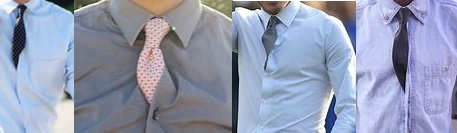
Visually, the shirt tuck shortens the tie's long vertical line and replaces it with a tidy, almost vintage detail at the chest. It carries echoes of older workwear and uniform dressing, which is why it pairs naturally with casual shirts, knitwear, and rolled sleeves, and why it can look studied and sharp on a wearer who clearly chose it. The same tuck under a formal suit, at a formal occasion, breaks the expected line of the outfit and is much harder to defend.
Context and consistency decide the reading. A tucked tie alongside otherwise relaxed, deliberate styling looks like a signature; a tucked tie alongside a crooked knot and an untucked shirt looks like surrender. The detail is small but conspicuous — people notice a tie disappearing into a shirt — so it functions like any strong accessory: it should look like the most intentional thing in the outfit, never the least.
Making the Call
In the end, you will have to make your own decision, because reasonable dressers land on both sides of this question. If your days involve food, tools, children, patients, or machinery, the practical case is strong enough to need no one's permission. If you are wearing the tuck purely as style, keep the occasion informal, keep the placement neat and centered, and untuck without embarrassment the moment the setting turns formal.
And if you go with this look, be confident, and carry your sense of style with pride. Hesitation is what makes the shirt tuck fail — the constant checking, smoothing, and half-explaining. Worn as if it were simply how you wear a tie, it reads as exactly that: a personal convention, practical and self-assured. Fashion forgives almost any detail that its wearer has clearly decided on, and this one is no exception.
Photos
Common Questions
Between which buttons should I tuck my tie?
Partway down the shirt front, at a placket opening below the chest, is the natural spot — low enough that a believable length of tie still shows below the knot, high enough that the blade lies flat against the chest without straining a button. Avoid the top openings near the collar, which leave almost no tie visible, and avoid forcing the blade through a gap that puckers the shirt. The tuck should look smooth and centered, never stuffed.
Will tucking my tie into my shirt wrinkle or damage it?
A gentle tuck for a few hours does little harm, but the placket presses a fold into the blade, and repeated tucking at the same point can set a crease, especially in silk. Slide the tie in smoothly rather than scrunching it, vary the tuck point if you do it daily, and hang the tie untucked after wear so the fabric relaxes. For a tie you treasure, a tie bar achieves similar control with no fold at all.
Is the shirt tuck appropriate for formal occasions?
Generally, no. Formal dress expects the tie's full hanging line, tip finishing at the belt, as part of the silhouette of a suit. A tie disappearing into the shirt front reads as a working or casual detail, however neatly done, and it will draw attention at exactly the events where attention should be elsewhere. Keep the shirt tuck for meals, workdays, and informal settings, and let the tie hang in full for weddings, ceremonies, and formal business.
If You Have More Questions About Fashion
You may want to try these sections here on Apparel Search: