Cloak Stores
Clothing stores selling long cloaks
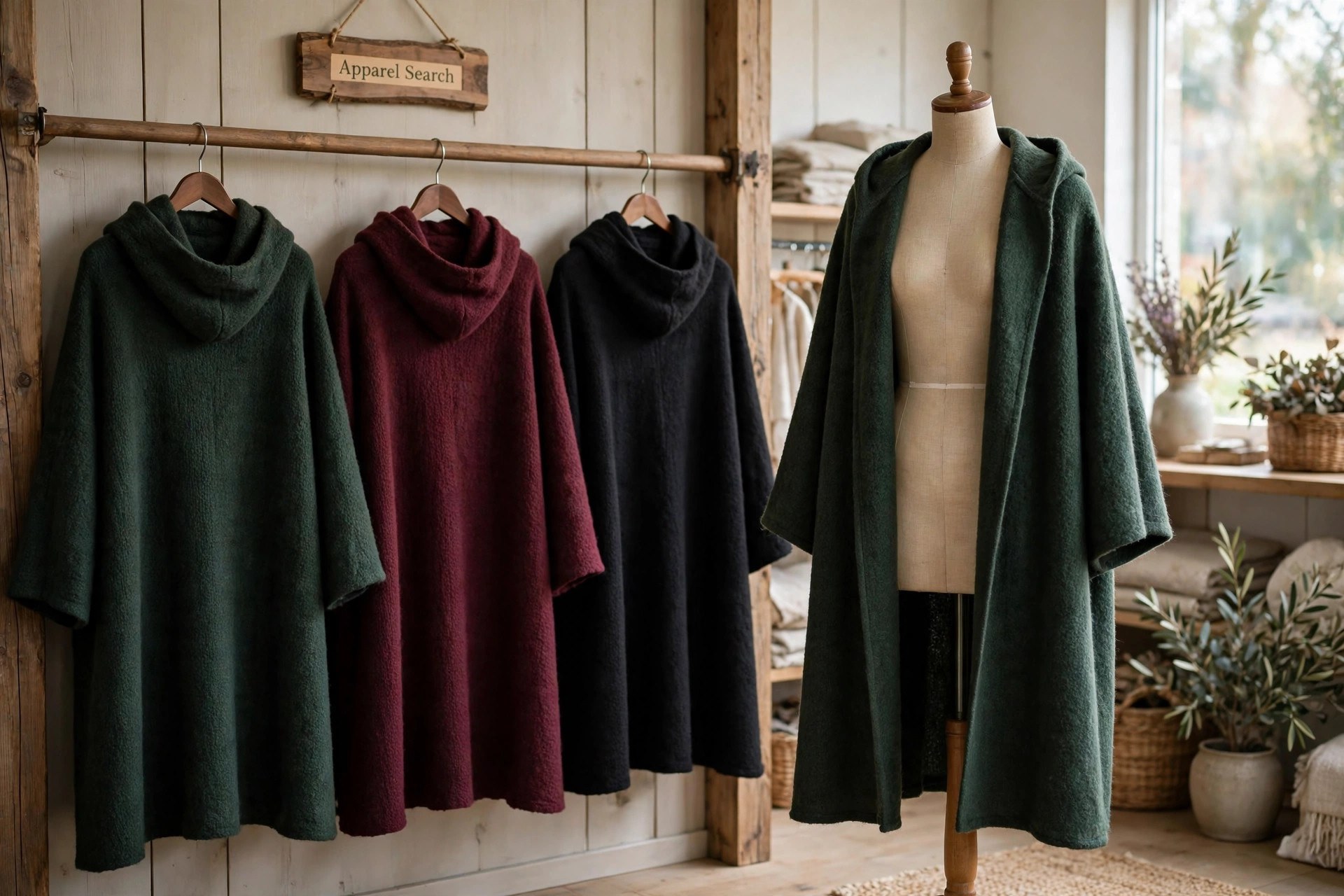
A cloak is a long, loose, sleeveless outer garment, usually ankle length and often hooded, worn over clothing for warmth, weather protection and ceremony. It is one of the oldest garments in continuous use, and its modern retail market divides into handcrafted wool cloaks worn as real outerwear, historical and reenactment cloaks, and costume cloaks. The retailer listed here, Bako Capes, handcrafts cloaks alongside its capes for women and men, in a European cashmere and wool blend, made with attention to the smallest detail and sold as romantic, practical and comfortable garments that can be worn everywhere, over anything, at any time. That everyday claim is the handcrafted end of the market speaking: a heavy wool cloak is a genuine cold-weather garment, warmer than many coats because it wraps the whole body and traps air in its folds. The cloak definition linked from this page gives the garment's terminology, and the cape and poncho pages cover its shorter and simpler relatives.
Cloak Stores - Clothing Stores Selling Cloaks
Fashion Accessories Clothing Retail Stores Women's Clothing Stores Men's Clothing Stores Children's Clothing Stores Apparel Shopper Fashion Stores by Category Cloak Definition Fashion News Fashion Jobs
 Bako Capes
For every woman and man... executive, housewife, student,
bride-to-be, expectant mother... Their Capes and Cloaks are romantic,
practical, and comfortable. They can be worn everywhere, over anything
and at any time. Their capes are made with a cashmere/wool blend from
Europe. Quality in fabric and work is very important to us. Every cape
and cloak is hand crafted with attention to the smallest detail.
- Capes
- Cloaks
You may want to also check the following: Fashion Accessory for Women on eBay
Do you know the difference between a Cloak and a Cape
The Cloak in History and Today
For most of recorded history the cloak was standard outerwear across Europe and beyond: a rectangle or shaped length of heavy cloth, fastened at the neck or shoulder, serving as coat, rain cover and blanket in one. Coats with sleeves took over daily wear as tailoring spread, and the cloak retreated to ceremony, theater and traditional dress, where it never disappeared. Its modern revival rides two currents at once: the heritage and craft market, where a handmade wool cloak is bought like a good coat, and the costume and reenactment market, which keeps cloak patterns in constant production.
Choosing Length, Cloth and Closure
Full-length cloaks give the full effect and the full warmth, and they need a wearer tall enough or a hem allowance to keep the cloth off wet ground. Three-quarter cloaks trade some drama for practicality on stairs, in cars and on public transport. Wool is the traditional cloth and still the best for weather; wool blends add durability and lower the price; costume cloaks in satin, velvet and synthetics are made for appearance over a single evening. The closure is the working part, clasps for ceremony, frogs and ties for period accuracy, and a hidden hook for a clean modern line.
Wearing and Keeping a Cloak
A cloak is worn over the day's clothing, so it pairs naturally with dresses, suits and knitwear, and it asks for gloves in cold weather since the arms sit inside the wrap. In rain, a wool cloak sheds a shower and dries by hanging in moving air. Storage is a coat's routine: a strong shaped hanger, room to hang straight, and protection from moths for wool. Treated that way, a handcrafted cloak is a decades-long garment, which is the whole proposition of the makers listed here.
Common Questions
What is the difference between a cloak and a cape?
Length, coverage and usually a hood. A cloak is long, typically ankle length, wraps the whole body and often has a hood, and historically served as a complete weather garment, even as bedding for travelers. A cape is shorter, waist to knee, leaves the arms freer, and works as a topper over an outfit. Bako Capes, the retailer on this page, makes both in the same cashmere and wool blend, which is typical of handcrafted makers: the pattern changes, the cloth and the craft standard stay the same.
Are cloaks still worn as real clothing?
Yes, in more settings than most people expect. Heavy wool cloaks are worn as winter outerwear by people who value their warmth and freedom of movement, by historical reenactors and living-history interpreters as period dress, at weddings as bridal and bridesmaid wraps, by clergy and choirs, and across fantasy, medieval fair and costume communities as their standard outer garment. A cloak is also practical travel wear in wet climates, since a water-shedding wool cloak covers the wearer and whatever they carry.
What should a buyer check in a wool cloak?
Cloth weight, closure and hood. A winter cloak needs a heavy, tightly woven wool or wool blend, light cloth hangs well but does not warm. The neck closure takes the garment's whole weight, so it should be a strong clasp, frog or tie, reinforced where it meets the cloth. A hood should be deep enough to cover the head without pulling the cloak forward. Length is measured against the wearer's height: ankle length on the listing means the hem should clear the ground when worn.