Pareo Stores
Stores selling pareos and sarongs
A pareo is the Tahitian wrap garment, a length of brightly printed cloth worn by nearly all Tahitian men, women and children, tied as skirt, dress, wrap or cover in ways limited only by the imagination. Pareo.com, listed here, presents pareos as perhaps the single most apparent folk art in French Polynesia: a symbol of the islands, extremely cool and comfortable to wear, whose colorful designs are their strongest feature, worn with a Tahitian gardenia behind the ear, a puka shell anklet and monoi oil in the site's own evocation. BB Foulards of Italy, hand-making shawls and scarves in natural fibers since 1948, appears on this page for its wrap range, linking the island garment to the European shawl tradition it resembles in use. The sarong retailer directory linked from the listings is the pareo's twin category: pareo and sarong name the same family of wrap garments from Tahitian and Southeast Asian traditions respectively, and beachwear retailers stock them side by side as swim cover-ups, skirts and dresses.
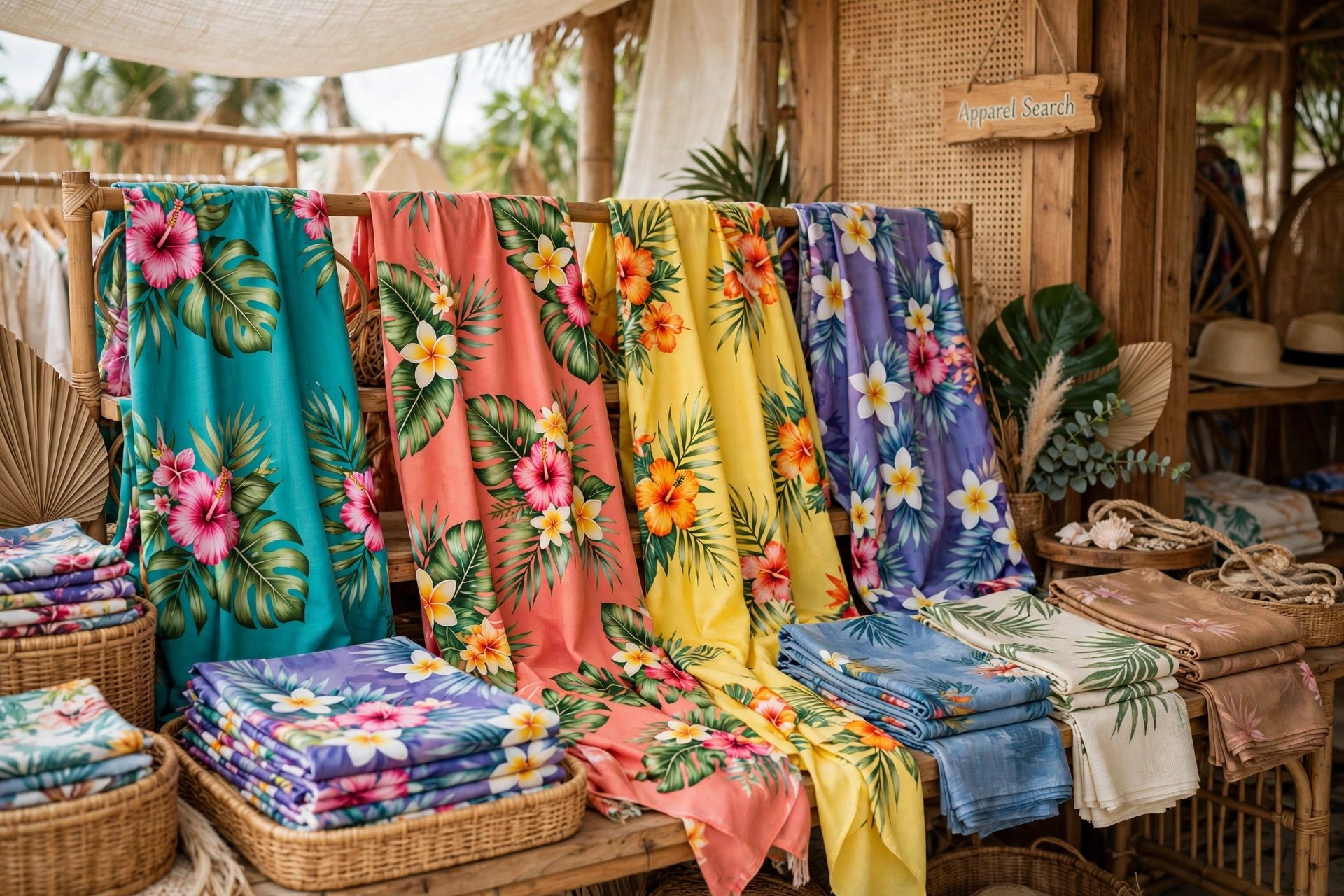
Pareo Stores - Clothing Stores Selling Pareos
Fashion Accessories Clothing Retail Stores Women's Clothing Stores Men's Clothing Stores Children's Clothing Stores Apparel Shopper Fashion Stores by Category Fashion News Fashion Jobs
 BB Foulards
(Italy) their production, started up in 1948, is
specialized in the production of shawls and scarves with natural fibers,
wholly hand made with knotted fringes following the old traditions of
the Italian craftsmen. The accessories trendy or classic, are all made
according to the specific designs and color, showing new textiles that
are shown in the more important Fashion Exhibitions. A production that
cares for the smallest detail and makes their products very interesting
and attractive. They also give the customers the choice among a variety
of color, designs, subjects, sizes and the opportunity of personalizing
the different articles with Logos or particular models.
They always try to meet the requirements of
their customers.
- Gloves
- Hats
- Pareos
- Shawls
- Scarves
- Ties
- Foulards
- Stoles
Pareo.com :
Pareos are simple garments worn by nearly all Tahitian men, women and
children. How you wear them is limited only by the imagination. Besides
being the preferred garment of many, pareos are perhaps the single most
apparent folk art in French Polynesia. Find out how it originated and
became so popular in Tahiti. The pareo is a symbol of the Islands. The
colorful designs that ornament the pareo are perhaps the strongest
feature. In addition to being extremely cool and comfortable to wear,
they are bright and attractive. Tie one of our pareos on, place a
Tahitian gardenia behind the ear, a puka shell anklet and a gentle rub
of monoi oil, their Black Pearl Girls is ready
to wow 'em. Get your pareo today!
- Pareos
- Sarongs
If you are interested in Pareos, we suggest you also visit the Sarong Retailer Directory.
You may want to also check the Fashion Accessory for Women on eBay.
The Pareo Beyond the Beach
Travelers adopt the pareo because one rectangle does the work of five garments: skirt, dress, shawl, towel in a pinch, picnic cloth, curtain and bag lining. That utility is older than tourism: in French Polynesia the pareo is everyday dress for men, women and children, not a beach novelty, and its prints carry cultural meaning there as folk art. Retail ranges aimed at resorts add pareo clips and coconut buckles that hold the ties, and matching pareo-and-top sets that turn the wrap into a complete outfit.
Care is beach care: rinse salt and chlorine, dry in shade to protect the prints, and store folded. A cotton pareo softens with washing and lasts for years of summers, which is why travelers so often buy a second one at the destination and bring the first one home as the souvenir that still gets used.
Common Questions
What is the difference between a pareo and a sarong?
Origin and name more than form. The pareo is the Tahitian and French Polynesian wrap, the sarong its Southeast Asian counterpart, and both are lengths of printed cloth tied around the waist, chest or shoulders. Retailers use the words almost interchangeably, and a store's pareos and sarongs may differ only in print style, island florals for pareos, batik traditions for sarongs. This directory keeps a page for each and cross-links them, since shoppers search by both names.
How is a pareo worn?
By tying, in ways its sellers describe as limited only by the imagination: as a long or short skirt knotted at the hip, as a dress tied behind the neck or above the chest, as a shawl over the shoulders, and as a swim cover-up over a bathing suit. The cloth's size decides the range, a full-length pareo dresses, a small one skirts or covers. Fabric matters: light cotton and rayon pareos dry fast at the beach and pack to nothing, which is their travel appeal.
What prints do pareos carry?
Island designs first: hibiscus and other tropical flowers, ocean and palm motifs, and the bold color combinations Pareo.com calls the pareo's strongest feature. The print is the garment, since the cloth is otherwise a plain rectangle, so pareo buying is print buying, chosen against swimwear and skin tone and the brightness of the setting. European makers like BB Foulards bring a scarf-maker's print discipline to the same form in natural fibers, at a different price and hand.