Apparel Search»Rugby Kits»British & Irish Lions
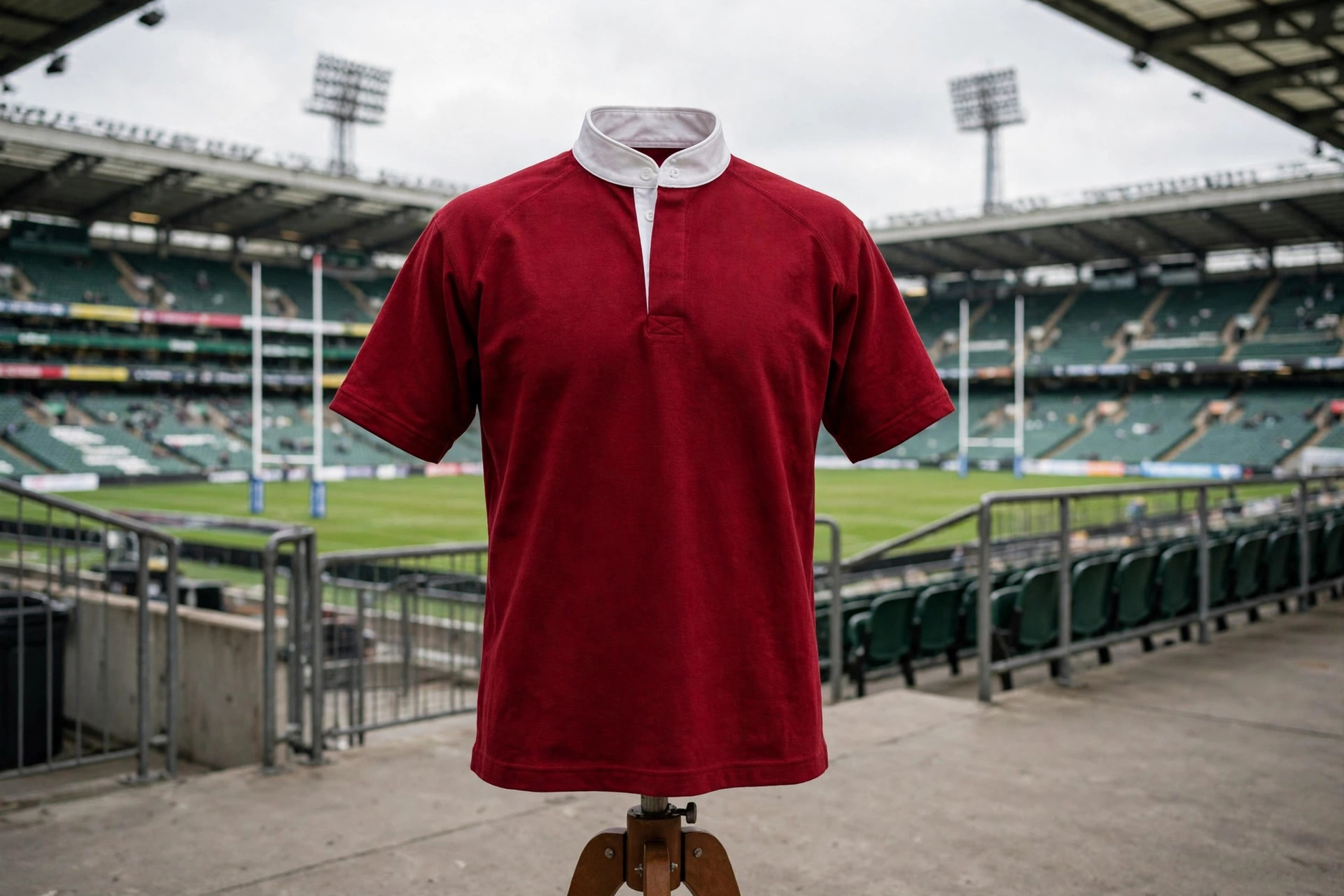
Illustrative image created for this guide by Apparel Search designers, closely following the team's current kit — team logos, sponsor logos and manufacturer marks have been removed, so small details may differ from the official shirt.
British & Irish Lions Rugby Kit
The Lions jersey is the rarest garment in this section: it exists only in tour years, it is worn by a team assembled from four rival nations, and a player who earns one keeps it for life. The British & Irish Lions have worn red since 1950 — red jersey, white shorts, and socks that borrow the other three nations' colours — and every four years the design is remade for a single tour of Australia, New Zealand or South Africa. This guide covers the red and the combined crest, Canterbury's relationship with the Lions since 1959, the 2025 Australia tour jersey with its supporter-chosen grandad collar, and how to buy a shirt that is only ever on sale for one season in four.
Red, and the Four Emblems: Colours and Identity
The first combined British Isles tourists of 1888 wore what they could assemble; red, white and blue hoops served the early tours. Red became the jersey in 1950, chosen so the tourists would not clash with any host — New Zealand's black, South Africa's green, Australia's gold all sit clear of it — and red has been the Lions colour ever since: red jersey, white shorts, and socks in dark blue with green and blue turnover tops, a quiet census of the other three home nations' colours carried into every match.
The crest is the kit's constitution in a single badge: the rose of England, the shamrock of Ireland, the thistle of Scotland and the feathers of Wales combined in one shield, with 'Since 1888' beneath. On the 2025 jersey Canterbury wove the four emblems into the fabric itself as a tonal jacquard pattern across the red — the unity of the four nations rendered as a textile, visible only at close range, which supporters judged exactly right.
The Maker: Canterbury and the Lions Since 1959
Canterbury's Lions story begins with an act of rescue: on the 1959 tour of New Zealand, the company's kit replaced a spoiled strip mid-tour, and the relationship has renewed itself ever since. In the modern era Canterbury has made the jerseys for the 2017 tour of New Zealand, the 2021 tour of South Africa and the 2025 tour of Australia, and its design process for the Lions is unusually consultative — former captain Sam Warburton advised on the 2025 shirt, and supporter feedback shaped its most remarked feature.
That feature is the collar. The 2025 Australia tour jersey (worn June-August 2025) restored a traditional grandad collar to the playing shirt because supporters asked for one — the clearest proof in the modern game that the collar tradition described in our rugby kits hub is alive. The shirt is a deeper shade of red than its predecessors, carries the four-emblem jacquard, and, in a first for a Lions jersey, an NFC tag in the hem connecting the wearer to the Lions' digital clubhouse. The tour it dressed ended in a 2-1 series win over the Wallabies, sealed in Melbourne.
Iconic Lions Kits
The 1971 jersey — plain red cotton, worn in New Zealand by the only Lions side to win a series there — is the founding classic, and the 1974 shirt of the unbeaten South Africa tour stands with it. Both were garments of the cotton century: long sleeves, proper collars, the combined crest embroidered. Heritage reissues of the 1970s design are the permanent core of the Lions classic range.
Of the modern shirts, the 1997 South Africa tour jersey carries the strongest story — the series win that defined the early professional era — and the 2013 Australia shirt, the previous winning tour Down Under, pairs naturally with the 2025 edition. The 2005 jersey is remembered more sadly, and the 2021 shirt, worn in empty South African stadiums, is the curiosity of the set. A Lions collection is built one tour at a time, four years apart, which is precisely its pleasure: each shirt is a closed edition tied to a single summer.
Buying a Lions Jersey
Canterbury sells the Lions range in test (player), pro and replica versions, plus the classic cotton line, through the Lions' official shop, Canterbury channels and authorised retailers — during the tour window. That window is the essential fact of Lions buying: the 2025 range was a 2024-25 story, and once a tour ends, the shirt moves to the secondary market until the 2029 New Zealand tour produces the next one. If you want the current tour's jersey at retail price, buy it in its season.
Fit follows the pattern of our buying guide: the test version is a close athletic garment, the replica a supporter's cut, the classic a heavy cotton shirt with the grandad collar's ancestor — the full traditional collar. For most supporters the replica of the current tour, or the classic of a tour they remember, is the right purchase; the 2025 shirt's combination of deep red, jacquard and grandad collar makes it the strongest Lions design of the modern era to start with.
Shop British & Irish Lions Jerseys
Look for the 2025 Australia tour jersey in test, pro and replica versions while tour stock lasts, and classic cotton editions of the great tour shirts. Official kit is sold through the Lions shop, Canterbury and authorised sports retailers. Use the search below to compare current Lions jerseys, sizes and prices before you buy.
Shop British & Irish Lions jerseys on AmazonAs an Amazon Associate, Apparel Search earns from qualifying purchases made through this link. Prices and availability are set by Amazon and its sellers.
Common Questions
Who makes the Lions' rugby kit?
Canterbury made the jerseys for the 2017, 2021 and 2025 tours, continuing a relationship that began on the 1959 tour of New Zealand. The 2025 shirt added a grandad collar at supporters' request and an NFC tag in the hem.
Why do the Lions wear red?
Red was adopted in 1950 so the combined side would not clash with any host nation's colours — black, green or gold. The kit is completed by white shorts and dark socks with green and blue turnovers, carrying the other home nations' colours.
How often is there a new Lions jersey?
Every four years, for each tour — Australia, New Zealand and South Africa in rotation. The 2025 Australia jersey is the current edition; the next will be made for the 2029 tour of New Zealand, which makes each tour shirt a closed edition.
Related Reading
Search Apparel Search