Apparel Search»Rugby Kits»England
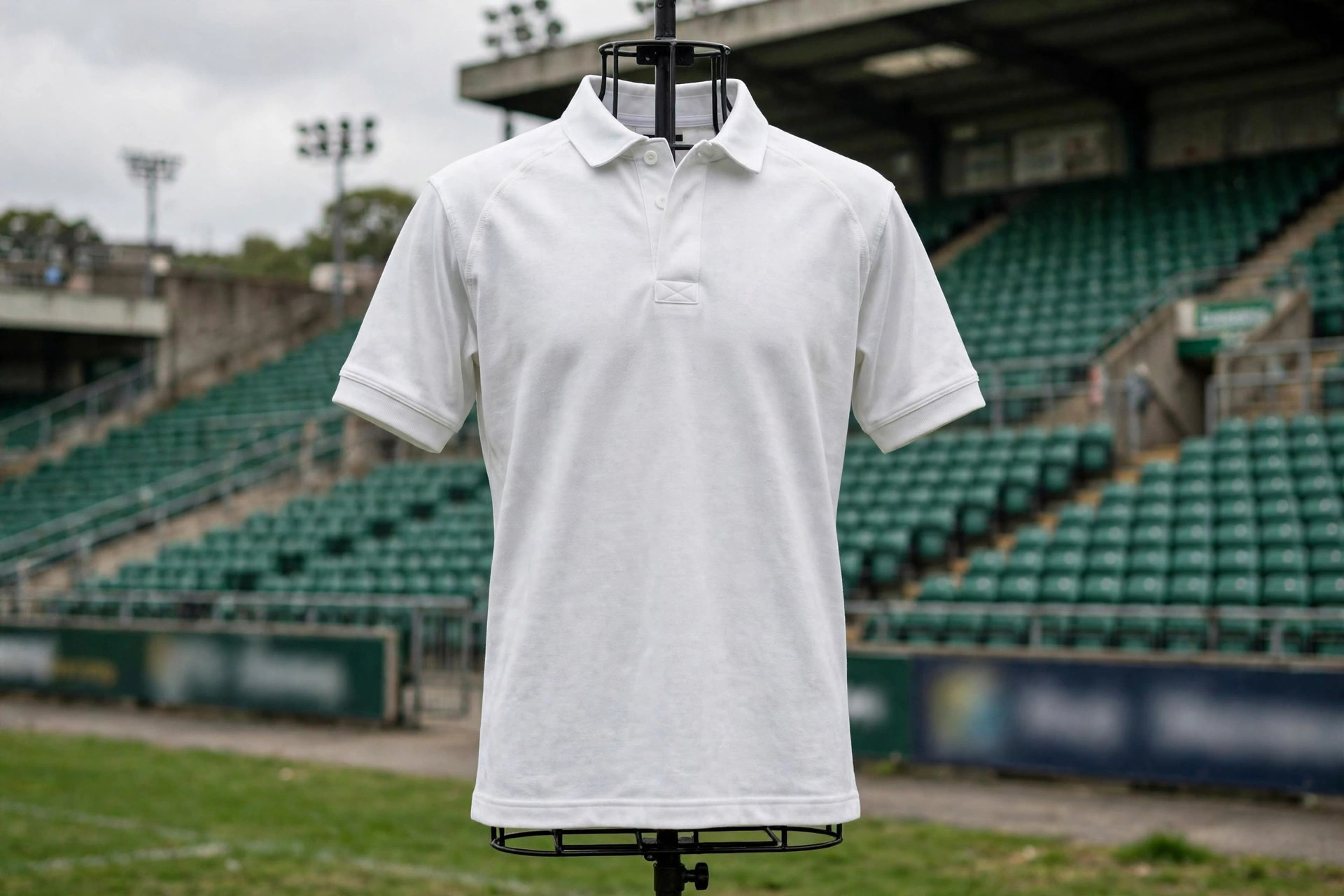
Illustrative image created for this guide by Apparel Search designers, closely following the team's current kit — team logos, sponsor logos and manufacturer marks have been removed, so small details may differ from the official shirt.
England Rugby Kit
England's rugby kit is the plainest in the world game, and deliberately so: a white shirt, navy shorts, white socks, and a single red rose on the chest. Where other teams wear their colours in hoops, panels and prints, England wear an absence of colour that has become a colour in itself — the white shirt is recognised from the back row of any stadium on earth. This guide covers the shirt and the rose, the makers who have dressed England from the amateur era to Castore's arrival in 2025, the 2003 jersey that sits at the top of the collectors' list, and what to check when buying the current 2025-26 shirt.
White and the Rose: Colours and Identity
England wore white in the first international in 1871 and have never seriously considered anything else. The shirt's companions settled alongside it: navy shorts, white socks, and the red rose — the emblem of the Rugby Football Union since the game's earliest years, worn on the left chest in red embroidery or print. The effect is a kit with almost nothing to redesign, which is why England kit launches argue about collars, fits and fabrics rather than colours.
The white is not quite unbroken. Change kits, required when England meet another white-shirted side, have wandered through the colour chart — a deep purple in the late 2000s, anthracite and black editions in the 2010s, red in others — and each experiment is debated like a constitutional change. The home shirt, though, returns every cycle to the same brief: white, clean, with the rose. The long partnership with O2, whose logo has sat on the front of the shirt since the mid-1990s and was renewed through to 2031, is the one constant decoration.
The Maker: Canterbury, Umbro, Now Castore
England's maker history mirrors the game's economics. Canterbury dressed England through much of the modern era's first half, including the 2003 World Cup win; Nike held the contract in the early 2010s; Umbro — the historic English sportswear name — returned in 2020. In 2025 the RFU moved to Castore, the Manchester-based challenger brand, which now supplies the men's, women's and age-grade teams' playing kit, training wear and travel wardrobe.
The first Castore England kits, for the 2025-26 season, keep the home brief exactly as tradition demands — a clean white home shirt with the rose and the O2 front sponsorship — in Castore's performance construction. One detail of the cycle ahead is already public: at the 2027 World Cup in Australia, tournament rules will strip the shirt of its sponsors, so England's World Cup jersey will be plainer even than usual — white, the rose, and nothing else. For many supporters that sponsor-free edition will be the one to own.
Iconic England Kits
The 2003 World Cup jersey is England's essential shirt: the figure-hugging white design worn through the tournament in Australia and in the final against the Wallabies, when England became the first northern-hemisphere side to lift the Webb Ellis Cup. It was also a landmark garment in itself — one of the first skin-tight jerseys in the game, built by Nike so tacklers could not grab loose cloth — and original examples and reissues remain the most requested England shirts in the retro market.
Earlier generations have their own touchstones: the white shirts of the 1991 World Cup final side, and the heavy cotton jerseys of the Five Nations era, sold today as classics with long sleeves and a proper collar. The change kits have produced cult items too — the purple shirt of 2009-10 divides opinion so reliably that it is remembered better than several home designs. Our buying guide explains how to tell the versions of each era apart.
Buying an England Jersey
Castore sells the England range in player and replica versions through the England Rugby store, Castore's own channels and authorised retailers. The player version is the match garment — very slim, technical, premium-priced; the replica is the supporter's shirt, regular in fit and the right choice for Twickenham in February. Classic cotton editions of the historic shirts are sold through heritage ranges.
White is the least forgiving colour a supporter can buy: it shows every mark, and a white jersey worn to matches needs the care routine in our buying guide — cold washes, inside out, no tumble drying of printed sponsors. If the shirt is for a child or for muddy touchline duty, consider the change kit or a classic in a darker shade. And if you want the cleanest England shirt of the modern era, the sponsor-free 2027 World Cup edition is the one the collectors will be chasing.
Shop England Jerseys
Look for the current Castore 2025-26 home shirt in player and replica versions, the change kit, and classic cotton editions of the 2003 World Cup shirt. Official kit is sold through the England Rugby store, Castore and authorised sports retailers. Use the search below to compare current England jerseys, sizes and prices before you buy.
Shop England jerseys on AmazonAs an Amazon Associate, Apparel Search earns from qualifying purchases made through this link. Prices and availability are set by Amazon and its sellers.
Common Questions
Who makes England's rugby kit?
Castore has made England's kits since 2025, replacing Umbro as the RFU's official supplier of playing kit, training wear and travel clothing for the men's, women's and age-grade teams. Canterbury and Nike held the contract in earlier eras.
Why is England's rugby shirt plain white?
England wore white in the first international in 1871 and the plain white shirt — with navy shorts and the red rose emblem — became the team's fixed identity. The restraint is the design: launches argue about collars and fits, never about the colour.
What is England's most famous rugby shirt?
The figure-hugging white jersey of the 2003 World Cup, worn in the final win over Australia — England's only World Cup title and a landmark in kit design as one of the first skin-tight match jerseys.
Related Reading
Search Apparel Search