Apparel Search»Rugby Kits»Ireland
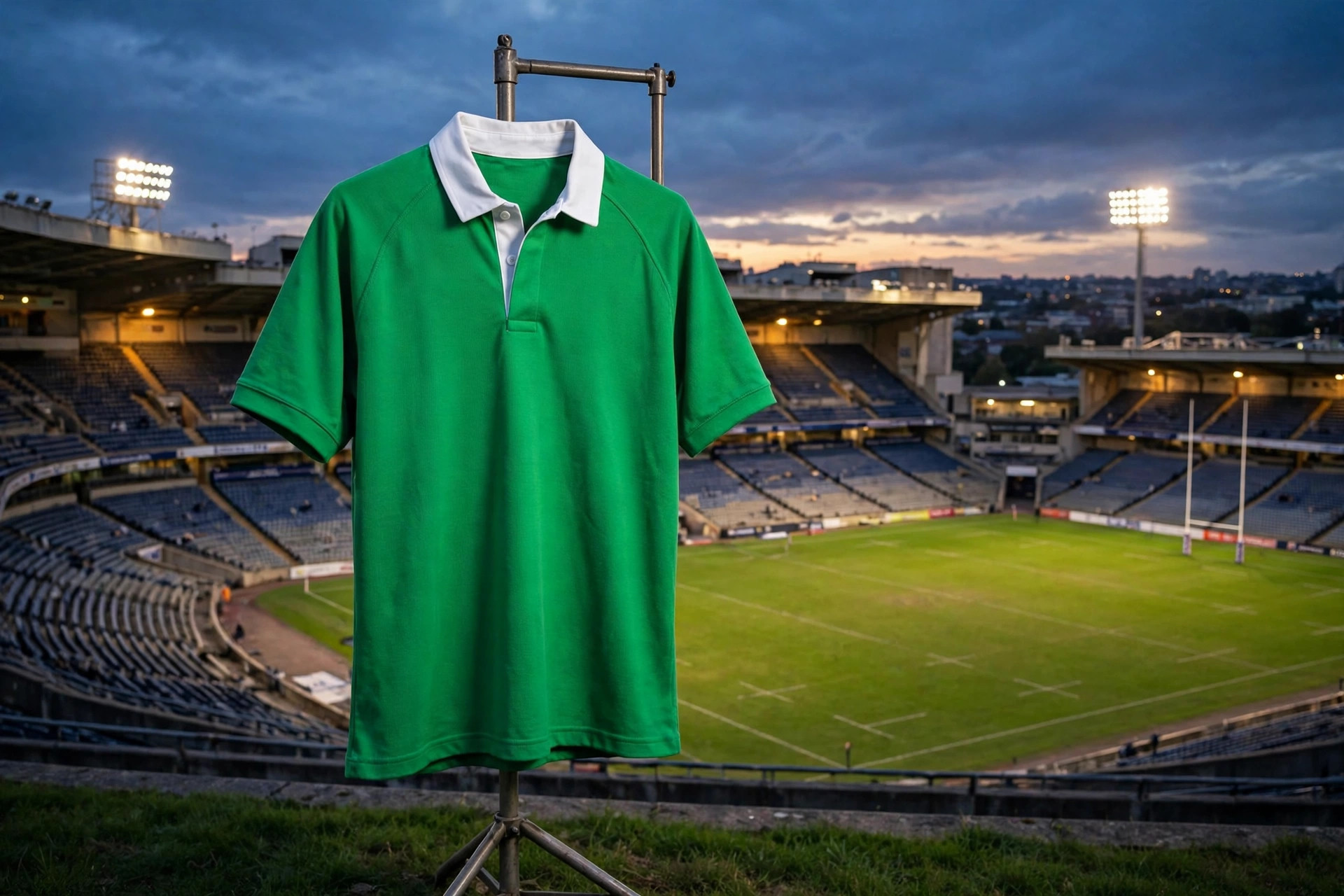
Illustrative image created for this guide by Apparel Search designers, closely following the team's current kit — team logos, sponsor logos and manufacturer marks have been removed, so small details may differ from the official shirt.
Ireland Rugby Kit
Ireland's green jersey is a garment with a constitution. The team represents the whole island — four provinces, two jurisdictions — and the kit carries that settlement on its chest: a badge that combines the shamrock with the crests of Ulster, Munster, Leinster and Connacht. The green itself has been Ireland's colour since the nineteenth century, deepened and brightened by turns but never replaced. This guide covers the colours and the badge, Canterbury's tenure as maker since 2014, the shirts of the Grand Slam years, and what to know before buying the current jersey.
Green and the Four Provinces: Colours and Identity
Irish representative sides wore green from the game's early decades, and green — with white shorts — has been the fixed home identity ever since. The shade has travelled: a deep bottle green in the cotton era, brighter greens in the synthetic years, but always unmistakably Ireland's. White is the change colour, produced most famously when Ireland meet South Africa, the one fixture where both sides' first choice is green.
The badge is the kit's quiet masterpiece. The IRFU's emblem sets the shamrock — Ireland's oldest sporting symbol — at the centre of the four provincial crests, a small heraldic summary of an all-island team drawn from two states. It is the reason the Ireland jersey rewards a close look: what reads from the stands as a plain green shirt carries, at reading distance, the whole structure of Irish rugby. Designers at Canterbury work inside that settlement; the green, the white shorts and the badge are constants, and the design variables are collar, trim and the shade's exact point on the green spectrum.
The Maker: Canterbury Since 2014
Ireland's modern maker history runs through the game's specialists and globals — Canterbury in earlier spells, Puma around the turn of the 2010s — before Canterbury returned in 2014 and settled in. The partnership has since covered three World Cups and the most successful decade in Irish rugby history, and Canterbury's current Ireland jerseys pair the traditional green with the company's Vapodri performance fabric in the player version.
The current home jersey keeps the classic arrangement — green shirt, white trim, white shorts — with the detailing of the present cycle worked into collar and side panels. Canterbury also supplies Ireland's extensive supporter range, and the classic cotton version of the green jersey, long-sleeved with a white collar, remains one of the strongest sellers in the heritage market: it is the shirt of the amateur-era Five Nations afternoons, and it is bought as clothing as much as kit.
Iconic Ireland Kits
The Grand Slam shirts are the collectors' spine of the Ireland range. The 2009 jersey — the first Grand Slam in sixty-one years, sealed in Cardiff — and the 2018 shirt, worn through a clean sweep and a famous win over New Zealand in Dublin that autumn, are the modern essentials. The 2023 Grand Slam, completed at home in Dublin, added a third, and the three together mark the green jersey's golden age.
Older touchstones include the jerseys of the 1948 Grand Slam side, surviving mostly in photographs and heritage reissues, and the shirts of the provincial heroes who became Lions. Supporters with longer memories also prize the deep-green cotton shirts of the 1970s and 1980s, when Ireland's kit changed so slowly that a jersey could serve a decade — the opposite of the modern cycle, and part of their charm. For how the versions differ, see the rugby shirt buying guide.
Buying an Ireland Jersey
Canterbury sells the Ireland range in player, replica and classic versions through the IRFU's official shop, Canterbury's channels and authorised retailers. The replica in the current green is the default supporter's purchase; the classic cotton shirt is the connoisseur's — heavier, looser, and the one that gets worn most outside match days.
Two practical notes. Ireland's green sits close to South Africa's, so if you follow both teams, the change kits are the collector's solution — Ireland's white against the Springboks' green is one of the game's best-looking fixtures in kit form. And because the badge is embroidered on most replica and classic versions, check its stitching when comparing listings: a clean, tight four-province badge is the quickest authenticity signal on this particular shirt.
Shop Ireland Jerseys
Look for the current Canterbury home jersey in player and replica versions, the white change kit, and the classic cotton green shirt. Official kit is sold through the IRFU shop, Canterbury and authorised sports retailers. Use the search below to compare current Ireland jerseys, sizes and prices before you buy.
Shop Ireland jerseys on AmazonAs an Amazon Associate, Apparel Search earns from qualifying purchases made through this link. Prices and availability are set by Amazon and its sellers.
Common Questions
Who makes Ireland's rugby kit?
Canterbury has made Ireland's kits since 2014, supplying the IRFU's national teams. The partnership has covered three World Cups and the Grand Slam wins of 2018 and 2023.
What is on the Ireland rugby badge?
The IRFU badge combines the shamrock with the crests of the four provinces — Ulster, Munster, Leinster and Connacht — reflecting that the team represents the whole island of Ireland.
What colour is Ireland's change kit?
White. Ireland's change jersey exists mainly for the fixture against South Africa, the other major green-shirted side, and the white shirt against green is one of the game's most distinctive contrasts.
Related Reading
Search Apparel Search