Men's Swimwear Store on Amazon
Trunks, board shorts and rash guards, compared by fabric and cut
Amazon's men's swimwear store covers the water in four clear product families: swim trunks, board shorts, racing swim briefs and rash guards. Each family is a different garment built for a different job — trunks for general swimming and beach days, board shorts for surfing and active water sports, briefs for lap swimming and racing, and rash guards for sun and abrasion coverage on top. Choosing well starts with matching the garment to the activity, not the pattern.
This is a product guide in the plain sense: fabrics, cuts, linings, waistbands and care. Swimwear fabrics are almost entirely synthetic for good reasons — they dry quickly, hold their shape in chlorinated and salt water, and resist fading better than natural fibers. The sections below compare the families honestly, explain the construction details listed on product pages, and cover the sizing and rinsing habits that keep a suit serviceable for more than one season.
Pack the whole beach bag from one map — the Apparel Search Amazon clothing guide connects the swimwear store to shorts, sandals and sunglasses departments nearby.
Swim Trunks and Board Shorts
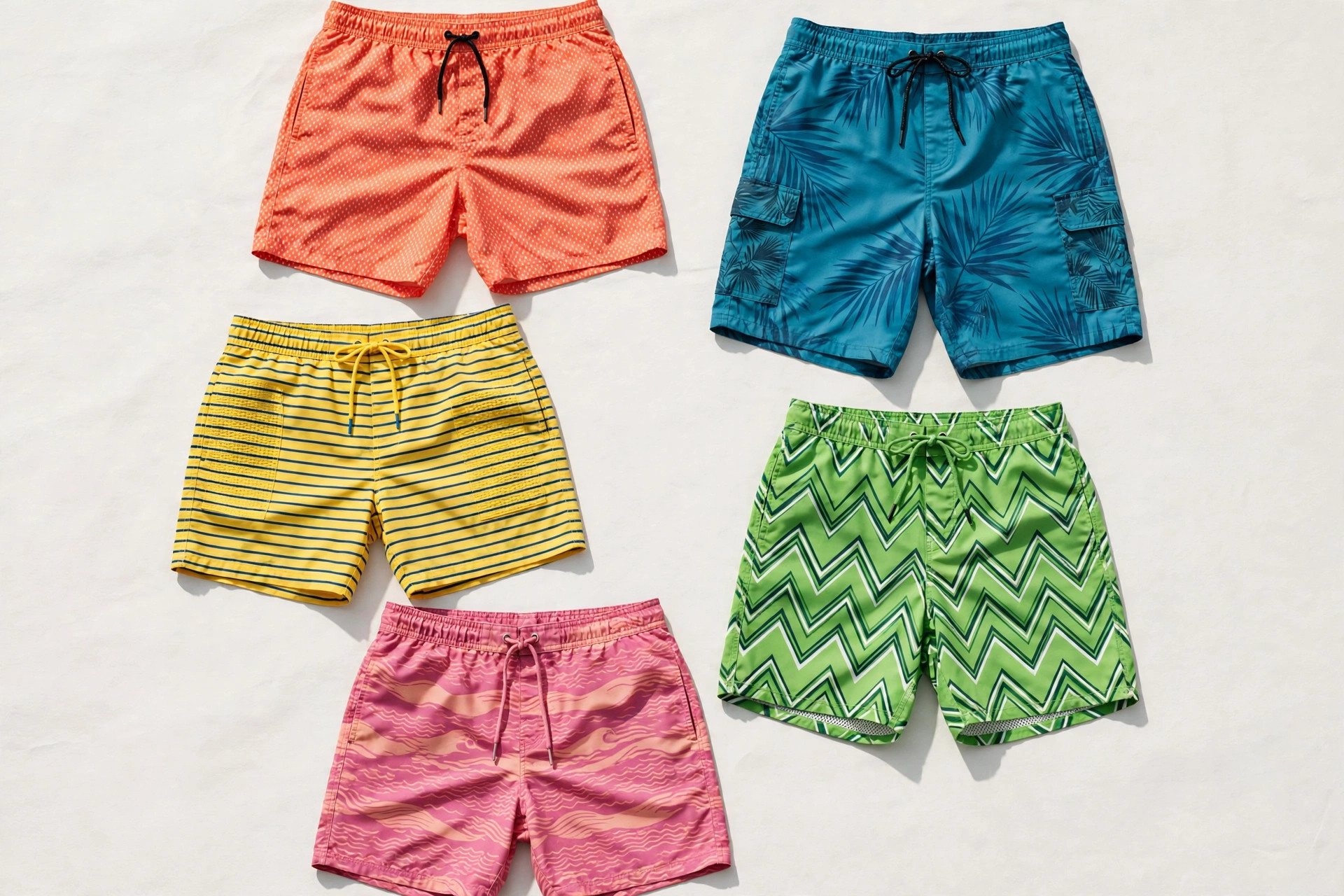
Swim trunks are the general-purpose option: an elastic or drawstring waist, a mesh brief liner for support, and inseams that range from short, retro cuts to knee length. Polyester dries fastest and resists chlorine and sun fading best; nylon feels softer and dries quickly too, though it can fade sooner. Side pockets and a back pocket are standard, and a secure internal pocket or key loop is worth looking for on listings meant for active days.
Board shorts differ in construction: a fixed waistband with a lace-up or hook-and-loop closure, no mesh liner, a longer inseam, and four-way stretch fabric on many modern styles. They are built to stay secure in surf and during movement, and they double as warm-weather shorts out of the water. Because the waistband does not stretch, sizing by exact waist measurement matters more with board shorts than with elastic-waist trunks.
Racing Briefs and Rash Guards
Racing swim briefs are the streamlined option for lap swimming, training and competition: a close cut, a drawstring waist and smooth synthetic fabric chosen to reduce drag and withstand frequent chlorine exposure. They are sized by waist measurement and are meant to fit snugly. Shoppers new to the style often order one size up for comfort during long training sessions, then adjust once they know a brand's fit from its size chart.
Rash guards are fitted or relaxed swim shirts, in short and long sleeves, originally made to protect surfers from board abrasion and now widely worn for sun coverage. Listings state a UPF rating for the fabric; higher ratings indicate more ultraviolet protection from the garment itself. Flatlock seams reduce chafing, and a snugger fit stays in place while swimming, while looser fits suit paddle sports and beach wear over trunks.
Sizing, Linings and Care
Swimwear sizing is waist-based for briefs and board shorts and letter-based for many trunks, so check each product page's chart rather than assuming consistency across brands. Liner preference is personal and practical: mesh brief liners add support in trunks, compression liners add coverage under board shorts, and unlined styles dry fastest. If a listing offers both lined and unlined versions, the product description states which one is being sold.
Care is simple and decisive: rinse swimwear in clean, cool water after every swim to remove chlorine, salt and sunscreen, wash gently when needed, and dry in shade away from direct heat. Wringing stretches elastic, and hot water and machine drying shorten a suit's life fastest. Rotating two suits on a trip lets each one recover its shape between swims.
Common Questions
What types of men's swimwear does Amazon sell?
Swim trunks, board shorts, racing swim briefs and rash guards — covering casual beach wear, surfing and water sports, lap swimming and sun-coverage swim tops.
Which swim fabric lasts longest in chlorinated pools?
Polyester is generally the most chlorine-resistant and colorfast choice for frequent pool swimming. Nylon feels softer but typically fades and degrades sooner with heavy chlorine exposure.
How should swimwear be cared for after swimming?
Rinse it in clean, cool water after every use, wash gently only as needed, and dry it in the shade. Avoid hot water, wringing and machine drying, which break down elastic fastest.
More to Explore
- Amazon Fashion Stores
- Men's Swimwear Guide
- Men's Swimwear Stores
- Swimwear News
- Fashion Stores
- Men's Fashion
- Men's Apparel
- Men's Fashion on Amazon
- Men's Clothing Stores
- Men's Clothes Guide
- Men's Fashion Brands
- Men's Fashion Shopper
- men's fashion store
- men's underwear store
- men's suits store
- men's pants store
- men's shoe store