Men's Jeans on eBay
Fits, washes and denim weights — waist and inseam truth, selvedge and vintage, and reading fade as a condition report
Jeans are eBay's most measured garment: waist, inseam, rise and leg opening decide everything, and good sellers state all four. The listings run from current mall-brand denim to raw selvedge and decades-old vintage pairs whose fade patterns are the product. This guide explains the fit families in the words sellers actually use, what denim weight and wash mean for wear, and how to read fading honestly — as a condition report on a used pair and as provenance on a vintage one.
Treat this page as a pre-bid checklist for its category. It covers what the listings typically offer, the measurements and materials worth verifying, and the seasonal rhythm that decides whether to bid now, watch, or wait for a better lot.
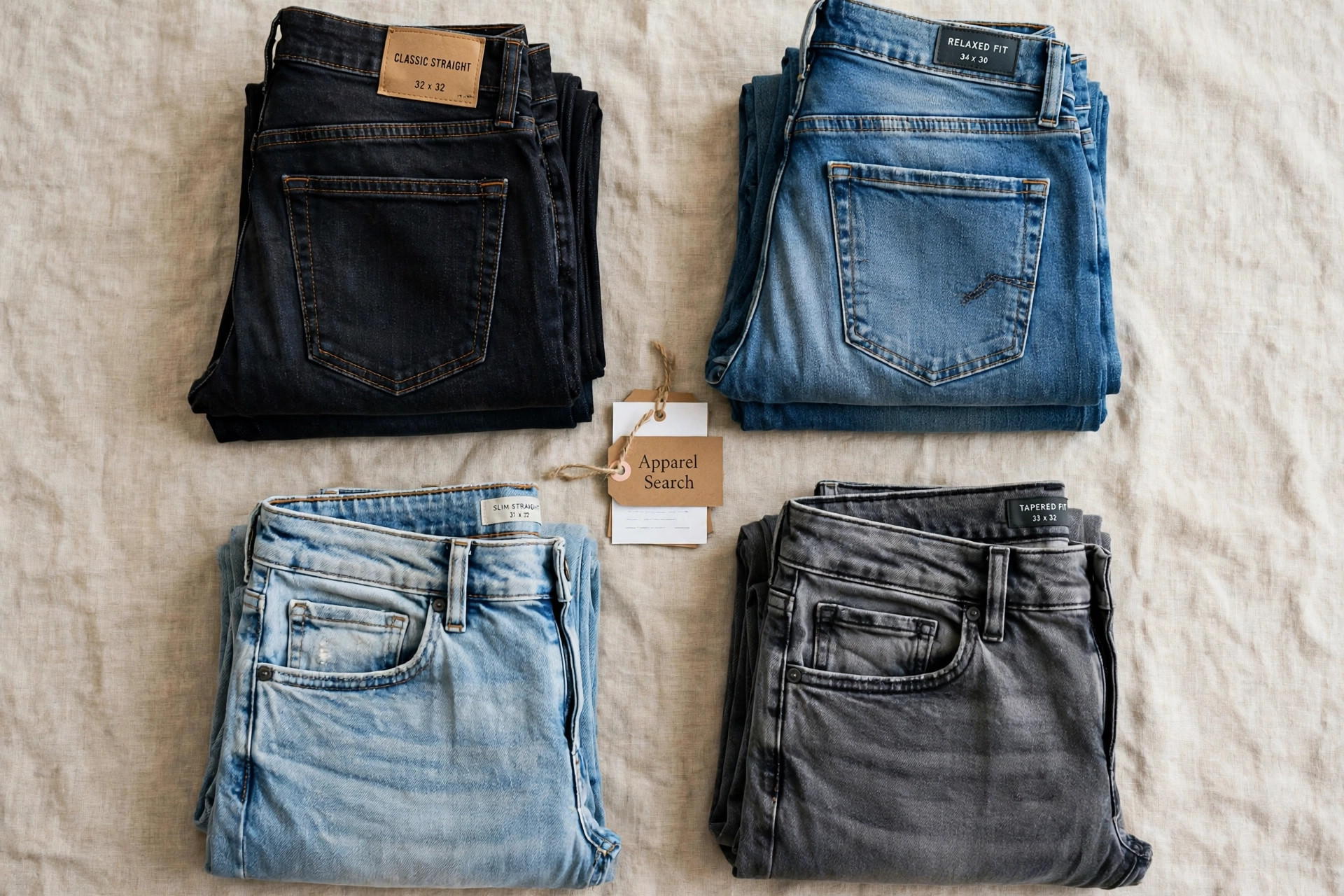
A standard jean in a standard size is an easy set-price buy too. The Apparel Search Amazon clothing guide gathers the Amazon men's denim departments — compare it, then return for the vintage and selvedge finds only auctions hold.
Fit Families and Tiers
The men's jeans listings on eBay typically cover straight and classic-fit jeans, slim and tapered fits, relaxed and carpenter styles, raw and selvedge denim, vintage jeans by decade and work jeans and double-knee styles in the same listings. Sellers range from individuals clearing a wardrobe to specialist dealers and outlet accounts, so condition, photography and description depth vary a great deal from one listing to the next. Every tier lists at once — current brands in volume, heritage and Japanese selvedge in a specialist seam, and vintage stock priced by era and fade. Start a search broad, then narrow by size, color and condition filters; saved searches with email alerts catch the short auctions that end before a casual browser ever sees them.
Seller wording is inconsistent, so run several searches rather than one: "selvedge jeans"; "vintage jeans waist"; "straight leg jeans"; "raw denim". Misspellings and vague titles are where the quiet bargains hide, because fewer bidders find those listings. Search waist and inseam as a pair ('W34 L32') — jeans sellers title by both numbers, and the pair search cuts the category to your size instantly. Sort by ending soonest to catch neglected auctions, and by price plus postage to compare the true delivered cost — a low bid price with high shipping is rarely the cheapest route to the garment.
Waist Truth and Denim Weight
Fit first: label waist and true waist differ: denim stretches and brands vanity-size, so the listing's laid-flat waist measurement, doubled, is the only number to trust. Auction listings cannot be tried on, so the measurements in the description — taken flat, in inches or centimetres — are the only reliable guide, and a seller who lists none is worth a message before bidding. On materials, expect midweight cotton denim, the everyday standard, heavyweight denim for work and heritage pairs, stretch denim with elastane and selvedge denim woven on shuttle looms. Selvedge is identified by the finished woven edge, usually with a colored line, visible when a cuff is turned — listings photograph the turned cuff to prove it.
Condition decides value in this category more than age does. Crotch wear is the structural check on used jeans — thinning at the inner thigh junction ends a pair's life while the rest looks strong — and honest listings show that area. Study the photographs at full size, read the returns policy, and check the seller's feedback for the pattern that matters — accurate descriptions — rather than the headline score alone. A garment described as new with tags should still show the tags in a photograph; if it does not, ask.
Fade, Crotch Wear and Vintage
Timing shapes price here. Jeans trade all year; heavyweight and raw denim interest peaks in autumn, and vintage finds surface whenever collections and estates are cleared. A quality pair's cost is in cloth and construction that barely depreciate, so used premium denim is the category's arithmetic winner. Set a maximum that includes postage, bid it once, and let the automatic bidding work — chasing an auction past your ceiling is how bargains turn into overpayments. Never buy jeans on the label inseam after hemming exists — ask for the current inseam measurement, because a shortened pair wears its new length, not its printed one.
Common Questions
What should I check first when buying men's jeans on eBay?
Measurements and condition. label waist and true waist differ: denim stretches and brands vanity-size, so the listing's laid-flat waist measurement, doubled, is the only number to trust. Then confirm the fabric content and read the seller's returns policy before bidding.
Which search phrases find the best men's jeans listings?
Try several seller wordings — selvedge jeans, vintage jeans waist, straight leg jeans — and save the searches so short or mis-titled auctions are caught before they end.
When is the cheapest time to buy men's jeans at auction?
Jeans trade all year; heavyweight and raw denim interest peaks in autumn, and vintage finds surface whenever collections and estates are cleared. Bidding on off-peak endings and setting a firm maximum that includes postage keeps the delivered price down.