Fashion Trends
Apparel Search fashion summary — a short guide to fashion trends.
A trend is what is stylish or popular at a certain point in time. Fashion trends are influenced by several factors — celebrity influence, creative explorations, financial buying power, social influence and many others — and staying up on the latest trends matters to many people, whether they follow the runways, the magazines and blogs, or simply the street fashion where they live.
Fashion Trends — Explore & Resources
Where Trends Come From
Trends are not decreed by any single source. Do fashion designers truly formulate the trends? It is a mix of runways, the street style scene and best-dressed celebrities altering our perception of what is currently in style, filtered through what buyers order and what shoppers can afford. Fashion influencers start fashion trends as well, carrying a look from a single post to a high-street range in weeks. The fashion trends guide and the fashion color trends pages linked from here follow the current movement season by season.
As each new season approaches it is time to usher in a new set of trends: what is hot for spring and summer, what is cool to wear for fall and winter. Emerging trends can be spotted cultivating early — in forecasting services, in street photographs from the fashion capitals, and in the trend resources published by WWD, Vogue and Who What Wear, all linked from this page.
Forecasting and Choosing
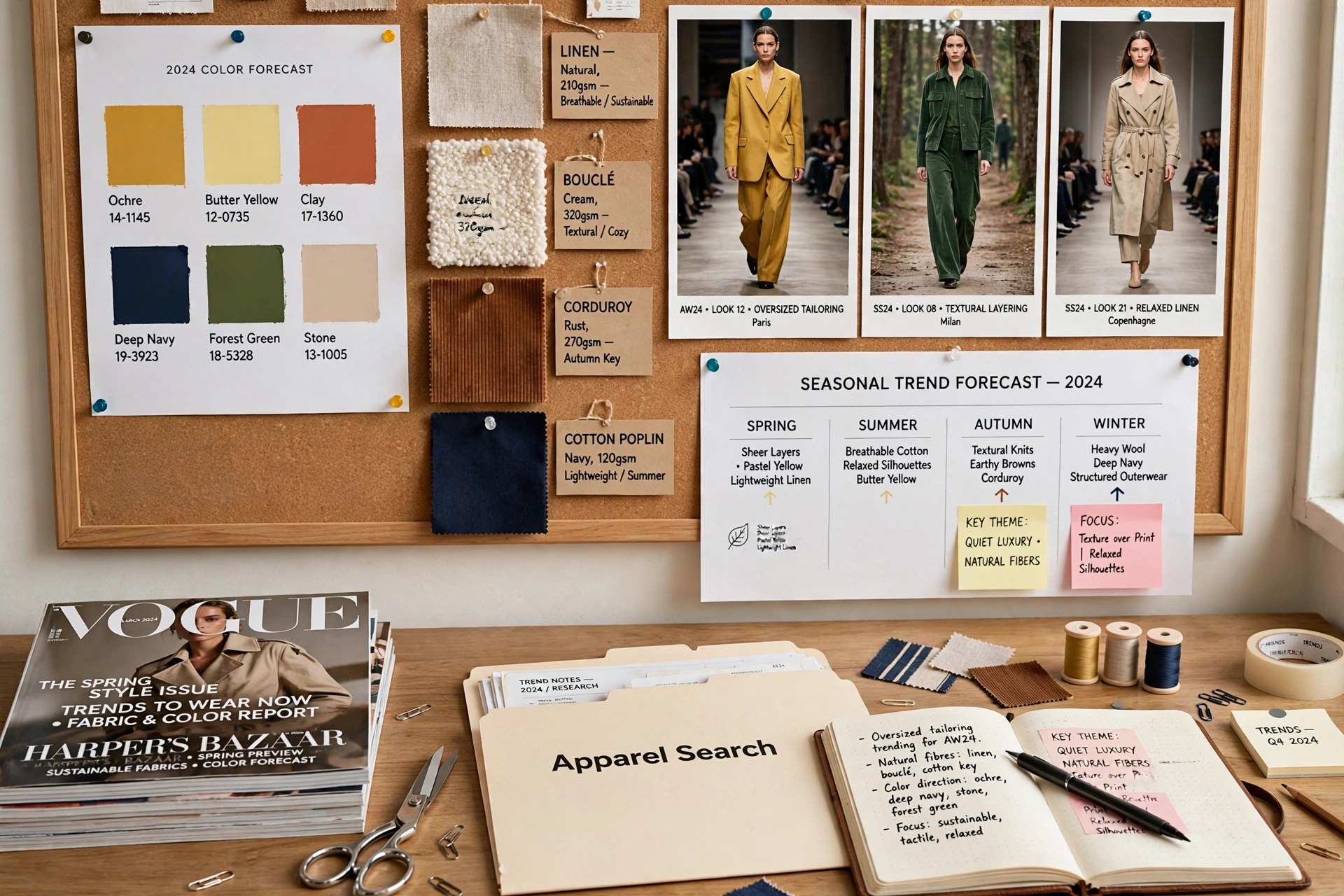
Fashion forecasters use street, runway, sales and cultural information to help determine future trends, and trend reports and trend boards — both with term pages linked here — are their working documents. It is most certainly not a perfect science: predicting the future without a crystal ball is not as simple as it may look, and every season's confident forecast includes looks that never leave the runway.
For the wearer, the discipline is selection. Not all trends are meant for you: understand your own sense of style, your body, your personality and which colours inspire you, and dress accordingly rather than jumping on a trend because others are flocking to the fad. If a season's trends truly disagree with you, the fashion police summary is the humorous court of appeal — and the fashion tips page linked here helps translate a trend into a wearable version.
Trends at Street Level
The street is where trends are audited. A runway look becomes a trend only when it survives translation — into cheaper fabrics, ordinary bodies, real weather and working days — and street style shows the translation happening: which pieces were adopted, which were adapted beyond recognition, and which were quietly refused by everyone. That is why forecasters photograph the street as seriously as the shows, and why a shopper reading trends should do the same: the blogs and magazines linked here report the proposals, but the pavement outside any fashion store reports the results. A trend that appears on strangers, unposed, in a city's ordinary dress has passed the only test that matters commercially. The wearer's version of the same discipline is to wait one translation before buying: when a look reaches the high street in wearable form, its price, its quality range and its true versatility are all visible at once — and the early adopter's premium, paid for a silhouette that may not survive the season, has usually been spent by someone else.
Common Questions
What is a fashion trend?
What is stylish or popular at a certain point in time, shaped by celebrity influence, creative exploration, buying power, social influence, runways, street style and the media.
How do forecasters predict trends?
They combine runway collections, street style, sales data and cultural signals into trend reports and trend boards. It is an informed discipline, not a perfect science.
Should you follow every trend?
No. Not all trends suit every person; the sound approach is to understand your own style, body and colours, and adopt the trends that fit them.