Warehouse Trolleys
Trolleys and carts for moving clothing and textiles around the warehouse — garment rails, cages and platforms, and how to choose them.
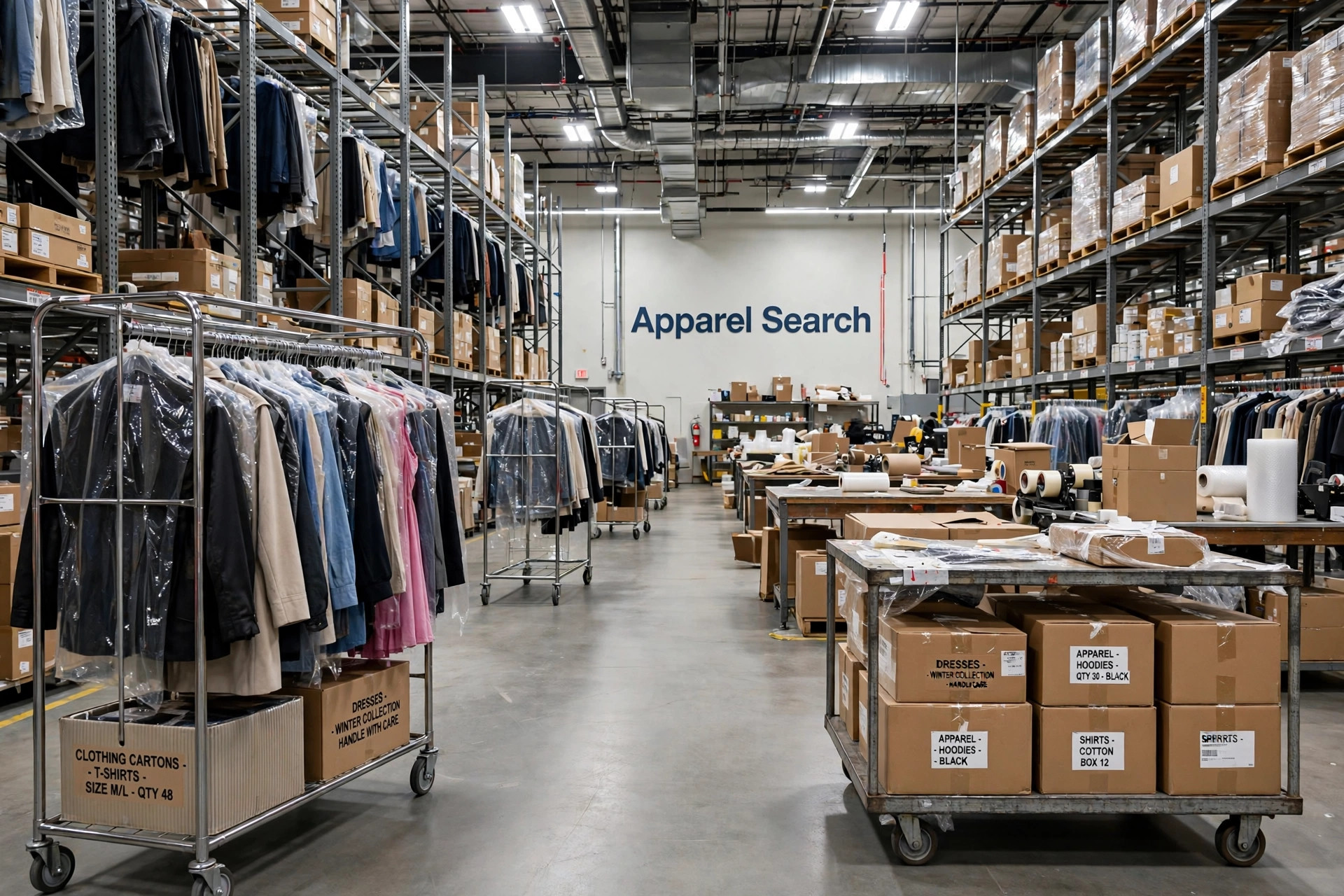
Warehouse trolleys are the wheels underneath a clothing warehouse. Almost nothing in an apparel building moves far on foot: hanging garments travel from receiving to the rail, picked orders travel to the packing benches, cartons travel to dispatch, and returns travel back again — and a trolley sized and built for the load does each of those jobs faster and with less handling damage than carrying stock by hand. This guide covers the main trolley types used for clothing and textiles, what to check when choosing them, and a manufacturer listing for warehouse racking and trolleys.
Warehouse Equipment & Guides
Trolley Types for Clothing and Textiles
- Garment trolleys (rail trolleys): an upright frame on casters with one or two horizontal hanging rails. The standard tool for hanging apparel — stock stays on its hangers from delivery through storage to picking, which avoids folding, creasing and re-bagging. Z-frame and nesting bases let empty trolleys slot together and take up little floor space.
- Cage trolleys (roll cages): a wheeled base with mesh or barred sides and often a hinged door. The cage contains loose cartons, polybagged garments and returns, and is the workhorse for moving picked orders and store replenishment between departments and onto vehicles.
- Platform trolleys (flatbed trucks): a flat deck on casters, with or without a push handle, for boxed and bulky loads — fabric rolls, carton stacks and packaged goods that do not hang.
- Shelf and picking trolleys: two or three open shelves sized for totes and cartons, used by pickers working through the racking aisles and by packing benches handling small, multi-item orders.
- Heavy-duty and specialty trolleys: higher-capacity frames for fabric rolls and bulk textiles, trolleys with brakes or tow hitches for train-style movement, and designs built to a manufacturer's own racking and conveying layout.
Choosing Trolleys for Apparel Stock
The right trolley depends on what it will carry and where it will roll. Start with load capacity: a full rail of winter coats or a deck stacked with cartons is heavier than it looks, and the rated capacity should cover the heaviest realistic load with room to spare. Casters decide how a trolley feels in daily use — larger wheels roll more easily over floor joints, dock plates and lift thresholds, softer treads run quieter and are kinder to sealed floors, and at least two casters should swivel so a loaded trolley can turn in a racking aisle; brakes matter anywhere the floor slopes, especially at loading docks. Check the geometry against your building: hanging-rail height against your longest garments, overall width against doorways and lift cars, and turning space against your narrowest aisle. Finally, plan for the empty trolley as well as the full one — nesting, folding or stacking designs keep the fleet from consuming the floor space it was bought to free up, and a frame finish that tolerates a damp receiving area will outlast one that does not.
Trolleys work as part of a system rather than on their own: they feed stock between the warehouse racking where it is stored and the warehouse machinery and equipment — conveyors, strapping and wrapping machines — that prepares it for dispatch, and they carry the packing materials and finished cartons at either end of that line. Sizing the trolley fleet to the racking layout and the packing operation, instead of buying trolleys in isolation, is what keeps goods moving without bottlenecks at the benches.
Manufacturer Listing
Nanjing Nuobei Rack Equipment Manufacturing Factory
Nanjing Nuobei Rack Equipment Manufacturing Factory is one of the earliest producers specializing in logistic systems — the layout, design, manufacturing and installation of warehouse racking and related equipment. The company possesses specialized technology and a full spectrum of sophisticated and complete product lines, including profile-rolling rack processing, acid-washing and phosphated roasted-paint treatment and surface plastic-jetting, with a professional after-sale service team for installation and other related aspects. Selecting raw material produced by Shanghai Baosteel Group Corporation, the company designs, manufactures and installs a variety of warehouse equipment, and deals mainly in warehouse section layout, rack profile choosing, final disposing, and the conveying and management of warehouse material; it also develops a series of warehouse management software and accessories. Its stated business principle is high quality, superior service and faith keeping — "quality is supreme, clients are friends" — and its products have won broad markets and numerous customers' trust.
Its product range includes:
- Light duty racks
- Medium duty racks
- Heavy duty racks
- Drive-in racks
- Multi-tier racks
- Cantilever racks
- Steel stacking frames
- Trolleys
Common Questions
What is a garment trolley used for in a clothing warehouse?
A garment trolley — a wheeled frame with a hanging rail — moves clothing on hangers between receiving, storage, picking and packing without folding or re-bagging it. Keeping garments hanging protects their finish, speeds up picking for store and e-commerce orders, and lets a full rail of stock be rolled straight to a packing bench or a waiting vehicle.
How do I choose the right warehouse trolley for apparel stock?
Match the trolley to the load and the route: check the rated load capacity against a full rail of the heaviest garments or a stacked load of cartons, choose caster size and material for your floor (larger, softer casters roll more quietly and easily over joints and ramps), and confirm the rail height and overall width clear your doorways, lifts and racking aisles. Nesting or folding designs save floor space when the trolleys are empty.
What is the difference between a trolley, a cage trolley and a platform truck?
A garment trolley carries hanging clothes on an open rail. A cage trolley encloses the load in mesh sides, which suits loose cartons, returns and higher-value stock that must not spill or wander in transit. A platform truck (flatbed trolley) carries boxed and bulky goods on a flat deck. Clothing warehouses commonly run all three: rails for hanging stock, cages for parcels and returns, and platforms for cartons.