Warehouse Machinery for Clothing Warehouses
The machinery directory for clothing warehouses: conveyors, palletizers, strapping and wrapping machinery.
If you own or manage a clothing industry warehouse, this directory helps you find the warehouse equipment and warehouse machinery the building runs on. The machinery in this section moves, stacks, secures and wraps the goods of apparel and textile warehouses — and it is just as useful in a factory, where the same machines serve the packing areas where finished garments are cartoned and shipped. Five machine families cover most of the work, and each has its own page in this directory, linked in the card directly below.
Warehouse Machinery Topics
The Machines That Move a Clothing Warehouse
Conveyors are the connective tissue: belt, roller and overhead garment conveyors carry cartons and hanging garments between receiving, storage, picking, packing and shipping, so work travels to the worker instead of the worker walking to the work. Pallet conveyors are their heavy counterparts, moving complete pallets on chain-driven rollers between the machines that build and secure loads. Together the two conveyor families decide how a building flows — where queues form, where forklifts still have to run, and how much handling each carton receives between the dock door and the truck.
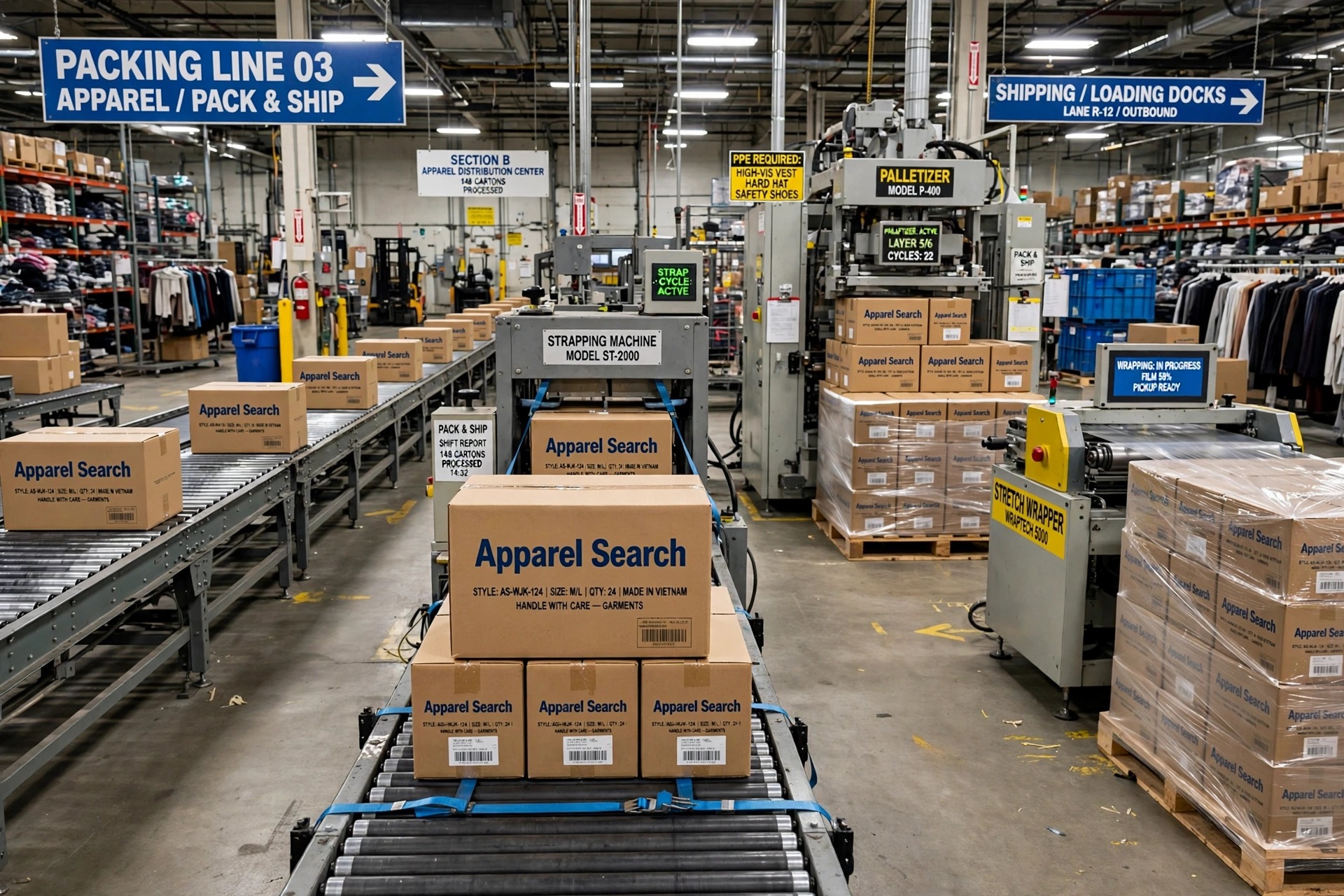
At the end of the line, three families of machines turn packed cartons into freight. Palletizers arrange cartons into interlocked layers on a pallet at a steady rate. Strapping machines band cartons, bundles and pallet loads with plastic or steel strap so they travel as one unit. Wrapping machinery secures pallet loads with stretch film, or shrink-wraps cartons and bundles, protecting garments from dust, moisture and handling on the journey. A packing line normally uses all three in sequence, and the pages in this directory explain each one and list the companies that supply it.
How the Machinery Fits Together
Picture one outbound flow. Cartons leave the packing benches on a belt conveyor, pass a checkweigher and labeller, and accumulate in front of the palletizer. The palletizer builds each load to a stored pattern on pallets fed from a dispenser. A pallet conveyor carries the finished pallet through the strapping machine and into the stretch wrapper, and a forklift takes the secured load to its staging lane. Every machine's rate is matched to the next one's, and the accumulation space between them absorbs the small stops that would otherwise halt the whole line.
Inbound work uses the same machinery in a different pattern: conveyors carry received cartons to inspection and put-away, overhead garment conveyors move hanging stock to the rails, and pallet conveyors and wrapping machines serve the transfer and storage points. Factories use the identical families at the end of production — conveyors from the sewing and pressing areas, strapping and wrapping at the export packing station — which is why this directory serves textile and apparel factories as well as warehouses.
Choosing machinery is therefore a system decision before it is a shopping list. The carton sizes, pallet types and peak volumes of the building set the rates each machine must meet; the layout decides which routes should be conveyor and which should stay on forklifts and pallet trucks; and the packaging materials — cartons, strap, film and pallets, covered in the packaging pages linked below — must match the machines that use them. Bought as a system, the five families in this directory cover the machinery life of a clothing warehouse from receiving to shipping.
Finding the Right Machinery and Suppliers
Each topic page in this directory explains one machine family in depth — how it works, where it earns its place in an apparel building, what to specify — and lists the manufacturers and suppliers for that family with their web addresses. Start from the topic card at the top of this page, and use the textile machinery directory, linked below, when the machinery you need belongs to garment production rather than to the warehouse: sewing, cutting, pressing and finishing equipment lives there, while this section covers the warehouse and packing end of the industry.
For the materials the machines consume and the loads they handle, the warehouse packaging directory covers packaging manufacturers, and the pages below cover tapes and adhesive tapes, warehouse racking and slip sheets — the alternatives to pallets that some import freight uses. Machinery, materials and storage planned together give a warehouse that works as one system.
Common Questions
What machinery does a clothing warehouse need?
The core families are conveyors for moving cartons and hanging garments, pallet conveyors for moving full pallets, palletizers for building pallet loads, strapping machines for banding cartons and loads, and wrapping machinery for stretch-wrapping and shrink-wrapping. Most apparel warehouses also rely on forklifts and pallet trucks, covered in the fork lifts section, and on racking for storage.
Is this machinery only for warehouses?
No. The same machine families serve factories, where conveyors, strapping machines and wrapping machines work in the packing areas at the end of garment production. This directory covers the warehouse and packing end of the industry; production machinery such as sewing and cutting equipment is in the textile machinery directory.
How do I choose between the machine families on a limited budget?
Start where the labour and damage are: most clothing warehouses gain first from conveying the longest, busiest carton route and from securing loads properly with strapping or wrapping, then add palletizing as volume justifies it. Because the machines are designed to work in sequence, each addition should be specified to match the rates of the equipment already in place.