Warehouse Rack Systems
Warehouse racking & shelving for clothing warehouses — every rack type, and how to choose between them.
Looking for a lovely rack? Look no further. This section is the guide to warehouse racking and shelving for clothing warehouses: the racking system manufacturers listed here produce light duty racks, medium duty racks, heavy duty racks, drive-in racks, multi-tier racks, cantilever systems, steel stacking frames, pallet rack systems, wire decking and more. Each type has its own page below, explaining what it is, where it fits in an apparel warehouse, and which companies supply it.
Warehouse Racking Directory
Warehouse Rack Types
Choosing the Right Rack for the Stock
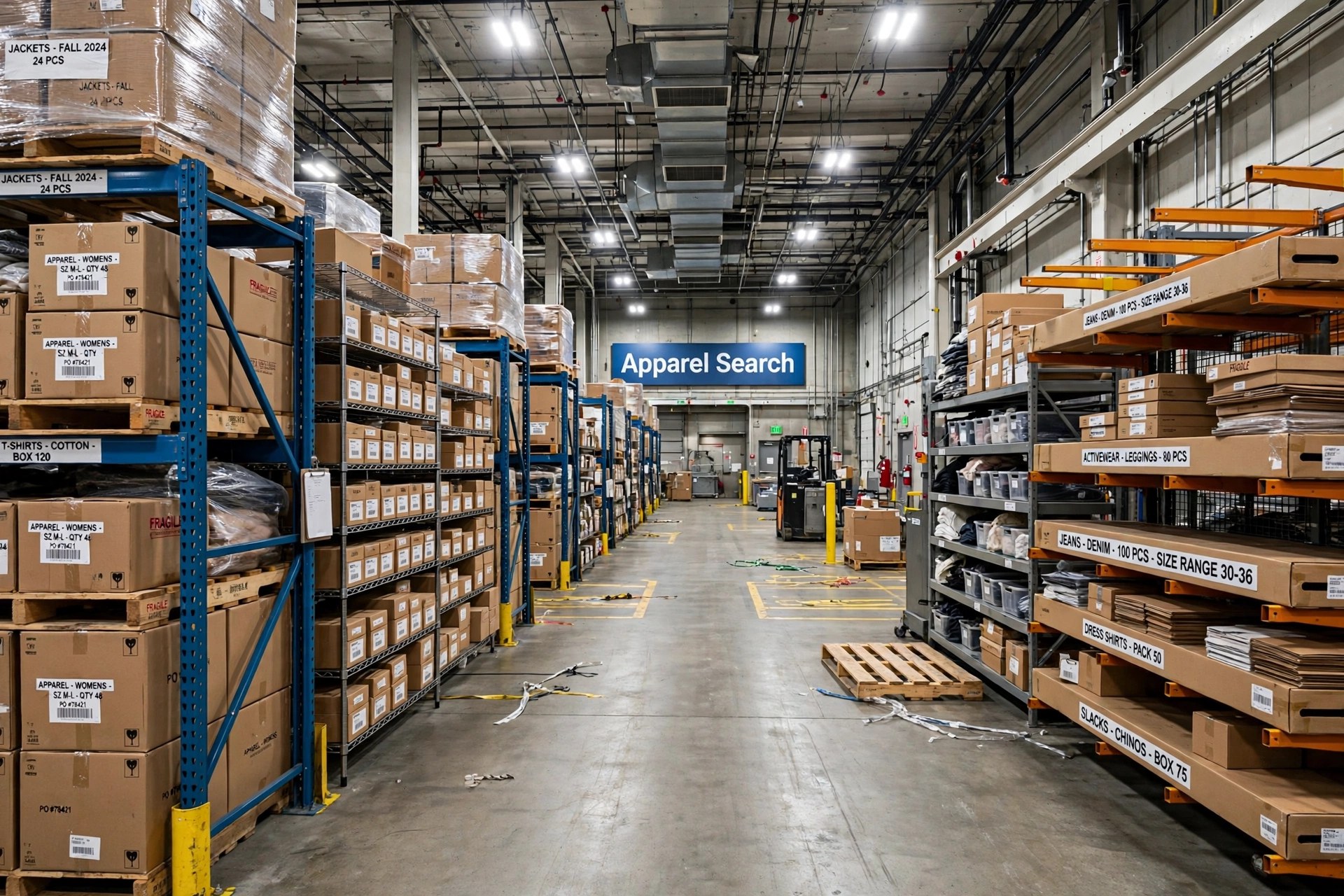
Racking choice starts with the goods, not the steel. Full pallets of cartons belong in pallet rack systems, and the system type follows how the stock moves: selective racking where every pallet must be reachable, drive-in lanes where identical seasonal stock can be stored deep, flow and pushback systems where rotation matters. Long and awkward goods — fabric rolls above all — belong on cantilever racks, whose open fronts and projecting arms are built for length. Portable steel stacking frames add stacking capacity for peaks without any fixed structure at all, and wire decking completes beam levels so split cartons and small pallets can sit safely on any rack.
Hand-loaded stock splits by weight: folded garments, accessories and pick faces on light duty shelving; reserve cartons and part pallets on medium duty racking; and the densest hand-placed or machine-placed loads on heavy duty frames. Where hand-picked variety outgrows the floor, multi-tier racks stack the shelving itself into two or three walkable levels. Most clothing warehouses run several of these types side by side, each matched to one family of stock.
The pages in this section follow that matching process type by type. Each one explains how its rack is built, the work it does best inside an apparel building and the mistakes to avoid when it is specified, and each carries the racking manufacturers and suppliers listed for that type, so a reader can move from understanding a system to sourcing it without leaving the section. Where two types overlap — medium and heavy duty, selective and drive-in — the paired pages explain the same boundary from both sides, because that boundary is where most racking money is wasted or saved. Taken together, the nine pages are what a warehouse manager needs before asking any supplier for a quotation: a request made against a clear type choice comes back sharper, cheaper and far easier to compare against the next one. Start with the type that matches your hardest load, and the rest of the layout follows from there.
Additional Clothing Warehouse Links
Beyond racking, a working apparel warehouse needs the equipment that feeds the racks. Pallets are the platform every pallet rack system is designed around; a warehouse trolley moves hand-picked goods between the shelves and the packing benches; and used forklifts are the economical way many warehouses put a truck in the aisle. The directory card at the top of this page links onward to warehouse machinery and equipment, the packaging manufacturers whose cartons and polybags fill the racks, and the clothing factories whose output arrives to be stored.
Racking is also only one layer of the building. The warehouses that store clothing well pair the right racks with the right flow around them — a goods-in area where pallets are checked before they are racked, packing and dispatch areas that the racks feed without crossing traffic, and stock records that know what is stored where. The Related Warehouse Resources at the foot of this page cover those surrounding decisions, linking the container load calculator, the warehouse selection guide and the warehouse software pages alongside the racking types themselves.
Common Questions
What types of warehouse racks are covered in this section?
Light duty, medium duty and heavy duty racks, drive-in racks, multi-tier racks, cantilever systems, steel stacking frames, pallet rack systems and wire decking — each with its own page explaining the type and listing its suppliers.
How do I choose a racking type for a clothing warehouse?
Match the rack to the stock and how it moves: pallet systems for full pallets, cantilever arms for long goods such as fabric rolls, shelving classes by load weight for hand-loaded stock, stacking frames for temporary peak capacity, and multi-tier shelving where hand-picked variety outgrows the floor.
Do the racking pages list suppliers?
Yes. The rack-type pages list the racking system manufacturers and suppliers for that type, carried from the directory listings — including BITO Storage Systems, Nanjing Nuobei Rack Equipment Manufacturing Factory and Custom Equipment Company where they were listed.