Pallet Rack Systems
Selective, drive-in, pushback and flow systems — the backbone of bulk apparel storage.
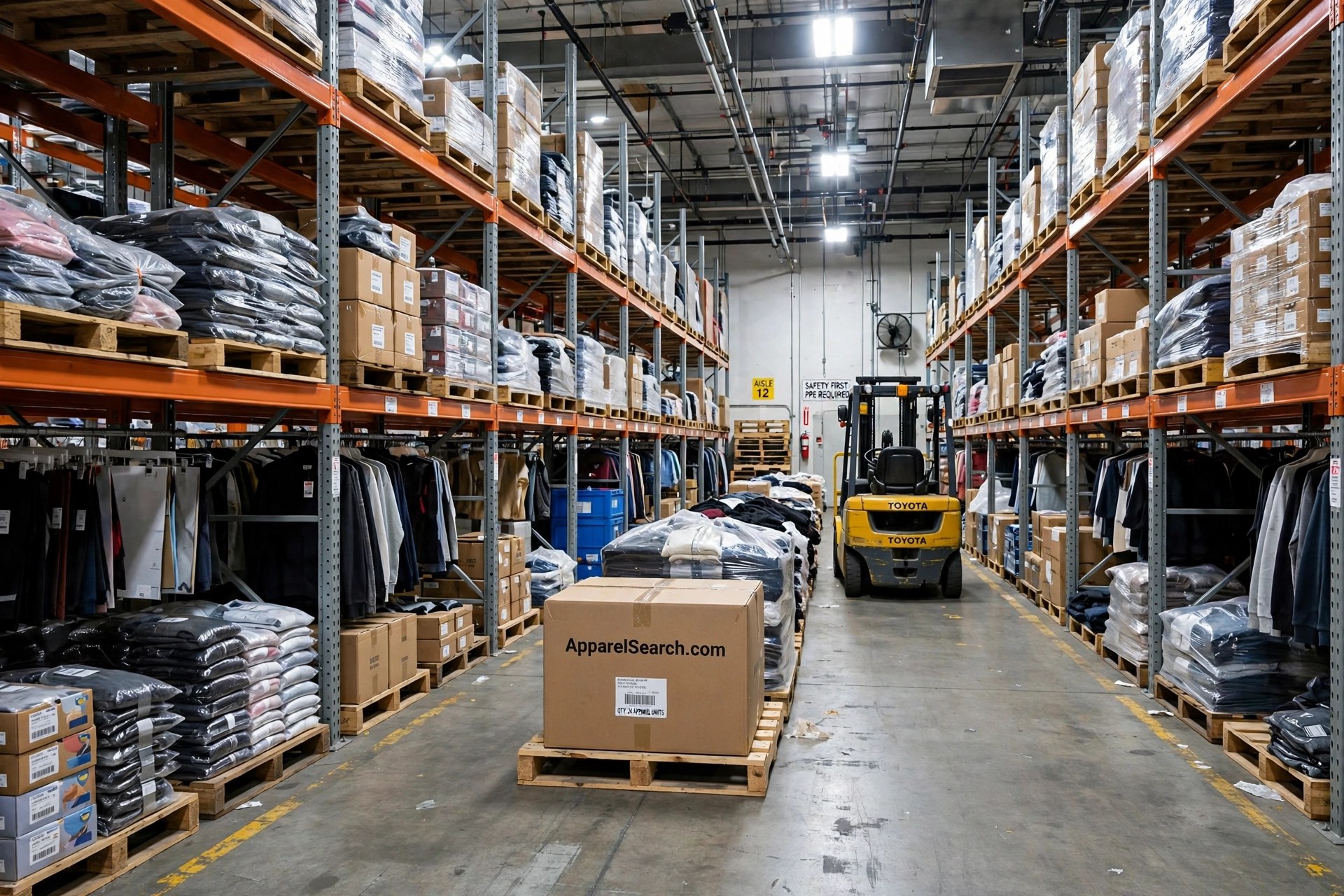
Pallet rack systems are the backbone of a clothing warehouse: the upright-and-beam structures that hold full pallets of garments, footwear and fabric above floor level, several levels high, so the building stores its bulk stock in the air instead of across the floor. This page explains the main system types, the parts every system is built from, and the suppliers listed for pallet racking equipment — and it points on to the fuller pallet information section here on Apparel Search, which covers pallets, pallet trucks and rack design in depth.
Warehouse Racking Directory
Rack Types in This Section
The Main Pallet Rack System Types
Selective racking is the standard system: single-deep rows where every pallet faces an aisle and can be reached directly, which is why most mixed apparel stock — many styles, constant access — lives in selective racks. From that base, the other systems trade access for density or flow: double-deep racking stores two pallets deep from one aisle; drive-in racking removes aisles and stores pallets deep in lanes; pushback racking lets several pallets roll forward on carts within one lane; and pallet flow racking uses gravity rollers so pallets loaded at the back roll to the pick face at the front, giving first-in, first-out rotation. Each type has its own page in this section where it belongs to the racking family, and the choice between them is a choice about how the stock moves, not just how much fits.
Whatever the type, every system is built from the same kit: upright frames, horizontal beams, safety clips, row spacers and anchors, with wire decking or pallet supports where loads need them. Systems are custom designed to the pallets in use — the design work establishes the load's length, depth, width and height, the frame depth and height, beam capacities and spacing, anchoring and back-to-back clearance before anything is ordered.
Choosing and Running a Pallet Rack System
The supplier listed below, Custom Equipment Company, stocks the material-handling side of this world from one catalogue: rack systems alongside conveyors, mezzanines, containers and the wire decking that completes a beam level. That breadth matters when a system is specified, because the rack, the pallets it holds and the trucks that serve it have to match — beam heights follow pallet heights plus clearance, aisle widths follow the forklift's turning circle, and decking follows the weakest pallet in the mix.
Running the system well is mostly discipline: keep loads within the rated beam and frame capacities posted on the load notices, store the heaviest pallets low, inspect uprights at forklift height for impact damage, and treat any bent frame as out of service until repaired. Used pallet racks are widely available refurbished and can be good value, provided the age, condition, inspection history and dealer are checked first — the pallet information section linked above covers buying used racks in full.
Accessories decide how a pallet rack system behaves day to day: wire decking where pallet quality varies, column protectors and end barriers where forklifts turn, row spacers that hold back-to-back rows at their designed flue distance, and decking or netting at levels above walkways. Level changes are the other routine job — beams unclip and reset as pallet heights change with new-season packaging — but every change moves the system's capacities, so the load notice and the design drawing should be updated with the beams, not left describing the layout the warehouse used to have.
Racking Companies
Custom Equipment Company — shop their huge online catalog for all your material handling, containers, packaging, rack systems, mezzanines, modular office, wire shelving, collapsible bulk containers, and new and used container needs. Their listed categories for this section are Conveyor Systems, Pallets and Topcaps, Pallet Rack Systems, Wire Decking (for warehouse shelves) and Collapsible Bulk Containers. Address: 10453 Leslie Drive, Raleigh, NC 27615. Phone: 919-518-0900. Fax: 919-847-5765. E-mail: tom@custommhs.com. Contact: Tom McGovern.
Common Questions
What is the most common pallet rack system?
Selective racking: single-deep rows in which every pallet faces an aisle and can be reached directly. It is the standard for mixed apparel stock. Denser systems — double-deep, drive-in, pushback and pallet flow — trade some of that direct access for more pallets per building.
What parts make up a pallet rack system?
Upright frames and horizontal beams with safety clips, row spacers and anchors, plus wire decking or pallet supports where the loads need them. Systems are designed around the actual pallets: load dimensions, frame depth and height, beam capacity and spacing, anchoring and clearances are all fixed before ordering.
Where can I learn more about pallets themselves?
The pallet information section linked on this page covers what pallets are and how they are used in the garment industry — types, materials, sizes, covers, pallet trucks, rack storage and buying used pallet racks.