Light Duty Warehouse Racks
Hand-loaded shelving for small cartons, folded garments and pick-face stock.
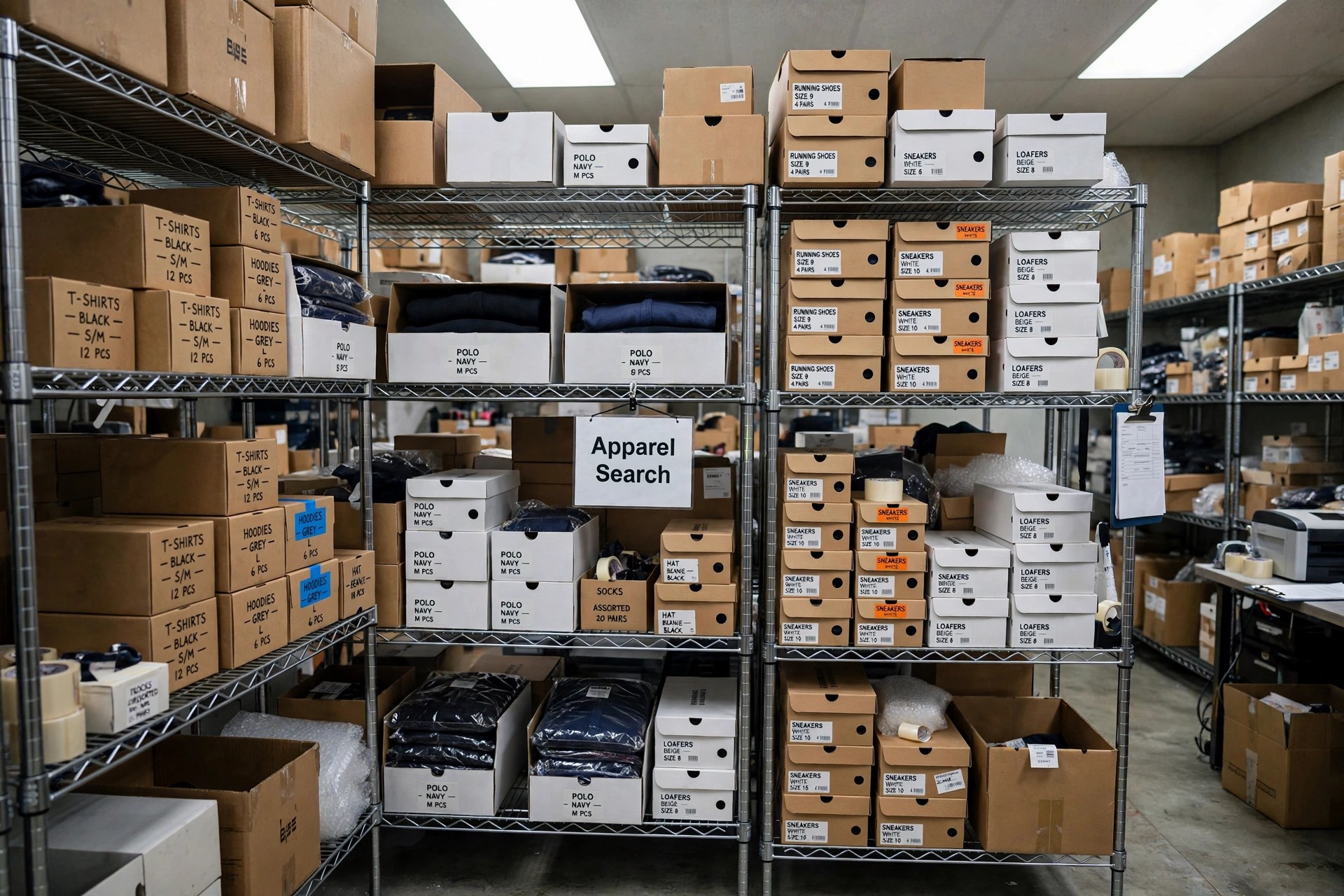
Light duty racks — light weight shelving — are the hand-loaded end of warehouse storage: shelving sized for small cartons, folded garments, accessories and pick-face stock that a person, not a forklift, puts away and retrieves. In a clothing operation this is the shelving of stockrooms, returns benches, sample rooms and e-commerce picking areas, where the goods are light, the variety is high and every item needs to be reachable by hand.
Warehouse Racking Directory
Rack Types in This Section
What Light Duty Shelving Is For
Light duty systems trade load capacity for flexibility and access. Shelves adjust on close increments so the vertical space follows the goods — low shelves for folded knitwear and accessories, taller openings for shoe boxes and hat boxes — and bays can be reconfigured as the stock mix changes with the season. Because everything is loaded by hand, shelf heights stay within comfortable reach, aisles can be far narrower than forklift aisles, and the same run can hold picking stock, packaging materials and the small equipment a packing bench consumes.
The manufacturers in this section build light shelving as part of a wider storage range. BITO, listed below, produces shelving and racking for loads from 50 kg per shelf upward and pairs the shelving with the bin and container systems made at its Lauterecken plant — the combination of light shelves and labelled picking bins is the standard furniture of an apparel order-picking face.
Planning a Light Duty Area
Start from the pick, not the shelf. The fastest-moving small goods belong at waist height where they can be picked without bending or stretching; slow movers go high or low; and reserve cartons of the same lines belong nearby so the face can be replenished without a trip across the building. Light duty shelving also carries the long tail of an apparel range — the sizes and colours that sell one at a time — far more economically than pallet positions, which is why growing online operations typically expand their light shelving first.
Keep the limits in view: light shelving is for hand loads, and the commonest misuse is creeping weight — cartons of denim or footwear quietly stacked onto shelves rated for folded garments. If a load needs two people or a trolley to lift it safely, it belongs on medium duty racking, not on a light shelf.
Small-part order is the other half of a light duty area. Labelled bins and containers on the shelves — the bin and container systems that the manufacturer listed here produces alongside its shelving — keep small apparel items such as buttons, trims, spare parts and accessories findable, and shelf dividers stop folded stock migrating between facings. Run a replenishment rule with the shelving: when a pick face sells down, refill it from its reserve carton the same day, so the light shelves never dwindle into single remaining items that nobody can sell and nobody quite throws away.
Racking Companies
Bito Storage Systems (United Kingdom) — an internationally operating manufacturer of storage and order picking systems, whose range starts with light weight shelving for small, light goods. At its plant in Lauterecken it also manufactures storage, transport and order picking containers — bin and container systems with a broad spectrum of applications in any industry.
Nanjing Nuobei Rack Equipment Manufacturing Factory — among the earliest producers specializing in logistics systems, with a complete product line spanning light shelving through full warehouse racking. The factory offers design projects for warehouse layouts, manufactures the racks it designs, and provides a professional after-sale service team for installation and related work.
Common Questions
What is stored on light duty warehouse racks?
Hand-loaded light goods: small cartons, folded garments, accessories, shoe boxes and picking stock. Light duty shelving serves stockrooms, returns and sample areas and e-commerce pick faces, where variety is high and everything must be reachable by hand.
How much weight can light duty shelving carry?
Capacities are rated per shelf and are modest by design — the BITO range listed here starts at 50 kg per shelf. The rating is for hand-loaded goods; if a load takes two people or a trolley to lift, it belongs on medium duty racking instead.
Why do online clothing sellers expand light duty shelving first?
Because the long tail of a clothing range — individual sizes and colours that sell one at a time — is picked by hand, one item at a time. Adjustable light shelving with picking bins holds far more pickable variety per metre than pallet positions do.