Steel Stacking Frames
Portable racking that stacks loaded pallets for the peak — and folds away after it.
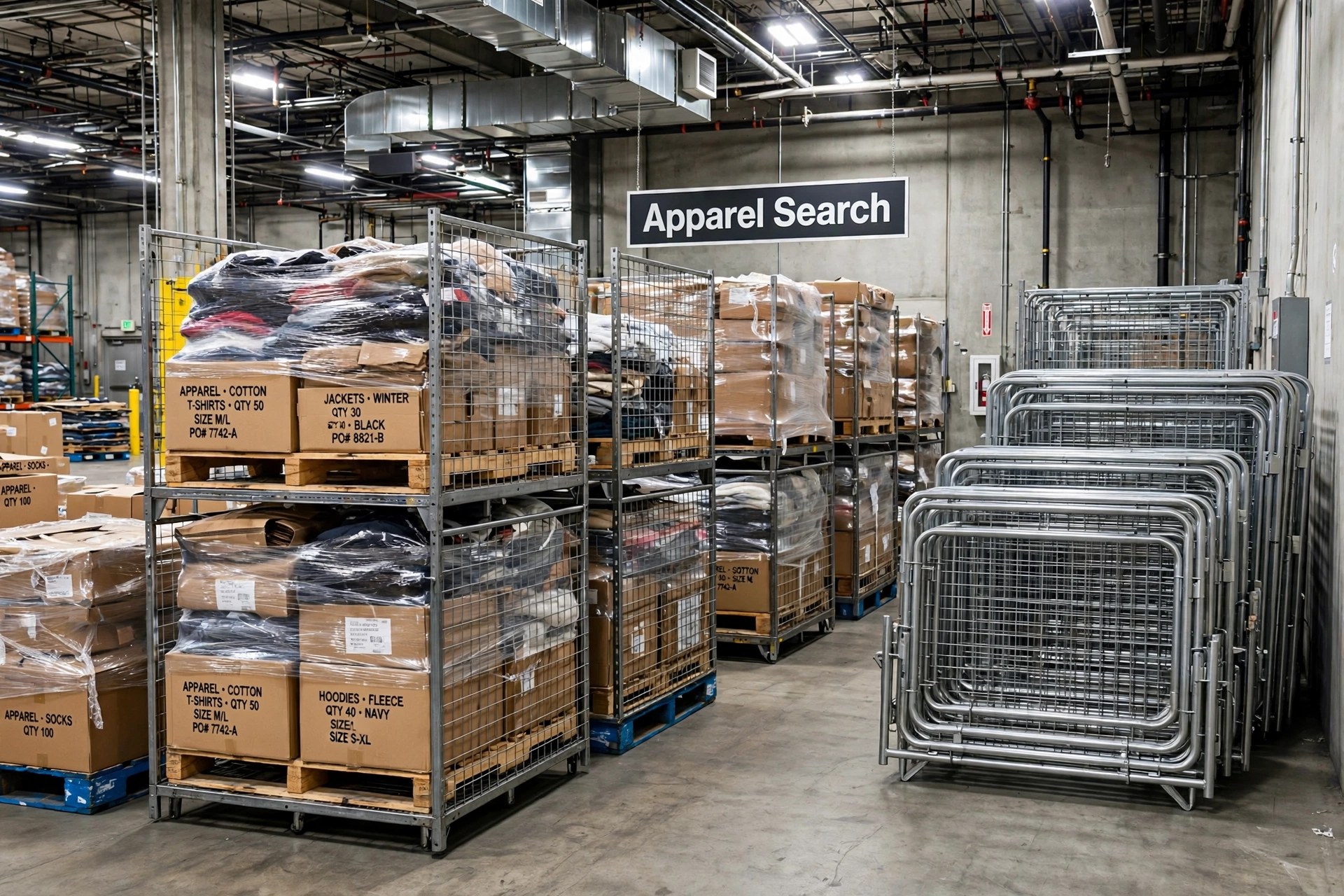
Steel stacking frames are portable racking: rigid steel frames that sit over a pallet load and let loaded pallets be stacked safely two, three or more high without any fixed rack structure at all. A clothing warehouse uses them where storage needs rise and fall — seasonal peaks, overflow stock, a temporary building — because the frames create rack-like stacking wherever they are placed and fold away to almost nothing when the peak has passed.
Warehouse Racking Directory
Rack Types in This Section
How Stacking Frames Work
Each frame is a base with four corner posts and a top structure that receives the posts or the pallet of the frame above. A pallet is loaded into the frame at floor level, the goods are secured, and a forklift lifts the whole loaded frame and sets it onto the stack, where the upper frame's weight is carried down through the posts to the floor — not through the goods below. That load path is the entire point: cartons at the bottom of a stack of frames carry no crushing weight from the cartons above, which is exactly the protection clothing cartons, piled directly on each other, cannot give themselves.
Stacking height is set by the frame design and the floor, and frames are typically used two to four high. When they are empty, most designs nest or fold — the posts collapse or the frames stack tightly together — so a season's worth of peak storage equipment stores in a corner for the rest of the year.
Stacking Frames Versus Fixed Racking
Fixed pallet racking stores more, higher and more selectively, and it is the right answer for permanent bulk storage. Stacking frames win on flexibility: no installation, no anchors, no planning permission for a structure, and no commitment of floor space once the need passes. Apparel warehousing has a pronounced peak — inbound stock for a new season can double the pallets on site for a few weeks — and frames let a business buy storage for that peak without building for it all year. They also travel: a frame can be loaded at a factory, shipped with its load protected inside it, and used as the storage rack at the destination.
The racking company listed below supplies the fixed end of the same decision, designing and installing complete warehouse rack systems; a layout that combines permanent racking for the base load with stacking frames for the peak is a common way apparel warehouses use both.
Frames earn their keep longest when they are treated as equipment rather than as scrap steel. Inspect welds and posts whenever a frame comes back empty; a cracked frame is retired, not straightened in place, because a bent-back post no longer carries its rated load. Store nested frames under cover so corrosion does not start at the feet, and keep to one frame design per site where possible — mixed designs seat badly on each other in a stack and are the commonest cause of an unstable pile. Bought once and handled well, a set of stacking frames serves through many seasons of peaks. Numbering the frames helps them last: a numbered set can be counted out when a peak begins and counted back in when it ends, so losses and damage surface while they can still be chased.
Racking Companies
Nanjing Nuobei Rack Equipment Manufacturing Factory — a rack equipment factory specializing in complete logistics systems, from warehouse layout and design through manufacturing to installation. Its stated approach — quality is supreme, clients are friends — is backed by scientific, reasonable design projects and a product range that has won broad markets and numerous customers' trust.
Common Questions
What is a steel stacking frame?
A portable steel frame that fits over a pallet load so loaded pallets can be stacked several high without fixed racking. The upper frames' weight travels down through the corner posts to the floor, so the goods below are not crushed by the goods above.
Why use stacking frames instead of pallet racking?
Flexibility. Frames need no installation or anchoring, create storage wherever they stand, and nest or fold away when empty — ideal for seasonal peaks and temporary space. Fixed racking stores more, higher and with better access for permanent bulk storage.
How high can stacking frames be stacked?
Typically two to four high, set by the frame design, the load and the floor. The frames in a stack must be the same design, correctly seated on each other, and loaded within their rated capacity.