Heavy Duty Warehouse Racks
The strongest class of racking — built for full pallets of denim, footwear and other dense apparel loads.
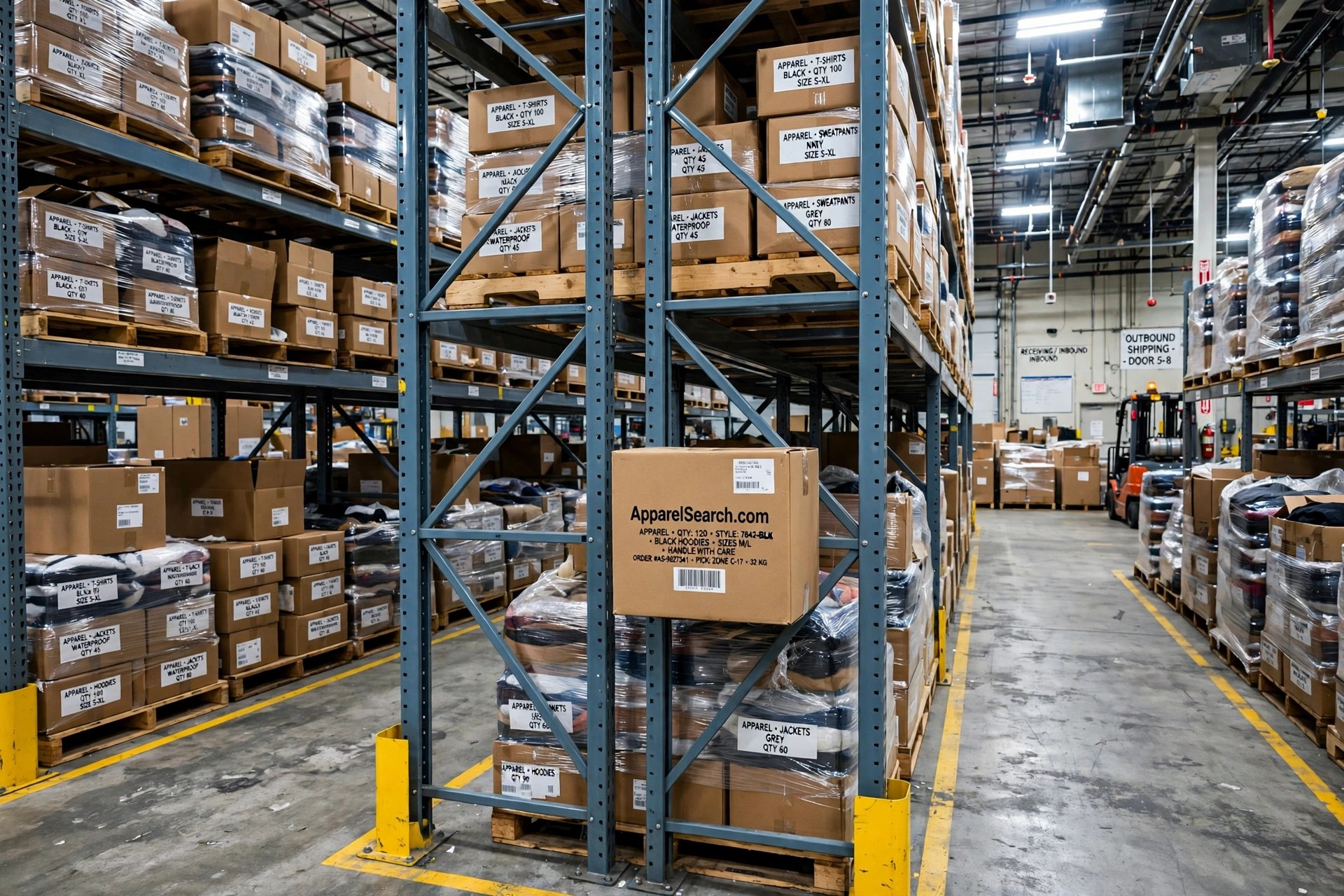
Heavy duty racks are the strongest class of warehouse racking: pallet racking and shelving built with heavy-gauge uprights and beams to carry the heaviest unit loads a building handles. In an apparel warehouse the loads are rarely extreme one carton at a time, but a full pallet of denim, footwear or wet-processed goods is genuinely heavy, and a rack level carrying several such pallets needs the capacities, beam sizes and frame strength that the heavy duty class provides.
Warehouse Racking Directory
Rack Types in This Section
What Makes a Rack Heavy Duty
Capacity is decided by the whole structure working together: the steel gauge and section of the upright frames, the beam profile and the connector that locks beam to frame, the depth of the frame front to back, and the bracing that keeps the run stable under load. Heavy duty systems are specified level by level — the safe load is a figure per beam level and per bay, not a single number for the whole rack — and load notices on the structure state those limits so operators can see them. Floors matter as much as steel: a heavy duty rack concentrates serious weight through its feet into the slab, so floor strength, anchoring and level installation are part of the same specification.
Within the class, heavy duty covers both pallet racking for forklift handling and heavy weight shelving for hand-loaded bulky goods. The manufacturers listed below span that range: BITO's shelving and racking, for example, is produced for load capacities between 50 and 4,500 kg per shelf or per level, from individual bays to multi-tier installations.
Using Heavy Duty Racking Safely
Most rack failures trace back to overloading, lift-truck damage or badly engineered systems rather than to the steel itself, so heavy duty racking earns its keep only when it is used within its ratings. Pallets should sit squarely on both beams with the load spread as the design assumed, damaged uprights — a bent column is a weakened column — should be taken out of service rather than loaded around, and beam levels should not be moved without rechecking the frame capacity, because capacity falls as beam spacing grows.
For a clothing warehouse, the practical checks are simple ones done regularly: look along the runs for impact damage at forklift height, confirm safety clips are in place on beam connectors, keep the heaviest pallets on the lowest levels, and make sure the load on each level matches the notice on the end frame. Heavy cartons of jeans, boots and home textiles are exactly the loads that justify stepping up from medium duty to heavy duty frames.
Accessories complete a heavy duty installation: column guards and end-of-aisle barriers where trucks turn, wire decking or pallet support bars where pallet quality varies, and safety locks at every beam connector. High-bay and seismic variants add bracing and base-plate specification to the same basic frame. When comparing quotations, compare like with like — frame capacity at the beam spacing the building will actually use, not a headline figure at a spacing it never will — and ask for the configuration drawings whose figures the load notices on the finished rack will repeat, so what was designed is what gets checked in service.
Racking Companies
Bito Storage Systems (United Kingdom) — an internationally operating manufacturer of storage and order picking systems. Its shelving and racking is produced in the plant at Meisenheim for load capacities between 50 and 4,500 kg per shelf or per level, covering heavy-weight and bulky goods as well as multi-tier installations built from individual bays.
Nanjing Nuobei Rack Equipment Manufacturing Factory — a rack manufacturer devoted to the design, manufacturing and installation of adjustable assembly racks, working to a stated principle of high quality, superior service and faith keeping. Its lines are built from raw material produced by the Shanghai Baosteel Group Corporation and finished with acid-washing, phosphated reaction, roasted paint treatment and surface plastic-jetting.
Common Questions
What counts as a heavy duty warehouse rack?
A rack built with heavy-gauge upright frames, beams and connectors to carry high loads per level and per bay. The rating is set level by level and shown on a load notice; floor strength, anchoring and correct installation are part of what makes the system heavy duty in practice.
What loads in a clothing warehouse need heavy duty racking?
Full pallets of the densest apparel goods: denim and jeans, footwear, and heavy home textiles. A single carton is light, but a stacked pallet of them is a serious unit load, and several on one beam level justify heavy duty frames and beams.
How is heavy duty racking kept safe?
Stay within the rated level and bay capacities, keep the heaviest pallets low, inspect uprights for forklift impact damage and take damaged frames out of service, keep beam safety clips fitted, and recheck frame capacity before changing beam level spacing.