Drive-In Rack Systems
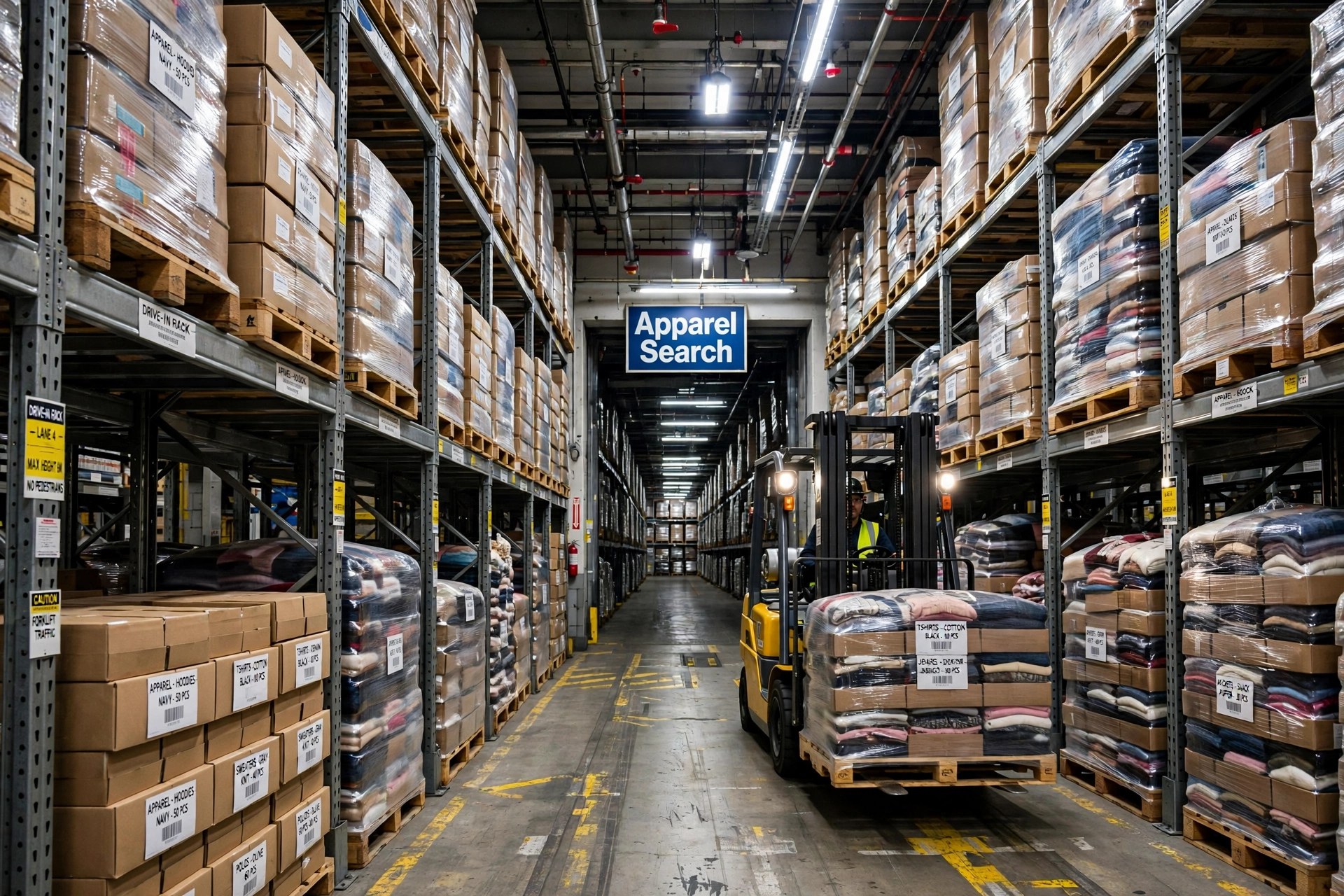
High-density pallet lanes the forklift drives into — bulk storage for seasonal apparel stock.
Drive-in racking is the high-density end of pallet storage: instead of giving every pallet its own aisle face, it stores pallets several positions deep in lanes that a forklift drives directly into. A clothing warehouse reaches for drive-in racks when floor space is the limiting factor and the stock suits depth storage — large quantities of the same goods, such as a season's cartons of one style, that arrive together, are stored together and leave together.
Warehouse Racking Directory
Rack Types in This Section
How Drive-In Racking Works
A drive-in system is a series of upright frames joined across the top, forming tunnels — lanes — that run back from a single loading aisle. Inside each lane, pallets do not rest on beams at the front; they sit on support rails that run the full depth of the lane at each level, so a forklift can carry a pallet into the tunnel, set it down on the rails behind the pallets already stored, and reverse out. The first pallet loaded into a lane is the last one that can be taken out, which is why drive-in racking is described as last-in, first-out storage. A close variant, drive-through racking, opens the lane at both ends so goods can flow in one side and out of the other for first-in, first-out rotation.
Removing most of the aisles is what buys the density: a drive-in block can hold substantially more pallets on the same floor area than selective racking, because the building gives up aisle space in exchange for lane depth. The trade is selectivity — a pallet at the back of a lane cannot be reached until the pallets in front of it have moved.
When Drive-In Racks Suit Apparel Stock
Drive-in storage works best where many pallets carry the same product and move as a group. Apparel warehousing has exactly that pattern at its peaks: a season's delivery of one garment style may fill dozens of identical pallets that will be drawn down over a few weeks of store replenishment, and the order in which individual pallets leave matters far less than the space they occupy in the meantime. It suits cold or costly space, reserve storage that feeds a picking area elsewhere, and slow-moving bulk that would otherwise consume prime selective positions.
It suits poorly where every pallet must be reached individually, where stock rotation by date is strict, or where many different styles share small quantities — those operations lose more to blocked lanes and extra handling than they gain in density. Drive-in lanes also ask more of forklift drivers, who work inside the rack structure itself, so rail guides, column protection and driver training belong in any drive-in plan.
Lane discipline keeps drive-in storage honest once it is installed. A lane should hold one product, and one delivery date wherever possible, so the last-in, first-out order never buries a style that the selling floor needs first; part-used lanes should be emptied and consolidated rather than topped up with different goods, because a mixed lane is exactly where pallets get forgotten. Entry guides and sacrificial protection on the front columns guard the structure where forklifts pass in and out, and lanes deserve inspection from the front on a schedule — damage deep inside a lane is hard to see and worse to repair, so the time to find it is before the lane is refilled, not after.
Racking Companies
Nanjing Nuobei Rack Equipment Manufacturing Factory — a specialist in warehouse logistics systems whose range includes drive-in racks alongside lane racks, mobile racks and gravity racks. The company designs the warehouse section layout, helps choose rack profiles, and handles final installation, conveying and warehouse material management, and it also develops warehouse management software and accessories.
Common Questions
How does drive-in racking increase storage density?
Drive-in racking removes most access aisles and stores pallets several deep in lanes, on rails that run the full depth of each lane. The forklift drives into the lane to place and retrieve pallets, so far more of the floor area holds stock instead of aisle.
Is drive-in racking first-in, first-out or last-in, first-out?
A standard drive-in lane is last-in, first-out: the pallet loaded deepest into the lane comes out last. Where stock rotation matters, the drive-through variant opens both ends of the lane so pallets can be loaded at one end and picked from the other, first-in, first-out.
What kind of clothing stock belongs in drive-in racks?
Large quantities of the same goods that arrive and leave as a group — for example a season's cartons of a single style held as reserve stock. Stock that needs individual pallet access or strict date rotation is better kept in selective pallet racking.