Multi-Tier Warehouse Racks
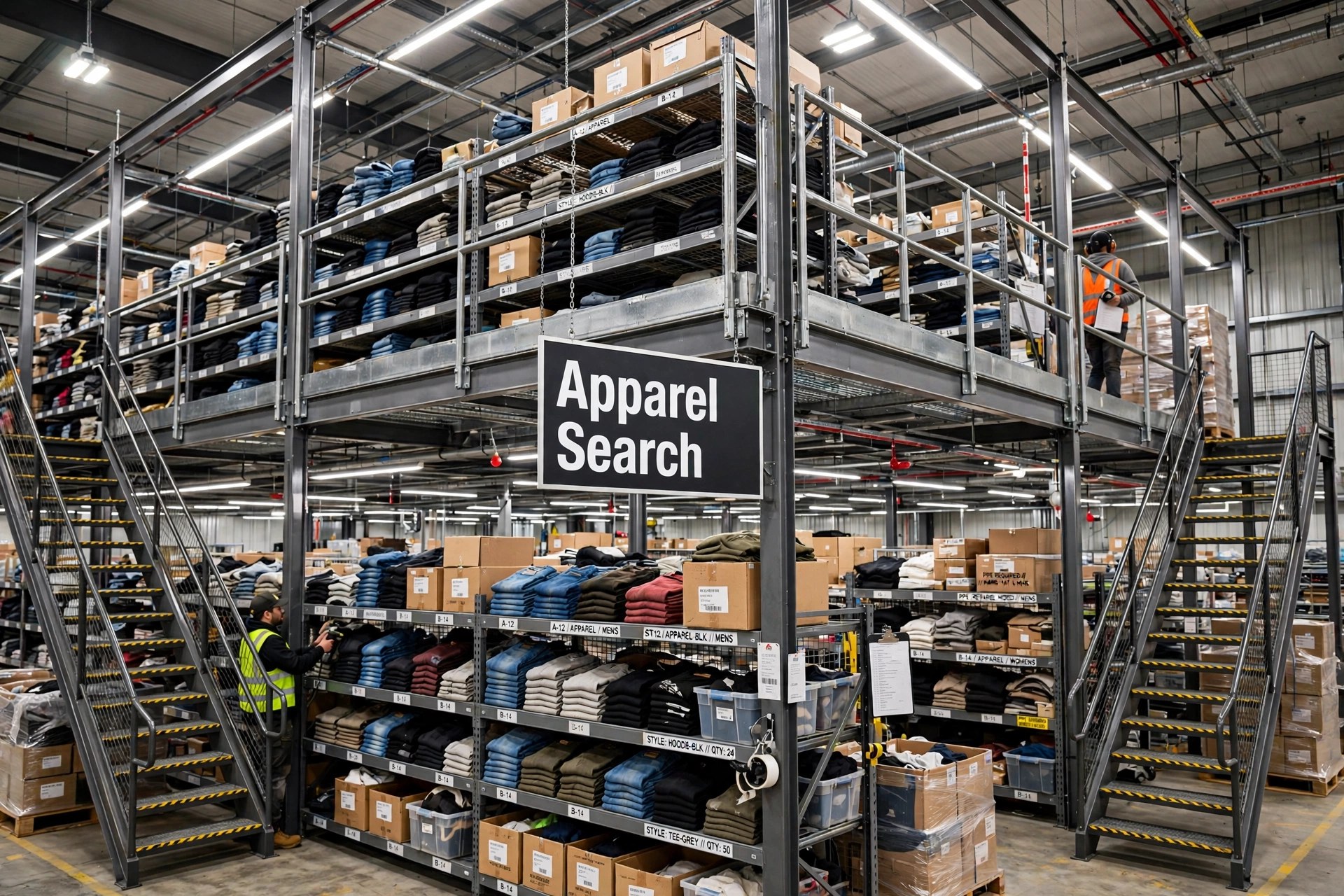
Stacked shelving levels with walkways — a second and third picking floor on the same footprint.
Multi-tier racks turn the full height of a building into hand-picking storage by stacking shelving levels one above another, connected by stairs and walkways. Instead of a single shelving level under a high ceiling, a multi-tier installation gives pickers two or three working floors of shelves — the answer for a clothing warehouse whose stock is light, varied and picked by hand, but whose floor space has run out.
Warehouse Racking Directory
Rack Types in This Section
How Multi-Tier Racking Works
There are two common constructions. In a rack-supported system, the shelving uprights themselves continue upward and carry the walkway floors, so the whole installation is one structure of shelves, decks and stairs. In the other, a free-standing mezzanine floor is built over ground-floor shelving and fitted with its own shelving above. Either way, the result is the same working pattern: pickers walk the tiers with trolleys or totes, goods move between levels by stair, conveyor or goods lift, and each tier is laid out like a small warehouse floor of light or medium duty shelving.
The manufacturers listed below build multi-tier work as part of their shelving ranges: BITO's Meisenheim production runs from individual shelving bays to multi-tier installations, and Nuobei designs and installs complete warehouse systems including the layout itself. Capacities stay in the hand-loaded classes — multi-tier multiplies light and medium duty storage; it does not turn shelving into pallet racking.
Multi-Tier Storage for Apparel Picking
Multi-tier suits apparel because clothing picking is a walking job: thousands of light items, picked one or a few at a time, across a huge range of styles, sizes and colours. Doubling or tripling the shelving on the same footprint keeps that range in one picking area instead of scattering it across overflow space, and the tiers divide naturally — one level for current-season picking, another for reserve or returns, or a tier per product family.
The planning details decide whether it works: stairs and walkways wide enough for pickers with trolleys to pass, safe transfer of cartons between levels so nobody carries loads on stairs, lighting under each deck as good as at the top, and sprinkler and fire-escape provisions designed in from the start, since a tiered structure changes how a building is protected. Planned well, a multi-tier installation is the cheapest additional floor a clothing warehouse can buy.
Fire protection and escape shape multi-tier design as much as storage does. Tiers change a building's sprinkler coverage, its travel distances to exits and its lighting and signage needs, so the installation is designed together with the building's fire strategy rather than added after it: decks may need open-grate sections so sprinkler water reaches the levels below, stairs double as escape routes and must stay clear at all times, and every tier needs its own emergency lighting. Build those provisions in at the quotation stage — retrofitting them into a finished tier structure is the expensive way to learn the same lesson. Insurance inspections ask about exactly these points, and a documented design answer kept with the building records is worth far more than a verbal one.
Racking Companies
Bito Storage Systems (United Kingdom) — an internationally operating manufacturer of storage and order picking systems, including the multi-tier shelving installations in its range. Its shelving and racking, produced at Meisenheim, serves load capacities from 50 to 4,500 kg per shelf or per level, for small or large, light or heavy, bulky or long goods.
Nanjing Nuobei Rack Equipment Manufacturing Factory — a logistics-system producer whose installations include multi-level warehouse projects, designed, manufactured and installed by the same company. It selects raw material from the Shanghai Baosteel Group Corporation and finishes its racks with acid-washing, phosphating, roasted paint and surface plastic-jetting, with a professional after-sale team covering installation.
Common Questions
What is multi-tier racking?
Shelving built in two or three stacked levels with stairs and walkways, so pickers work on each tier like a small warehouse floor. It multiplies hand-picking storage within the same footprint by using the building's full height.
What stock suits multi-tier racks in an apparel warehouse?
Light, varied, hand-picked stock: folded garments, accessories and small cartons across many styles, sizes and colours. Multi-tier multiplies light and medium duty storage; heavy pallet loads still belong in pallet racking.
How do goods move between tiers?
By design, not by carrying: stairs are for people, and cartons move between levels by conveyor, goods lift or chute. A workable multi-tier plan includes the transfer method, walkway widths, lighting under decks and fire provisions from the start.