Cantilever Rack Systems
Open-fronted racking with projecting arms — the rack for fabric rolls, garment rails and long goods.
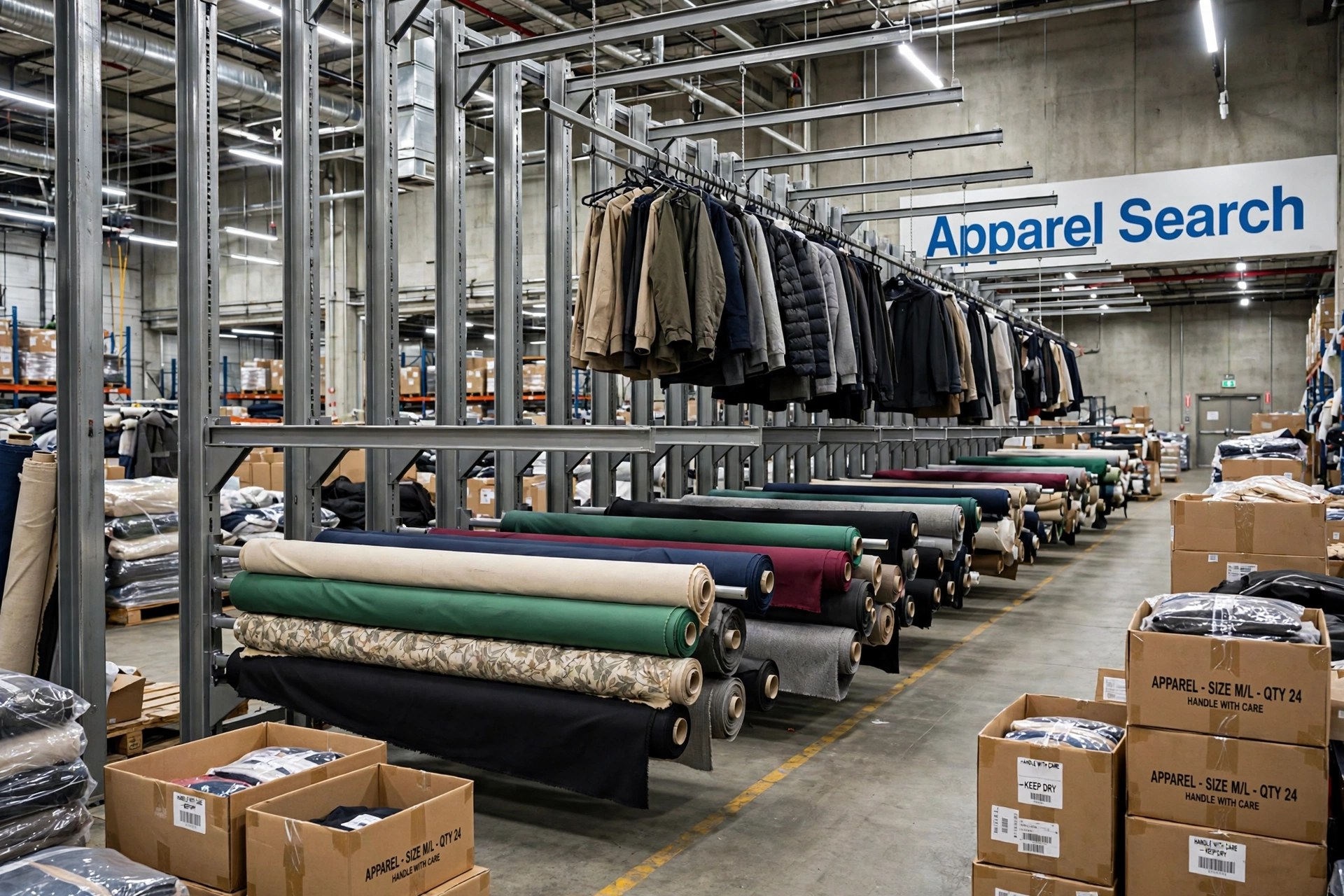
Cantilever racks store the loads that ordinary pallet racking handles badly: long, bulky or awkward goods that will not sit neatly on a pallet between uprights. In a clothing warehouse that means rolls of fabric, bolts of cloth, garment rails and long cartons — stock whose length, not its weight, causes the problem. A cantilever system is built from upright columns with arms projecting out at each level and no vertical obstructions at the front, so a long load rests across the arms and can be lifted straight in and out along its whole length.
Warehouse Racking Directory
Rack Types in This Section
How a Cantilever Rack Is Built
The structure has three working parts: a heavy base and upright column at the back, horizontal arms that project forward from the column and carry the load, and bracing that ties columns together into runs. Because every arm is supported from behind, the storage face is completely open — there is no front upright to steer around, which is what makes cantilever racking the natural home for fabric rolls and other long stock that a forklift or a worker carrying a roll needs to approach from the side. Arms are commonly adjustable on the column, so level heights can follow the diameter of the rolls or the length of the goods being stored, and systems are built single-sided against a wall or double-sided as free-standing rows with arms on both faces.
Loads rest directly on the arms, so the arm itself — its length, its capacity and any slight upward incline that stops round stock rolling forward — is the detail that decides whether a system works. Rolls of fabric are usually stored on their core or cradled so the cloth is not crushed, and end stops or pins keep long goods from sliding off the arm ends during loading.
Cantilever Racking in an Apparel Warehouse
Fabric is the classic cantilever load in this industry. A clothing factory or fabric warehouse receives cloth in rolls that may be far longer than a pallet is deep; laid across cantilever arms, each roll stays visible, reachable and off the floor, protected from the damp, dust and forklift knocks that damage stock stored at ground level. The same open-faced structure suits garment rails awaiting pressing or dispatch, long packaged goods such as rolled carpets and trims, and the timber, tube and board that maintenance teams keep for shopfitting. Because any level can be reached without moving the loads in front of it, cantilever racking keeps every roll individually accessible — a real advantage when a production order calls for one specific fabric from the middle of the stock.
Cantilever systems sit alongside, not instead of, pallet racking: the palletized cartons go in the pallet racks, and the long and irregular goods go on the arms. Planning a run means matching arm capacity to the heaviest roll, spacing columns so long loads do not sag between arms, and leaving handling room at the front for the longest item to swing in and out.
Specifying a cantilever run starts with the longest and heaviest load it must carry. Arm length has to clear the depth of the goods with room to spare, arm capacity is quoted per pair of arms at a level, and column spacing follows the stiffness of the load — a flexible fabric roll needs support at closer intervals than a rigid garment rail. Give the supplier those load cases rather than a rack height and depth alone, keep the lowest arms high enough that floor-stacked goods cannot foul them, and make the handling aisle wide enough for the longest roll to turn into the run. Cantilever racking is normally ordered for a known family of long stock, and it serves that family for decades when the specification starts from the goods.
Racking Companies
Nanjing Nuobei Rack Equipment Manufacturing Factory — one of the earliest producers specializing in logistics systems for warehouses, covering layout, design, manufacturing and installation. Its production includes profile-rolling rack processing with acid-washing, phosphating, roasted paint treatment and surface plastic-jetting, backed by a professional after-sale installation team, and its steel is sourced from the Shanghai Baosteel Group Corporation.
Common Questions
What is a cantilever rack used for in a clothing warehouse?
Cantilever racks store long and bulky goods that do not fit pallet racking: rolls and bolts of fabric, garment rails and long cartons. Projecting arms carry the load from upright columns at the back, leaving the front completely open so each roll can be loaded and reached along its full length.
What is the difference between single-sided and double-sided cantilever racking?
Single-sided cantilever racking stands against a wall with arms on one face only. Double-sided racking is free-standing with arms on both faces of the columns, doubling the storage on the same footprint where floor space and access aisles allow it.
How are fabric rolls protected on cantilever arms?
Rolls rest on their core or in cradles so the cloth is not crushed, arms can be fitted with stops or pins to keep round stock from rolling or sliding, and storing rolls up on arms keeps them clear of floor damp, dust and passing forklift traffic.