Wire Decking for Warehouse Shelves
The mesh panel that turns two beams into a shelf — safer, flexible rack levels.
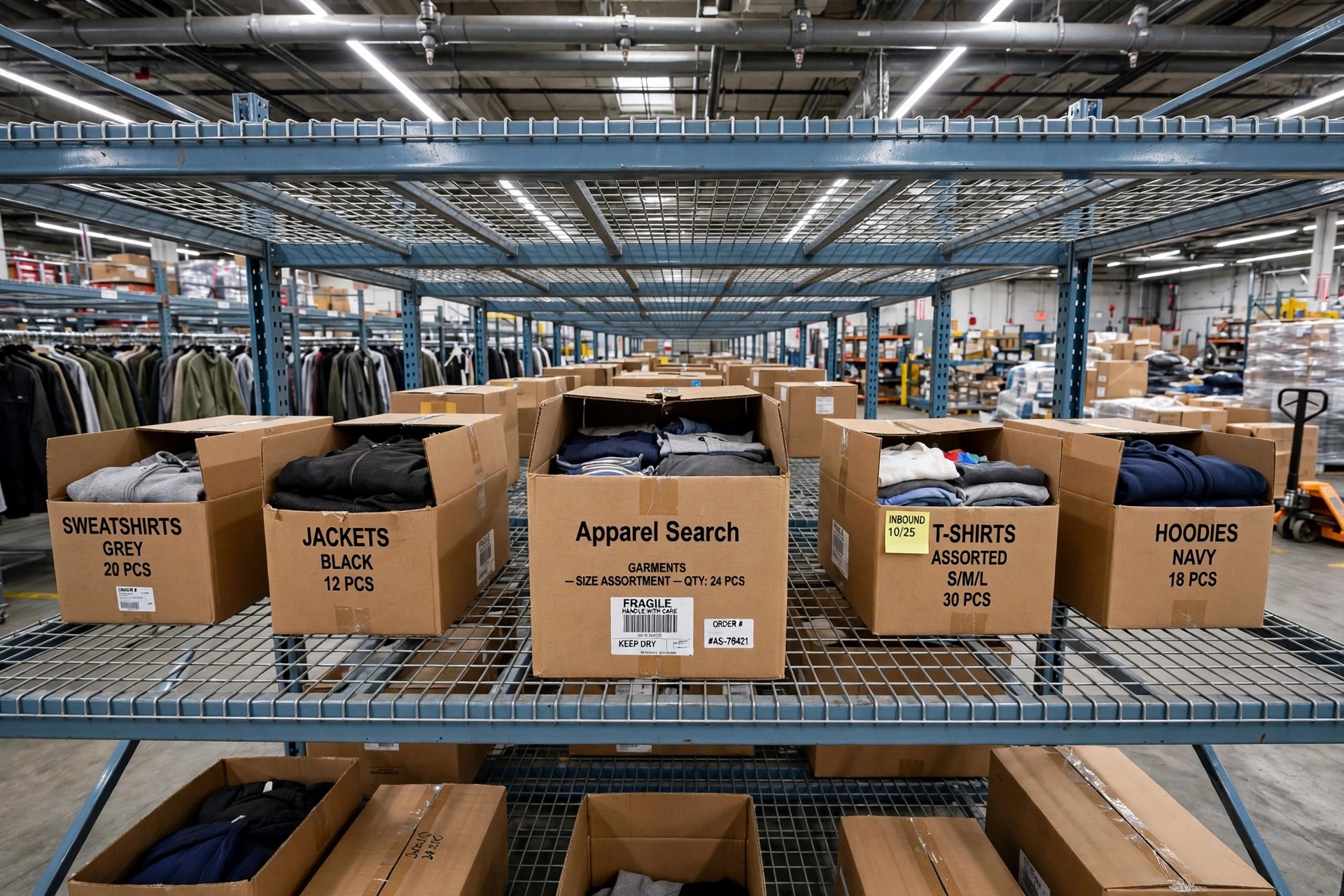
Wire decking is the mesh panel that turns two parallel rack beams into a shelf. Dropped into a pallet rack level, a wire deck gives that level a continuous surface, so the rack can hold more than full pallets on standard footprints: split cartons, small or damaged pallets, hand-stacked boxes and the odd-shaped loads that would otherwise fall or sag between the beams. For a clothing warehouse, where a pallet position may hold cartons one day and loose stock the next, wire decking is what makes a pallet rack behave like flexible shelving.
Warehouse Racking Directory
Rack Types in This Section
What Wire Decking Does
A wire deck is a welded mesh of steel wires with support channels beneath that rest on the rack beams. Its first job is safety: it stops cartons and pallets that are misplaced, undersized or broken from falling through the level to the floor or onto stock below — a real hazard in any rack where forklifts place pallets at speed. Its second job is versatility: with a deck in place, a level can be hand-loaded with individual cartons, used as a picking shelf, or hold pallets of mixed sizes, all without reconfiguring the beams. Decks are made to the beam spacing and frame depth of the rack they serve and are rated for a distributed load, so they are specified with the rack, not after it.
The open mesh brings two further advantages that matter in apparel storage. It lets sprinkler water pass through the levels instead of ponding on solid shelves, which is why fire protection practice favours wire decks over solid boards in rack storage; and it keeps stock visible from below, so a picker or a stock checker can see what a level holds without climbing. The supplier listed below stocks wire decking for warehouse shelves as part of a full rack-systems range.
Wire Decking in the Clothing Warehouse
Apparel stock stresses racks in a particular way: cartons are light but bulky, pallet quality varies, and levels are constantly re-purposed between bulk reserve, case picking and returns. Wire decking absorbs all of that. A returns area can hand-stack mixed cartons on decked levels; a reserve level can take a part pallet that would bridge beams unsafely on its own; and a damaged pallet can be set down on a deck rather than refused at the aisle. Decks also keep small cartons from tipping into the flue space between rows, helping the rack stay as it was designed.
Decking is not a substitute for beams where full heavy pallets are concerned — a pallet should still be supported as the rack was designed for it, and deck load ratings assume the load is spread across the panel. Used within its rating, though, wire decking is one of the cheapest upgrades a clothing warehouse can make to racks it already owns.
Specifying decks for racks you already own is a measuring job. The panel must match the inside depth of the frame and rest fully on both beams, its support channels must clear any step in the beam profile, and its rated capacity must suit the most concentrated load it will meet, not just the average carton. Order a sample panel and test it in the rack before fitting out a whole aisle, confirm that sprinkler coverage and lighting were allowed for when the level was designed, and record the deck specification alongside the rack's own load documentation, so a future level change never pairs stronger beams with weaker decks by accident.
Racking Companies
Custom Equipment Company — a material handling supplier whose huge online catalog includes the wire decking for warehouse shelves covered in this section. Beyond decking, the company is listed for rack systems, mezzanines and modular office systems, wire shelving, containers in new, used and collapsible bulk forms, packaging, conveyor systems, and pallets and topcaps. Address: 10453 Leslie Drive, Raleigh, NC 27615. Phone: 919-518-0900. Fax: 919-847-5765. E-mail: tom@custommhs.com. Contact: Tom McGovern.
Common Questions
What is wire decking used for?
Wire decking is a welded mesh panel that sits on pallet rack beams to make a continuous shelf surface. It lets a level hold split cartons, small or damaged pallets and hand-loaded stock safely, and it stops items falling through the level.
Why is wire decking preferred over solid boards in racks?
The open mesh lets sprinkler water pass through the rack levels instead of ponding, keeps stored stock visible from below for picking and stock checks, and does not collect dust the way solid surfaces do — while still supporting the load across both beams.
Can wire decking replace rack beams for heavy pallets?
No. Decks are rated for a distributed load spread across the panel, and full pallets should still be supported as the rack was designed. Wire decking extends what a level can hold; it does not raise the rack's beam or frame capacities.