Medium Duty Warehouse Racks
The versatile middle class — carton and part-pallet storage between shelving and pallet racking.
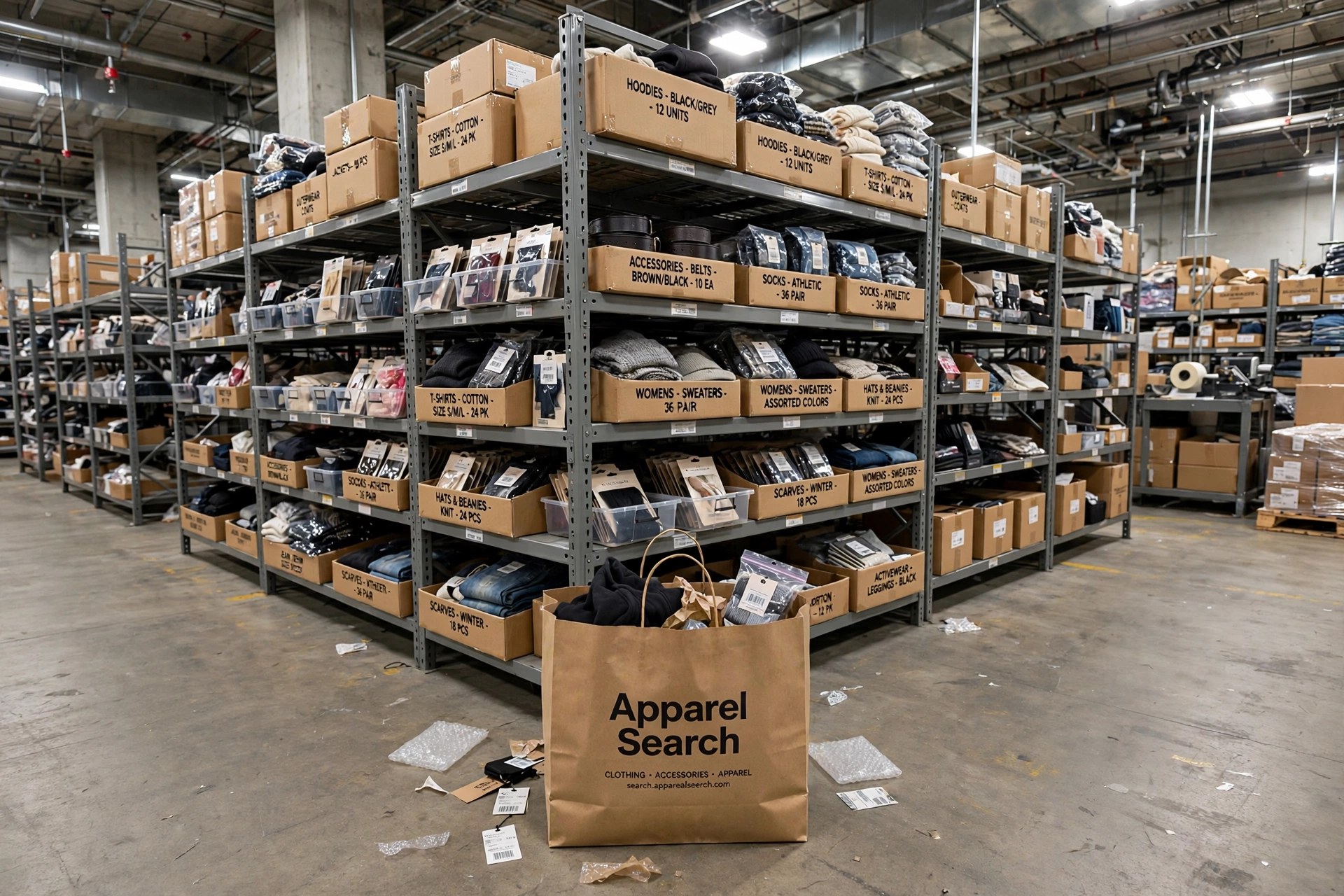
Medium duty racks are the versatile middle of the warehouse racking range: stronger than light shelving, lighter and cheaper than heavy duty pallet racking, and sized for the mixed hand-and-trolley loading that fills most of an apparel warehouse. Medium duty racking typically carries cartons and goods by hand or with light mechanical help at each level, which makes it the default choice for reserve cartons, work-in-progress storage and the middle-weight stock that is too heavy for shelves and too small or too varied for full pallet positions.
Warehouse Racking Directory
Rack Types in This Section
Where Medium Duty Racking Fits
The duty classes are really a statement about how a level is loaded and what it carries. Light duty shelves are hand-loaded with individual light items; heavy duty beams carry full pallets placed by forklift. Medium duty sits between: beam levels or long-span shelves that accept whole cartons, part pallets and bundled goods, loaded by hand, by trolley or by light lifting equipment. For a clothing warehouse that means the working stock — cartons of shirts awaiting allocation, boxed accessories, bagged garments in transit between departments — stored accessibly without paying for pallet-rack steel it does not need.
Adjustable assembly is the norm in this class, and the manufacturer listed below builds its range around it: adjustable assembly racks whose levels can be reset as the stock changes. That adjustability is what makes medium duty the flexible reserve behind a picking area, re-spaced each season as carton sizes change.
Choosing Between the Duty Classes
Choose by the heaviest load a level will actually carry and by how it gets there. A level of denim cartons placed by hand may weigh more than a level of hanging garments placed by trolley, so estimate the real loaded weight per level — cartons add up faster than they look — and then step up a class if the figure is anywhere near the rating. It is false economy to run medium duty at its limit everywhere: the class above costs less than one collapsed level.
In practice most apparel buildings mix all three classes deliberately: light shelving at the pick face, medium duty behind it for reserve cartons, and heavy duty pallet racking for inbound bulk. The racking companies in this section supply across those classes, and a layout that assigns each stock type to its proper class uses both the building and the budget better than any single system used for everything.
Medium duty levels also carry the working clutter of a warehouse between jobs: roll cages awaiting repair, packing-bench stock, display and shopfitting kits, and the returned-goods totes that need a home while they wait for inspection. Giving those odds and ends a labelled medium duty bay of their own is unglamorous and effective — it keeps them off the floor, out of the pallet racking and out of the aisles. Mark each bay with the load class it was built to, so a well-meant tidy-up never quietly parks a heavy load on a level that was only ever specified for cartons. A bay that is honestly labelled tends to be used honestly, and the same discipline applies at goods-in, where weighing one sample carton settles which duty class a new line belongs to before it is put away in the wrong place.
Racking Companies
Nanjing Nuobei Rack Equipment Manufacturing Factory — a manufacturer of adjustable assembly racks and related warehouse systems, with sophisticated and complete product lines of profile-rolling rack processing. Beyond the racks themselves it deals in warehouse section layout, rack profile choosing, conveying and the management of warehouse material, plus a series of warehouse management software and accessories.
Common Questions
What is a medium duty rack used for?
Medium duty racking carries the mixed middle loads of a warehouse: whole cartons, part pallets and bundled goods loaded by hand, trolley or light lifting equipment. In apparel warehouses it typically holds reserve cartons and work in progress behind the picking area.
How do I choose between light, medium and heavy duty racking?
By the real loaded weight per level and how the load gets there. Hand-loaded individual items suit light shelving, cartons and part pallets suit medium duty, and full forklift-placed pallets need heavy duty. If a level's weight nears its class rating, step up a class.
Can medium duty racking be adjusted when stock changes?
Yes. Adjustable assembly is the norm in this class: beam or shelf levels reset on the uprights so spacing follows new carton sizes each season, which is what makes medium duty racking the flexible reserve behind a pick face.