01 · Hardware
The Hardware That Holds a Charm
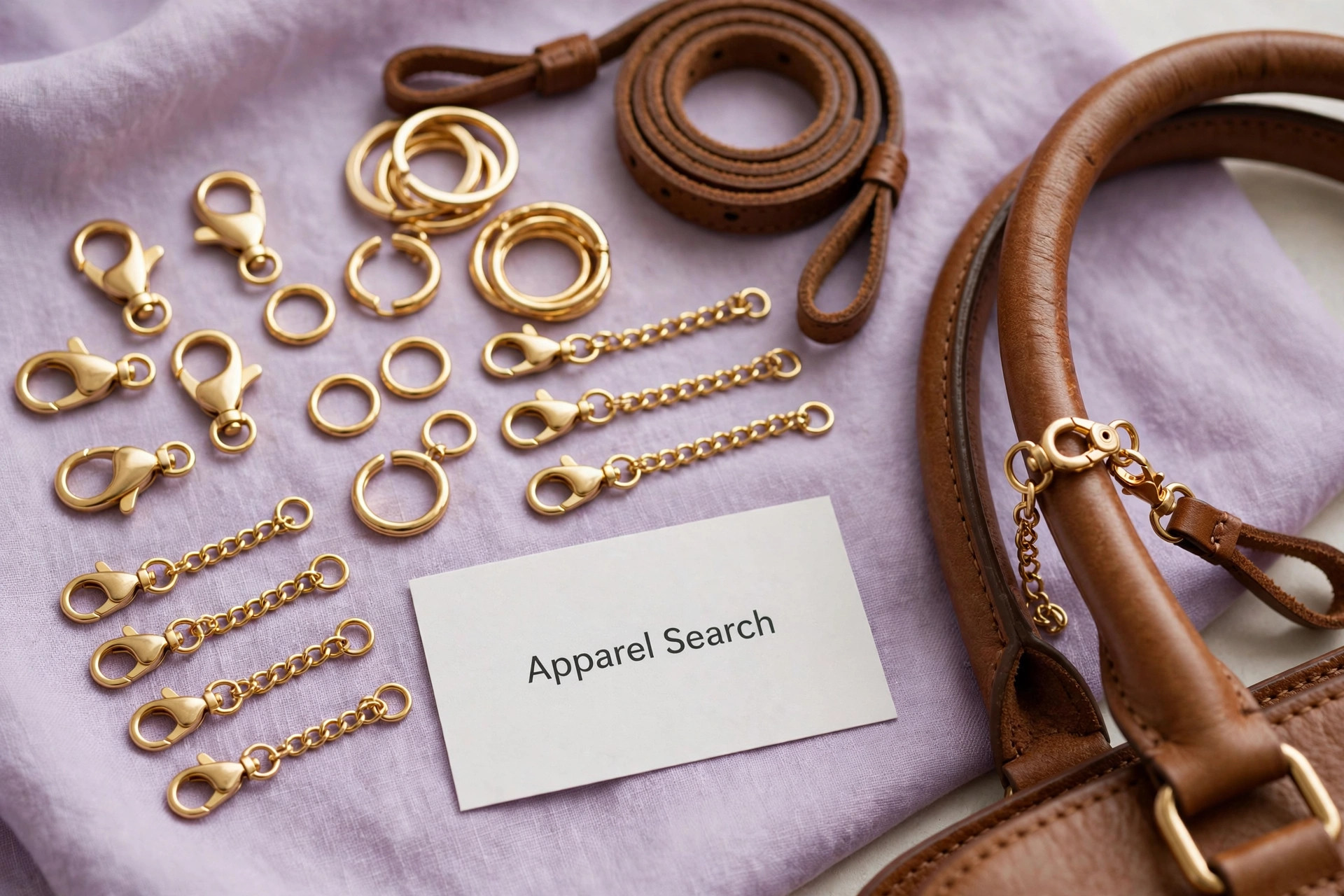
Every bag charm is only as good as its attachment. The charm itself may be plush, bead or metal, but the part that decides whether it stays on the bag, swaps easily and leaves no mark is a few millimetres of hardware — and it is worth choosing deliberately rather than accepting whatever the charm arrived with.
| Hardware | How it works | Best for |
|---|---|---|
| Lobster clasp | A spring-loaded claw that clips onto a ring or loop and releases with a small lever | The default choice — secure, quick to swap, fits most D-rings and zip pulls |
| O-ring / split ring | A closed ring, plain or sprung, that several charms can share | Clusters — group three to five charms on one ring, then clip the ring to the bag |
| Leather loop strap | A short strap that threads around a handle and fastens with a stud or knot | Smooth or delicate handles, and bags with no metal ring to clip to |
| Chain extender | A short length of chain between clasp and charm | Adding drop length so a charm clears a flap, pocket or handle base |
| Tie-on / scarf wrap | Fabric knotted or wound around the handle itself | Handle protection plus decoration; no metal touches the leather at all |
Whatever the fitting, test the spring or closure before trusting it with a charm you would mind losing, and re-check it after the first few wears. The full picture of what the charms themselves can be is in the bag charms guide.
02 · Weight & Balance
Weight, Balance and Where the Charm Hangs
Weight is the quiet limit on charm collecting. A bead strand weighs almost nothing; a metal miniature or a large plush can pull noticeably on a handle, and a heavy charm on a soft, unstructured bag will drag one side out of shape over a season. As a working rule, the whole cluster should feel negligible when you lift the bag by its handle — if you can feel the charms’ weight, they are too heavy for everyday wear on that bag.
Balance matters as much as total weight. One cluster at one point keeps the pull in a single, predictable place; charms scattered at several points twist straps and handles in different directions. Hang length counts too: a charm should clear the bag’s body rather than swing against it, and should never hang low enough to catch on clothing, seatbelts or the contents of a shopping trolley.
03 · Protecting the Bag
Protecting Leather and Finishes
The damage charms do is almost always friction damage: bare metal rubbing leather, painted finishes or light-coloured canvas, thousands of small swings a day. Preventing it is simple. Prefer clasps with smooth, rounded edges; put a small felt pad, a leather loop or a turn of the scarf wrap between any metal fitting and the bag’s surface; and keep raw or unfinished metal charms off pale leather entirely, where they can leave transfer marks.
Choose the attachment point with the same care. Sturdy, replaceable hardware — a D-ring, a strap ring, a zip pull — is made to take the load. Decorative stitching, thin handle glazing and the edges of a flap are not. Structured styles from the handbag types hub usually offer an obvious ring; on bags without one, a leather loop strap around the handle base spreads the load kindly instead of concentrating it on a single stitch.
04 · Care & Storage
Care and Storage for Charms
Charms live a harder life than jewellery — swung, rained on, knocked against doors and dropped in bags — so a little routine keeps them presentable. Wipe metal charms with a soft dry cloth; clean beads with a barely damp one; let plush charms air after a wet day rather than sealing them away damp. Check clasps and rings every few weeks: a spring that feels soft or a ring that has opened a fraction is a charm about to be lost.
Store charms as you would store the collection they are: individually in small pouches or compartments, so beads do not chip each other and metal does not scratch metal, and keep plush away from anything with a hook or clasp that can snag it. Stored kindly and attached kindly, a charm collection outlasts any single bag — which is rather the point, since the bags rotate and the charms, as the styling guide shows, are the part of the outfit that stays personal.
Questions
Common Questions
What is the best way to attach a bag charm?
A lobster clasp clipped to sturdy hardware — a D-ring, strap ring or zip pull — is the best default: secure, quick to swap and kind to the bag. For a cluster, group the charms on one O-ring first and clip the ring on. On bags with no ring, a leather loop strap around the handle base spreads the load without stressing any single stitch.
How heavy can a bag charm be?
Light enough that you cannot feel it. Lift the bag by its handle with the charms attached: if their weight registers, the cluster is too heavy for everyday wear on that bag. Heavy charms strain handles, drag soft unstructured bags out of shape, and swing harder against leather and finishes.
How do you stop a bag charm scratching leather?
Keep bare metal off the surface: choose clasps with smooth rounded edges, place a felt pad, leather loop or scarf wrap between the fitting and the leather, attach to sturdy hardware rather than near decorative stitching, and keep raw unfinished metal charms off pale leather, where they can leave transfer marks.
More to Explore
Search Apparel Search