Children's Boys Belts Guide
Boys' belts do two jobs at once: they keep trousers securely in place, and they contribute the polished finish that separates a dressed outfit from a thrown-on one. This boys-specific guide goes deeper than the general belts page in this letter - into the materials and styles boys actually wear, from school leather to the reversible and braided belts that anchor a boy's everyday rotation.
Shop Children's Boys Belts Now
Shop Children's Boys Belts on Amazon Shop Children's Boys Belts on eBayThe Amazon and eBay links on this page are affiliate links. If you make a purchase through them, Apparel Search may earn a commission.
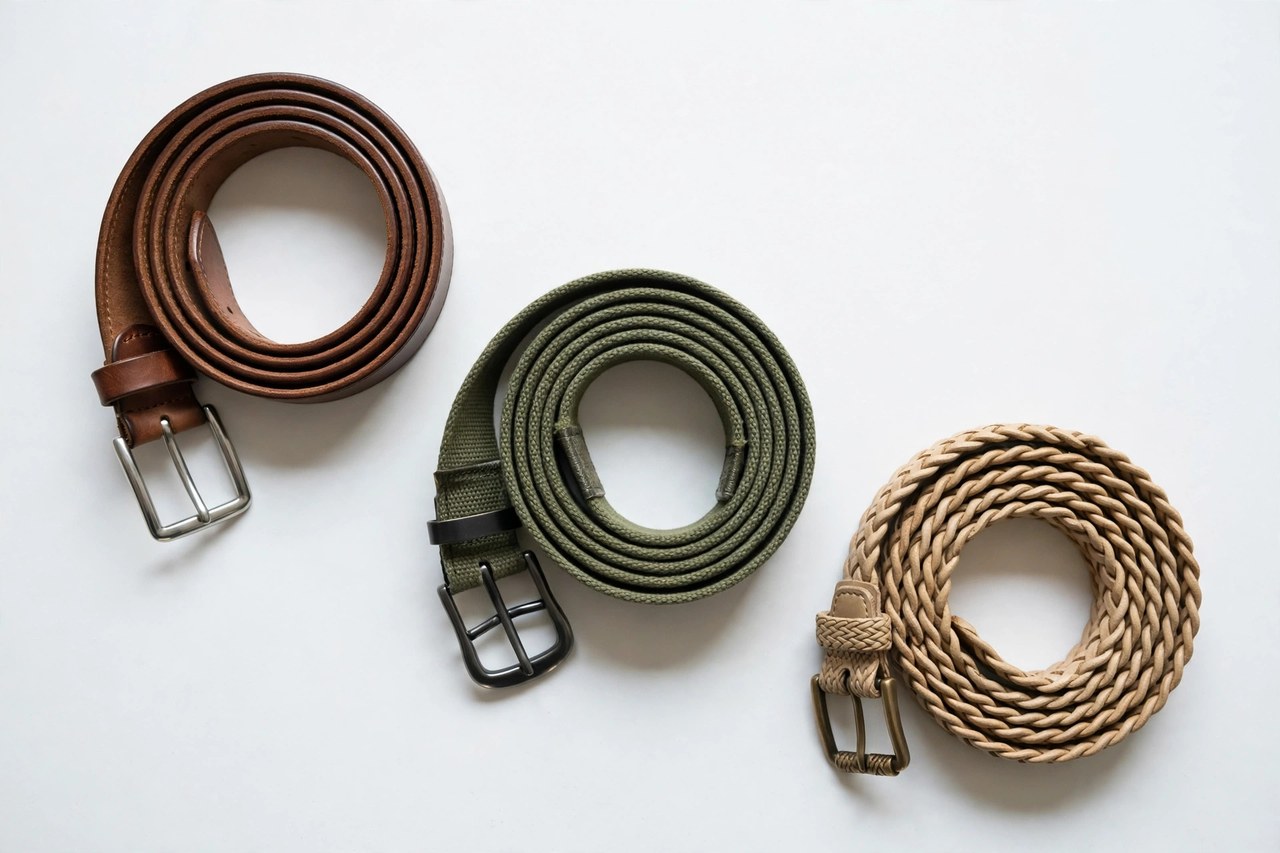
Boys' belts do two jobs at once: they keep trousers securely in place, and they contribute the polished finish that separates a dressed outfit from a thrown-on one. This boys-specific guide goes deeper than the general belts page in this letter - into the materials and styles boys actually wear, from school leather to the reversible and braided belts that anchor a boy's everyday rotation. This guide walks through the choices that matter - style, fit, fabric and finish - with the practical detail a product listing rarely gives, and closes with the care habits that keep the garment in service.
Styles and Construction
Leather leads the material list: smooth leather for school and occasions, suede for a softer look with chinos, and embossed or tooled straps where western wear is the wardrobe. Canvas and webbing belts with slide buckles are the self-dressing choice for younger boys, indefinitely adjustable and forgiving of growth. Braided leather or elastic braids fasten anywhere along their length - the between-sizes solution - and reversible black-to-brown straps give two occasion belts in one purchase, the economical core of a small belt drawer.
Children's accessories succeed on safety and simplicity: no small detachable parts for the youngest children, no long cords or ties that can catch on playground equipment, and closures a child can work alone. Materials should tolerate the child's real life - washable, chew-resistant for toddlers, and free of rough edges against skin. An accessory that needs adult help every time it is worn will simply stop being worn, however handsome it looks in the shop.
Fit and Sizing
Buckles stay simple in this range: frame-and-prong for leather, slide and D-ring for webbing, and plaque styles kept small and light for school. The buckle guides in this letter cover the hardware in depth; here the rule is proportion - a boy's buckle should sit inside the trousers' loop spacing without forcing, and any mechanism a boy cannot work alone at school is the wrong mechanism however smart it looks.
Accessories fit by measurement, not by age label: head circumference for hats, waist for belts measured over the trousers the belt will hold up, and hand length for gloves. Makers' charts vary more for accessories than for clothing, so measure and read the chart every time. Anything worn at the neck or head must fit close enough to stay put in play and loose enough to pull off easily - if a child cannot remove it alone, it does not fit yet.
Wearing and Care
One good leather belt, one webbing everyday belt and - where the wardrobe leans western - one braided or tooled belt cover nearly every boyhood occasion. Care follows the general rule: hang or roll, condition leather when it stiffens, and size up when the working hole reaches the last two - a belt outgrown at the holes is finished even if the strap is perfect, and it passes down well for exactly that reason.
Store children's accessories where the child can reach them - a low basket for hats and gloves, a hook for the belt - because an accessory with a home is an accessory that gets worn and does not get lost. Wash hats and soft accessories on the gentle cycle inside a mesh bag, reshape while damp, and check straps, buckles and fasteners monthly for cracks or looseness. Keep a spare pair of gloves and a spare hat from the start; winter loses them on schedule.
Common Questions
What materials are boys' belts made from?
Leather first - smooth for school and occasions, suede and tooled styles for casual and western wear - then canvas and nylon webbing with slide buckles for everyday self-dressing, and braided leather or elastic that fastens at any point along its length. Leather leads for its polished contribution to an outfit, and the material order runs from dressy to practical in that sequence.
How do you measure a boy for a belt?
Measure his waist over the trousers the belt will hold, and buy the belt whose middle hole lands on that measurement. The common shortcut - two inches above the trouser size - works when the trousers are true to size. Check the strap passes every loop and the tip reaches just past the first loop fastened; between sizes, a braided or webbing style adjusts to the exact waist and ends the guessing.
Does a boy need more than one belt?
Two cover almost everything: a leather belt for school, occasions and photographs, and a webbing or elastic belt for everyday trousers and shorts. Add a western or braided belt only where the wardrobe genuinely includes those outfits. Belts are outgrown at the holes rather than worn out, so a small, right-sized drawer beats a collection.
More in Children's Clothes Guide B
The B letter hub and the guides closest to this one:
Looking for Children's Clothing Stores?
This guide helps you choose children's boys belts. To browse where to buy, visit our children's clothing store directory, where you can find retailers that carry them.