Children's Belt Buckles Guide
The belt buckle is the working half of a child's belt: the frame, prong and mechanism that fasten the strap and take every strain of the school day. Children's buckles divide into the classic frame-and-prong, the roller buckle that spares soft straps, military-style slide buckles, snap-on novelty buckles that swap between straps, and the western engraved plates that finish a cowboy outfit. Buckles deserve their own topic for good reason: belts fail at the buckle first.
Shop Children's Belt Buckles Now
Shop Children's Belt Buckles on Amazon Shop Children's Belt Buckles on eBayThe Amazon and eBay links on this page are affiliate links. If you make a purchase through them, Apparel Search may earn a commission.
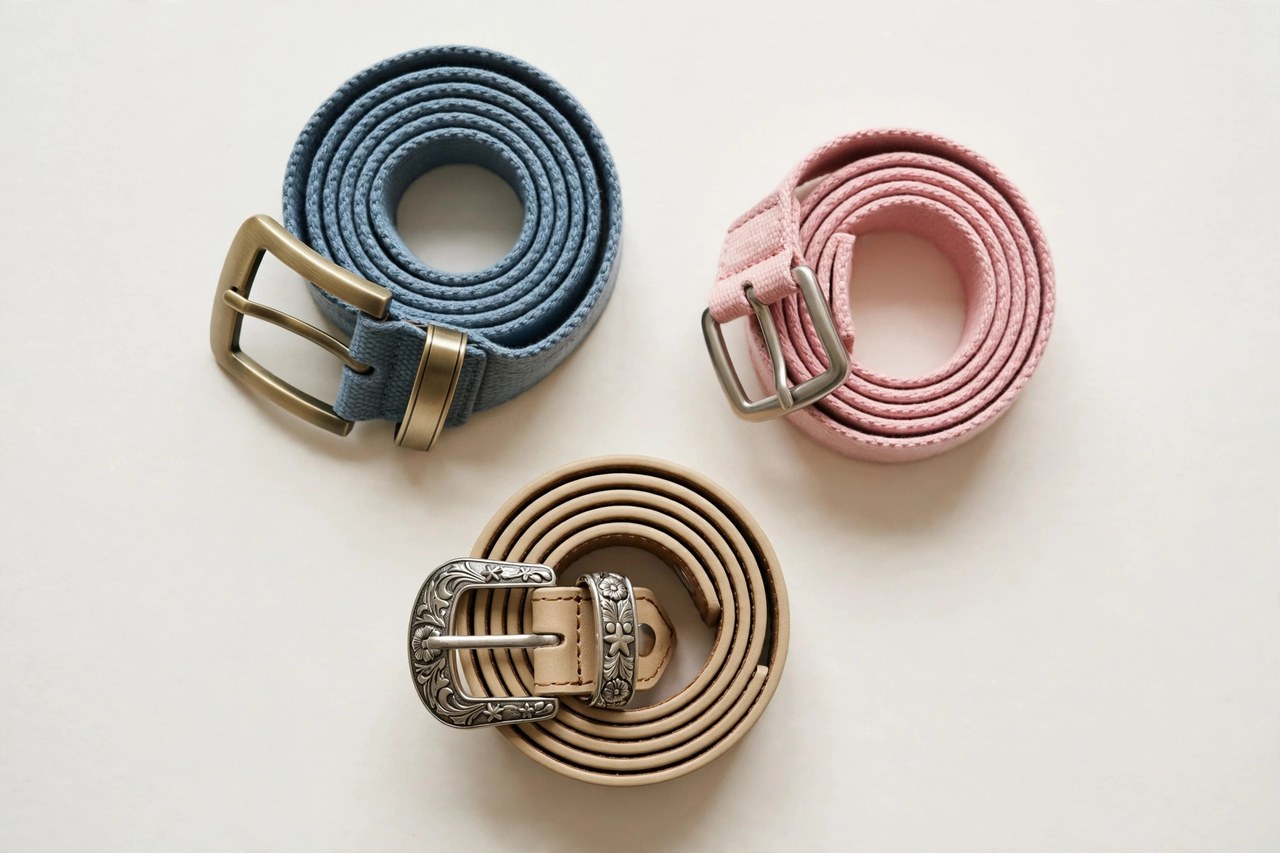
The belt buckle is the working half of a child's belt: the frame, prong and mechanism that fasten the strap and take every strain of the school day. Children's buckles divide into the classic frame-and-prong, the roller buckle that spares soft straps, military-style slide buckles, snap-on novelty buckles that swap between straps, and the western engraved plates that finish a cowboy outfit. Buckles deserve their own topic for good reason: belts fail at the buckle first. This guide explains what to look for, how the sizing actually works, which fabrics and constructions earn their price, and how to care for the garment so it keeps doing its job all season.
Styles and Construction
Judge a buckle as hardware. Solid metal - brass, stainless or zinc alloy with real weight - outlasts the thin stamped plates that bend at the prong within a term. The prong should be firmly riveted, move freely and sit centered; the frame's edges should be smooth enough not to chew the strap's holes. For western buckles, the engraving should be cut or deeply cast, not printed on, and the finish even. Snap buckles that interchange between straps are the economical novelty: one good mechanism, several straps, and a child who can dress a belt to match the day.
Children's accessories succeed on safety and simplicity: no small detachable parts for the youngest children, no long cords or ties that can catch on playground equipment, and closures a child can work alone. Materials should tolerate the child's real life - washable, chew-resistant for toddlers, and free of rough edges against skin. An accessory that needs adult help every time it is worn will simply stop being worn, however handsome it looks in the shop.
Fit and Sizing
Safety and school rules shape this purchase more than style: buckles should be proportioned to the child - an adult-size trophy plate overhangs a small waist and digs in sitting - and pointed or heavy designs have no place in a playground. For young children, a buckle the child cannot open is a buckle that causes accidents at school; test the mechanism with the child, not for them, before the belt joins the school rotation.
Accessories fit by measurement, not by age label: head circumference for hats, waist for belts measured over the trousers the belt will hold up, and hand length for gloves. Makers' charts vary more for accessories than for clothing, so measure and read the chart every time. Anything worn at the neck or head must fit close enough to stay put in play and loose enough to pull off easily - if a child cannot remove it alone, it does not fit yet.
Wearing and Care
Buckles outlive straps, so care is mostly corrosion control: dry a wet buckle before storing the belt, polish plated finishes with a soft cloth rather than abrasives, and tighten the screw or snap that holds a removable buckle at the first wobble. A loose prong screw found in October is a five-second fix; ignored, it is a lost buckle by Christmas. Keep the strap conditioned where it bends around the frame - that flex point is where leather belts crack.
Store children's accessories where the child can reach them - a low basket for hats and gloves, a hook for the belt - because an accessory with a home is an accessory that gets worn and does not get lost. Wash hats and soft accessories on the gentle cycle inside a mesh bag, reshape while damp, and check straps, buckles and fasteners monthly for cracks or looseness. Keep a spare pair of gloves and a spare hat from the start; winter loses them on schedule.
Common Questions
What is the best buckle type for a young child?
A simple frame-and-prong or a slide buckle in a small, light size: both are easy for small fingers, have no sharp points and survive daily use. For children still mastering dressing, a hook-and-loop or elastic belt with a decorative buckle front removes the mechanism entirely. Avoid heavy novelty plates and spinners for school wear.
Can belt buckles be swapped between belts?
Yes, if the strap has a snap or screw closure at the buckle end and the buckle's bar width matches the strap width - the measurement that matters. Interchangeable snap buckles are sold exactly for this. A buckle sewn into a strap cannot be swapped without a cobbler or leatherworker, which is rarely worth it on children's sizes that are outgrown in a year or two.
How do you size a buckle for a child's belt?
By the strap width, not the child's age: measure the belt strap in millimeters or inches - common children's widths are 25 to 32 millimeters - and match the buckle's stated width. The buckle should be no wider than the strap's loops allow it to pass through; check it slides through the trousers' belt loops too before committing.
More in Children's Clothes Guide B
The B letter hub and the guides closest to this one:
Looking for Children's Clothing Stores?
This guide helps you choose children's belt buckles. To browse where to buy, visit our children's clothing store directory, where you can find retailers that carry them.