Children's Mittens Guide
A mitten is essentially a glove without individual finger openings: a type of glove with two sections, one section for the thumb and a second section for the remaining four fingers together. That simple construction is exactly why mittens are the default hand covering for younger children. Four fingers sharing one warm compartment generate and hold more heat than four fingers separated in glove stalls, small hands are far easier to dress into two sections than into five, and there are no fiddly finger stalls to twist, miss or tear at the seams.
Shop Children's Mittens Now
Shop Children's Mittens on Amazon Shop Children's Mittens on eBayThe Amazon and eBay links on this page are affiliate links. If you make a purchase through them, Apparel Search may earn a commission.
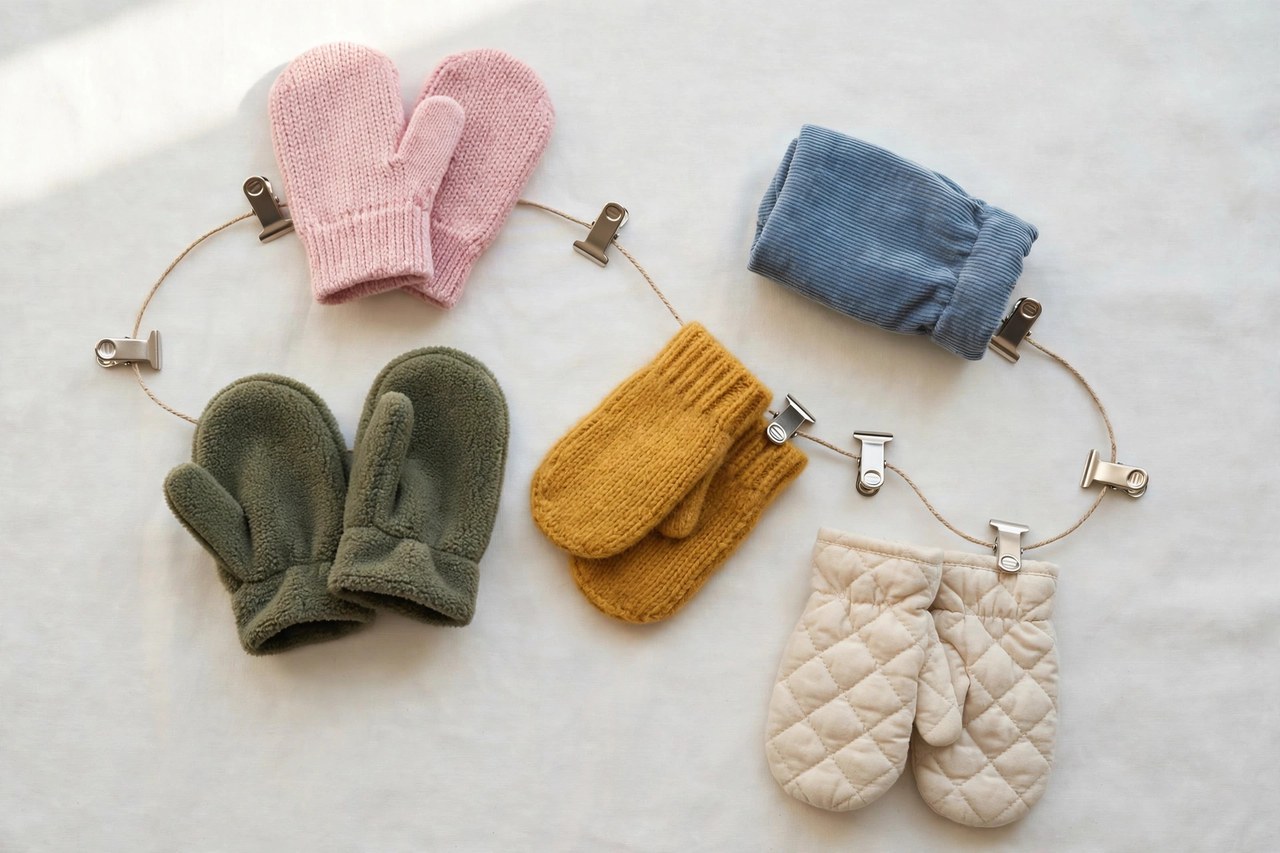
A mitten is essentially a glove without individual finger openings: a type of glove with two sections, one section for the thumb and a second section for the remaining four fingers together. That simple construction is exactly why mittens are the default hand covering for younger children. Four fingers sharing one warm compartment generate and hold more heat than four fingers separated in glove stalls, small hands are far easier to dress into two sections than into five, and there are no fiddly finger stalls to twist, miss or tear at the seams.
Hats and mittens are an important aspect of kids' fashion if you live in an area that gets cold — and in addition to looking stylish, mittens provide critical warmth for your child. Hands cool faster than almost any other part of a small body, and a child absorbed in play will rarely report cold fingers until they are properly chilled. The right pair, chosen for the weather the child will actually be out in, prevents that problem before it starts.
Why Mittens Beat Gloves for Most Young Children
Warmth is the first reason: fingers held together share warmth and present less surface area to the cold, so a mitten of a given insulation keeps hands warmer than a glove of the same insulation. The second reason is independence. A toddler or preschooler can push a hand into a mitten with a wide cuff largely unaided, while a five-stall glove still needs an adult to seat each finger — a real difference at nursery doors, school lines and sledding hills where dressing happens five times a day.
Gloves earn their place later, when a child needs finger dexterity for zips, buckles, climbing frames or a scooter brake and is old enough to dress them correctly. Many families run both: mittens as the deep-winter and snow-play default, gloves as the milder-weather, dexterity option for older children. String mittens threaded through coat sleeves, or modern mitten clips that grip the cuff, solve the category's oldest problem — the single lost mitten — and are worth far more than their small cost over a winter.
Fabrics, Waterproofing and Choosing by Weather
Match the mitten to the job in three families. Knitted acrylic or wool-blend mittens are the dry, cold-day and dress-up choice: soft, cheap enough to keep spares, but they soak through in wet snow and then chill hands quickly. Fleece mittens are the light, breathable everyday winter choice, drying fast and layering well under a shell. Waterproof or water-resistant shell mittens with insulated linings are the snow-play choice — building, sledding and snowball weather — usually with a long gauntlet cuff that goes over the coat sleeve so snow cannot pack in at the wrist.
Check construction where it matters: a reinforced palm patch slows wear on climbers and scooter riders, a soft thumb panel doubles as the traditional nose-wipe, and elastic or adjustable wrist straps keep the mitten on a hand that opens and closes all day. For babies, thumbless mittens and scratch mitts are a separate, simpler product — warmth and protection with no thumb section at all — sized by age in months rather than by hand measurement.
Sizing, Care and Surviving the Winter Intact
Size mittens by hand length — wrist to middle fingertip — rather than by age alone, and leave a small pocket of air at the fingertips: too tight compresses insulation and chills, too loose slips off and fills with snow. The cuff system matters as much as the size: a gauntlet worn over the sleeve for snow, a snug knit cuff worn under the sleeve for dry cold. Before buying, have the child make a fist and open the hand fully — the mitten should allow both without pulling at the thumb seam.
Care is mostly about drying: mittens that go back into a drawer damp will smell, stiffen and lose loft, so dry them open, away from direct radiator heat, after every wet outing. Most knit and fleece pairs machine-wash cool; waterproof shells usually wipe clean and re-proof better than they machine-wash, so follow the label. Buy the winter's main pair early, keep one budget spare pair in the school bag or car, and label everything — in a classroom of near-identical navy mittens, the labelled pair is the pair that comes home.
Common Questions
What is the difference between mittens and gloves?
A mitten has two sections — one for the thumb and one shared section for the other four fingers — while a glove has an individual opening for each finger. Fingers together share warmth, so mittens keep young children's hands warmer and are much easier for small children to put on.
Are mittens warmer than gloves for children?
Yes, at the same insulation level. Four fingers in one compartment share heat and expose less surface to the cold than fingers separated in glove stalls, which is why mittens are the deep-winter and snow-play default for younger children.
How do I stop my child losing one mitten?
Use a mitten string threaded through the coat sleeves or mitten clips that grip the cuffs, label both mittens with the child's name, and keep a budget spare pair in the school bag or car for the day one still goes missing.
More in Children's Clothes Guide M
The M letter hub and the other M guide:
Looking for Children's Clothing Stores?
This guide helps you choose children's mittens. To browse where to buy, visit our children's clothing store directory, where you can find retailers that carry them.