Children's Mukluks Guide
Mukluks are a soft winter boot with roots in the Indigenous footwear of the Arctic, traditionally made from seal or reindeer skin with a soft, flexible sole, built to be warm, light and quiet on snow. Children's mukluks borrow that design — a soft or flexible-soled boot, often with a fur or faux-fur trim and decorative stitching or beadwork styling — in a category that is not a hugely common type of shoe. That rarity shapes how families should buy them: check the sizes carefully, expect stock to come and go, and know what job the boot is really for before ordering.
Shop Children's Mukluks Now
Shop Children's Mukluks on Amazon Shop Children's Mukluks on eBayThe Amazon and eBay links on this page are affiliate links. If you make a purchase through them, Apparel Search may earn a commission.
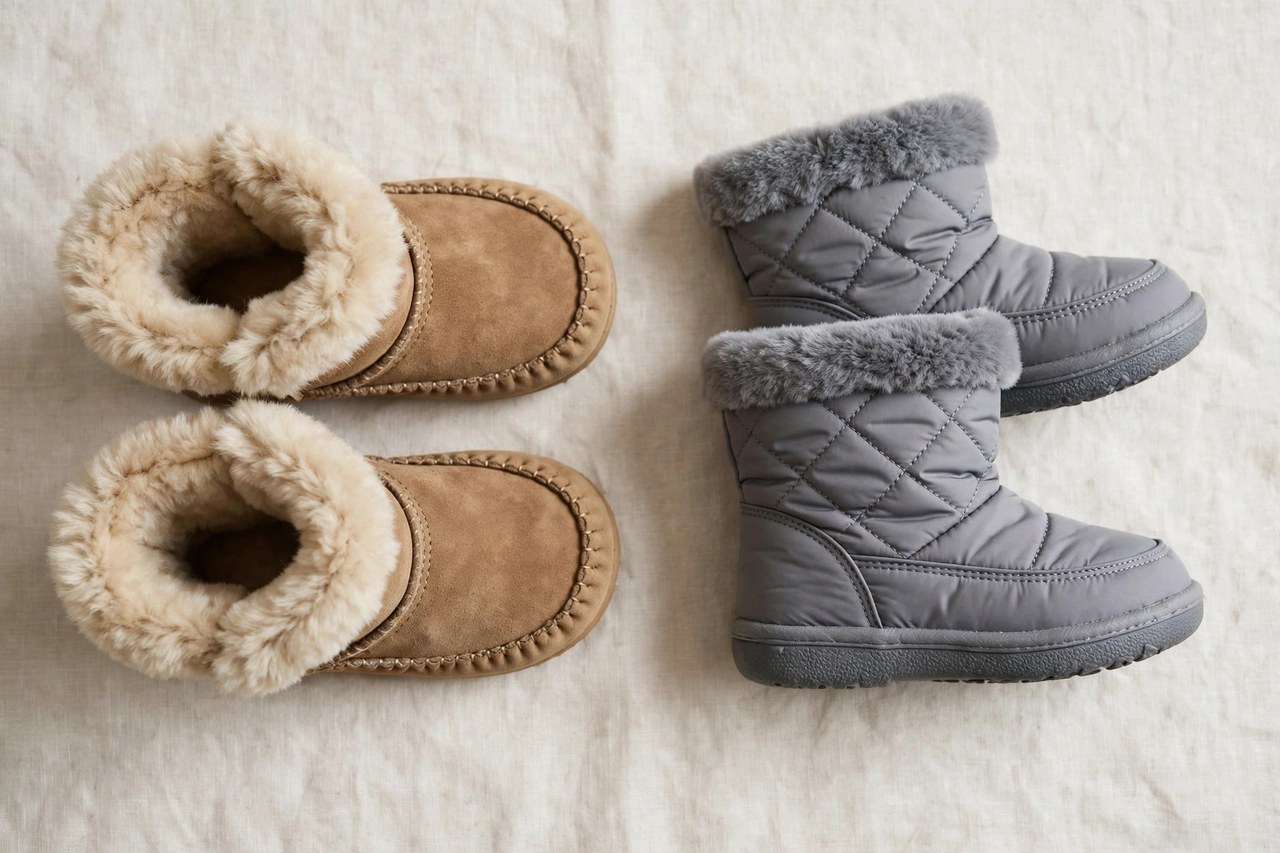
Mukluks are a soft winter boot with roots in the Indigenous footwear of the Arctic, traditionally made from seal or reindeer skin with a soft, flexible sole, built to be warm, light and quiet on snow. Children's mukluks borrow that design — a soft or flexible-soled boot, often with a fur or faux-fur trim and decorative stitching or beadwork styling — in a category that is not a hugely common type of shoe. That rarity shapes how families should buy them: check the sizes carefully, expect stock to come and go, and know what job the boot is really for before ordering.
The classic mukluk's soft sole is its defining feature and its main limit. On snow and dry cold ground it flexes with the foot, feels light, and insulates well when paired with thick socks or felt liners. On wet slush, icy pavements and long hard-surface walking, a soft sole offers less grip, less support and less water protection than a rigid moulded winter boot. Children's versions range from faithful soft-sole styles for dry cold and dress wear to modern hybrid mukluk-style boots that keep the look but add a waterproof moulded sole for everyday winter use.
Traditional Construction and Modern Children's Versions
Traditional mukluks were sewn from animal hides with the fur used for warmth and trim, a drawstring or wrap at the top to keep snow out, and soles of tougher hide that flexed rather than gripped. The design was perfected for dry, deep cold, where snow stays powdery and a light, repairable boot matters more than waterproofing. Decorative uppers — embroidery, appliqué and beadwork — made each pair distinctive, a tradition the children's versions echo in their stitched and patterned shafts.
Modern children's mukluks translate that pattern into family materials: suede, leather-look or textile uppers, faux-fur trims, fleece or imitation-shearling linings, and — in the hybrid styles — rubber or TPR soles with real tread. When shopping, decide which you are buying. A true soft-sole mukluk is a dry-cold, short-outing and special-occasion boot. A mukluk-style boot with a moulded waterproof sole is an everyday winter boot wearing mukluk clothing. Both are legitimate; confusing one for the other is how pairs disappoint.
Sizing, Warmth and Checking the Fit
The central shopping advice is simple: if you are planning to make a purchase, be sure to check the sizes. Mukluk sizing is less standardised than mainstream shoe sizing, some listings mix adult and children's sizes, and the style is not always in stock, so a size run may be incomplete when you find a pair you like. Measure the child's foot, compare it to the seller's own size chart rather than a generic one, and allow room for the thick socks or liners the boot is designed to be worn with — a mukluk fitted to a thin sock is a mukluk that will be cold.
Warmth in a mukluk system comes from layers and loft, not from a temperature rating printed on a box: a roomy boot, a warm sock, and an insulating liner or insole that traps still air. Fit should feel secure at the heel and ankle wrap without squeezing the toes, because compressed toes chill first. Have the child walk, crouch and climb a step in them: the soft sole should flex without the foot sliding forward, and the top closure should sit snugly enough that snow shaken off a sledge cannot fall straight inside.
Care, Value and When to Choose a Different Boot
Care follows the materials: brush suede and textile uppers dry, stuff the boots with paper to hold their shape while they dry away from direct heat, and keep leather-look and hide styles conditioned rather than soaked. Faux-fur trims revive with a cool brush once dry. Because children's mukluks are often bought for a season's look as much as for deep-winter duty, check the return window before ordering — fit in this category is harder to predict than in a mainstream boot, and an easy exchange is worth more than a small price saving.
Choose a different boot when the winter is mostly wet: sleet, slush and rainy school runs call for a fully waterproof, rigid-soled winter boot, and icy pavements call for deep tread a soft sole cannot give. Choose mukluks when the cold is dry, the outings are shorter, the ground is snow rather than slush, or the occasion simply calls for the style — and consider the mukluk-style hybrid as the honest middle path, keeping the distinctive look a child loves with the sole a parent needs. Read the boot in front of you, not the category name, and the pair will do its job well.
Common Questions
What are mukluks?
Mukluks are a soft winter boot originating in Indigenous Arctic footwear, traditionally made from seal or reindeer skin with a soft, flexible sole. Children's versions keep the soft or flexible sole, warm lining and often a fur or faux-fur trim, in modern materials.
Are mukluks good winter boots for children?
For dry, cold, snowy conditions and shorter outings, yes — they are light, warm with thick socks and flexible. For wet slush, icy pavements and long hard-surface walking, a waterproof rigid-soled winter boot grips and protects better; mukluk-style hybrids with moulded soles bridge the gap.
What should I check before buying children's mukluks?
Check the sizes against the seller's own chart — mukluk sizing varies, listings can mix adult and children's sizes, and stock comes and go. Allow room for thick socks or liners, and confirm the sole type: soft sole for dry cold, moulded waterproof sole for everyday winter use.
More in Children's Clothes Guide M
The M letter hub and the other M guide:
Looking for Children's Clothing Stores?
This guide helps you choose children's mukluks. To browse where to buy, visit our children's clothing store directory, where you can find retailers that carry them.