Children's Thermal Underwear Guide
Children's thermal underwear is the cold-weather base layer, and this guide treats it strictly as a product: fabric, fit, construction and care. Long underwear, also called long johns or thermal underwear, is a style of two-piece underwear with long legs and long sleeves that is normally worn during cold weather, commonly worn under clothes in cold countries. That two-piece set — a long-sleeve top and a full-length bottom — is the unit this page covers, from the school run to the ski trip.
Shop Children's Thermal Underwear Now
Shop Children's Thermal Underwear on Amazon Shop Children's Thermal Underwear on eBayThe Amazon and eBay links on this page are affiliate links. If you make a purchase through them, Apparel Search may earn a commission.
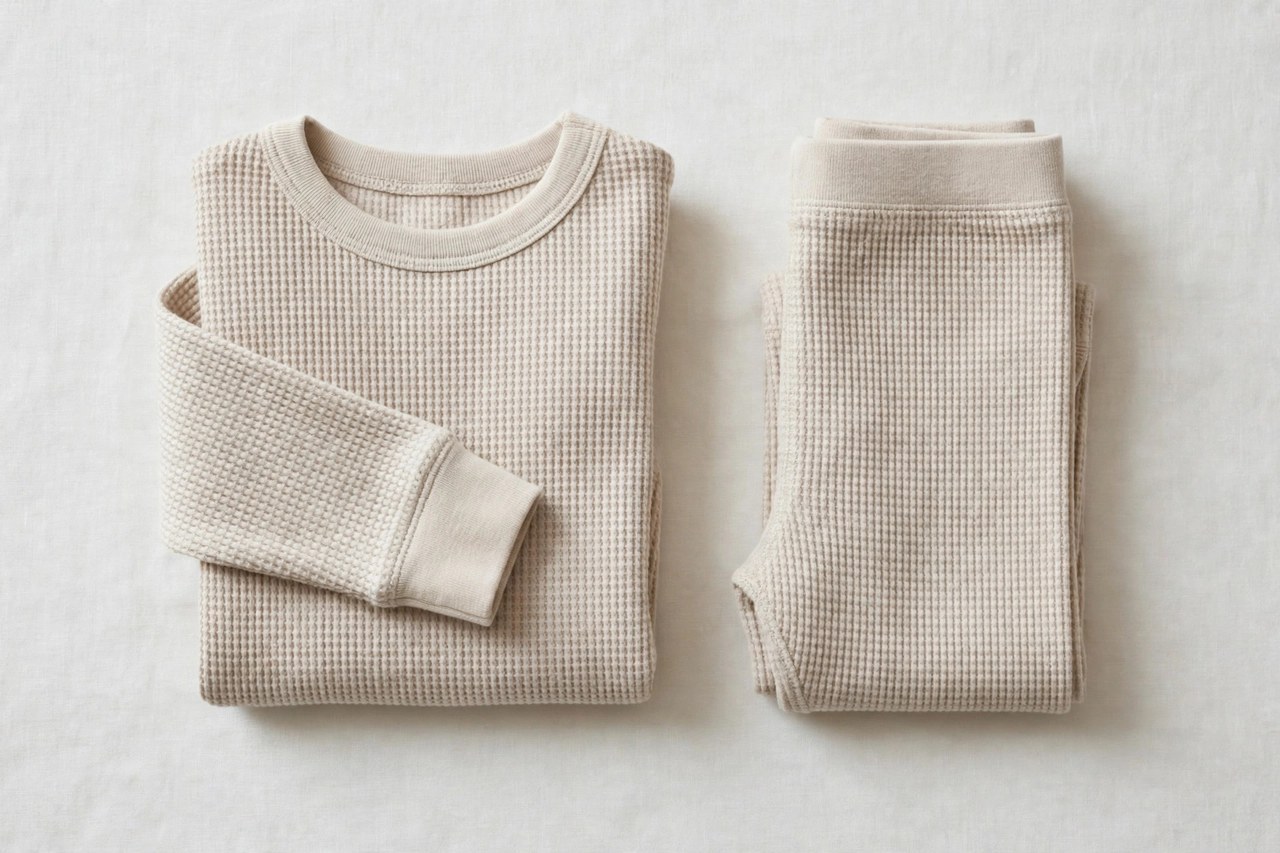
Children's thermal underwear is the cold-weather base layer, and this guide treats it strictly as a product: fabric, fit, construction and care. Long underwear, also called long johns or thermal underwear, is a style of two-piece underwear with long legs and long sleeves that is normally worn during cold weather, commonly worn under clothes in cold countries. That two-piece set — a long-sleeve top and a full-length bottom — is the unit this page covers, from the school run to the ski trip.
A base layer has exactly one job: keep a moving, then resting, child warm without overheating, by managing the thin layer of air and moisture at the skin. Everything that follows — fibre choice, waffle knits, fit against the body, cuff and waistband design — serves that single job, and a set that does it well disappears under clothes so completely that the child forgets it until the weather turns.
The Two Pieces: Top, Bottoms and Set Design
The thermal top is a close-fitting long-sleeve layer with a crew neck that sits at the base of the throat without choking, cuffs that grip the wrist so sleeves do not ride up inside coat arms, and a body long enough to tuck into the bottoms and stay tucked through bending and play. Raglan or flat seams across the shoulders prevent the rubbing that a rucksack strap or seatbelt would otherwise cause over a whole day. Some tops add a half-zip neck for venting during high activity, a feature older children genuinely use.
The bottoms — the long johns — are full-length close-fitting legs with a soft elastic waistband, ankle cuffs that sit inside socks or boots without bunching, and a gusset that lets a child squat, climb and sit cross-legged without the waistband sliding down. Sets are usually sold together for fibre consistency, but pieces can be replaced separately as legs and torsos grow at different rates. Check that the waistband elastic is covered by fabric; bare elastic against skin all day is the detail children complain about, and complaint is the enemy of a layer that only works when worn.
Fabrics: Waffle Knits, Merino, Silk and Synthetics
The classic thermal fabric is a waffle or honeycomb knit, whose pockets trap warm air against the body — the grid texture is the insulation, not a decoration. Cotton waffle knits are cheap, soft and fine for short, mild cold exposure like a school run, but cotton holds sweat and chills a resting child, so it is the wrong choice for snow play or skiing. Merino wool is the premium standard: warm, breathable, naturally odour-resistant and comfortable across a wide temperature range, at a price that argues for handing sets down. Silk is the light, smooth option under smart clothes.
Synthetic base layers in polyester or polypropylene wick sweat away from the skin fastest and dry quickest, which makes them the active child's practical choice for winter sports, at the cost of holding odour sooner than merino. Blends split the differences. Judge any fabric by two tests: does it move moisture, and does the inside face feel smooth — a base layer sits against skin for hours, so seams should be flat or offset, care labels printed rather than sewn in where possible, and no scratchy stitching anywhere at the neck, waist or ankle.
Fit, Layering and Care
Fit a thermal set snug, not tight: the fabric should contact the skin over most of the body, because the warm air layer is thin by design, but never bind at the neck, underarm, waist or ankle. A loose set is just a cold shirt — air circulates, moisture pools and the insulation fails — while a too-tight set restricts movement and will be refused. Buy the child's current size; thermal underwear is the category where growing room defeats the purpose entirely, and the set must be replaced as the child grows, like shoes.
Layering order is fixed: thermal set first, then ordinary clothes, then insulation and outerwear. Under school uniforms, a thermal top alone often does the whole job on cold mornings, and under snow clothing the full set is the difference between an hour outside and an afternoon. Care follows the fibre: merino washes cool and gentle and dries flat or on a line out of strong heat; synthetics wash cool without fabric softener, which coats the wicking fibres; cotton waffle tolerates ordinary washing. Keep two sets in rotation through deep winter so one is always dry, check waistband elastic and ankle cuffs each autumn, and hand down only sets whose fabric still springs back when stretched.
Common Questions
What is thermal underwear?
Long underwear, also called long johns or thermal underwear, is a style of two-piece underwear with long legs and long sleeves, normally worn during cold weather and commonly worn under clothes in cold countries. The two pieces — a long-sleeve top and full-length bottoms — form one base-layer system.
Is cotton thermal underwear a good choice for children?
Only for short, mild cold like a school run. Cotton waffle knits are soft and cheap, but cotton holds sweat and chills a resting child. For snow play, skiing and long outdoor days, choose merino wool or a synthetic wicking fabric, which move moisture away from the skin and keep working when damp.
Should children's thermals fit snugly or have growing room?
Snugly, in the child's current size. The insulation is a thin layer of warm air held at the skin, so a loose set lets air circulate and fails, while a binding set gets refused. Contact without tightness is the fit — and the set is replaced as the child grows, like shoes.
More in Children's Clothes Guide T
The T letter hub and related T guides:
Looking for Children's Clothing Stores?
This guide helps you choose children's thermal underwear. To browse where to buy, visit our children's clothing store directory, where you can find retailers that carry them.