Children's Turtlenecks Guide
A children's turtleneck is a top defined by its neck: a close-fitting, high collar that folds over and covers most of the neck. Start with the question — what are turtleneck shirts? — and see the shirt and sweater guides of this directory, because the turtleneck lives in both families at once: it is a shirt by weight and a knit layer by function. This page covers the neckline itself across every garment that carries it: the jersey turtleneck top, the knitted roll-neck sweater, and the layering system they anchor.
Shop Children's Turtlenecks Now
Shop Children's Turtlenecks on Amazon Shop Children's Turtlenecks on eBayThe Amazon and eBay links on this page are affiliate links. If you make a purchase through them, Apparel Search may earn a commission.
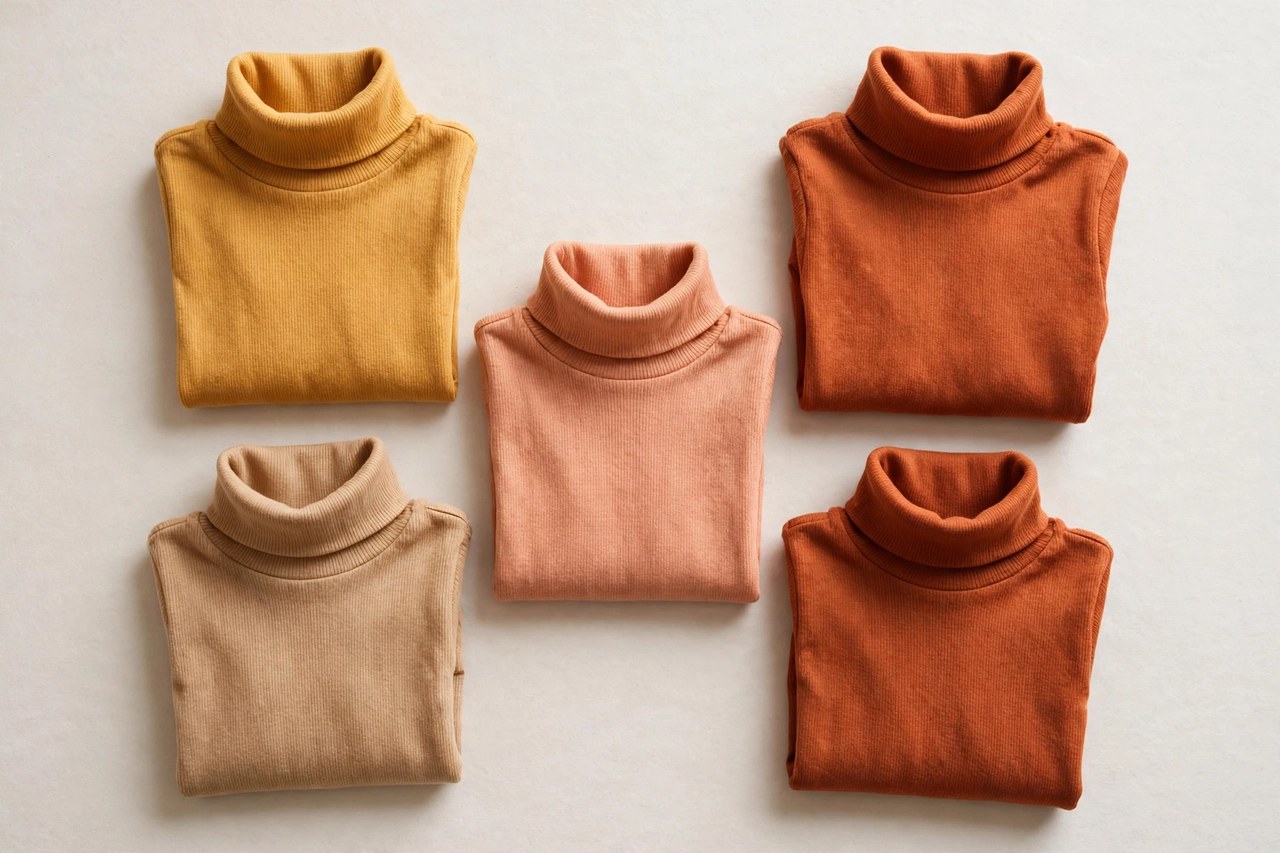
A children's turtleneck is a top defined by its neck: a close-fitting, high collar that folds over and covers most of the neck. Start with the question — what are turtleneck shirts? — and see the shirt and sweater guides of this directory, because the turtleneck lives in both families at once: it is a shirt by weight and a knit layer by function. This page covers the neckline itself across every garment that carries it: the jersey turtleneck top, the knitted roll-neck sweater, and the layering system they anchor.
The turtleneck's virtue is elimination: it removes the cold gap between collar and chin that scarves are otherwise hired to fill, and it does so with nothing to lose, trail or untie. For school and outdoor days that makes it one of the most practical tops in the winter wardrobe — provided the child accepts the collar, which is this category's one honest condition, addressed head-on below.
The Family: Jersey Tops, Knit Roll-Necks and Mock Necks
The jersey turtleneck top is the workhorse: a fine cotton or cotton-blend knit with long sleeves and a soft roll collar, worn alone in autumn and as the layer under jumpers, dungarees and ski bibs all winter. It is the turtleneck of school photographs and everyday wear, cheap enough to own in three colours and sturdy enough to hand down. The knitted roll-neck is the sweater version — chunkier yarns, real insulation, worn as the main warmth layer under a coat — and the sweater guide in this directory covers its fibres and care in depth.
The mock turtleneck is the diplomatic compromise: a shorter band collar that stands at the base of the neck without folding over, giving most of the warmth gap coverage with none of the full collar's embrace. For children who resist the true turtleneck, the mock neck is usually the negotiated settlement. Dickies and detachable collars exist in some ranges as layering inserts. Across the family, collar construction is the quality tell: the neck should be ribbed or elastane-blended enough to recover its shape after being pulled over a head, wash after wash — a collar that bags out makes the whole garment look finished.
The Collar Question: Comfort, Fit and Children Who Refuse
Be direct about the category's risk: some children dislike anything close at the neck, and a turtleneck bought against that dislike will not be worn, however warm the theory. The tests before buying are simple — the collar should admit two fingers between fabric and neck when worn, the knit should stretch over the head without a struggle that repeats daily at dressing speed, and the inside of the collar should be smooth, with no exposed seam ridge at the throat. Let a hesitant child try the garment at home for an hour before committing the wardrobe to it.
Fit the body as a layering top: close enough to sit under jumpers and bibs without bunching, long enough to tuck and stay tucked, sleeves to the wrist. Sized too big, a turtleneck's collar flops and its body wrinkles under layers; sized right, it is the smoothest base in the drawer. Children who accept the collar gain a real advantage — no scarf to manage, no gap for wind on the walk to school — and many who refuse at three accept happily at six, so the category is worth revisiting rather than writing off.
Fabrics, Layering Systems and Care
Cotton jersey with a touch of elastane is the everyday fabric: soft, breathable, washable and elastic where the collar needs recovery. Cotton-modal and brushed-cotton versions feel smoother against neck-sensitive skin. Wool and wool-blend roll-necks are the warm end — test them against the child's own neck and cheek, not your wrist, because a knit worn this close is judged by its itchiest inch. Thermal and merino turtlenecks serve as true base layers under ski and snow clothing, where the collar closes the last gap in the system the thermal underwear guide in this letter starts.
Care keeps collars alive: wash inside out, cool to moderate, reshape the collar while damp, and dry flat or hung by the body — never by the collar on a hook, which stretches the ribbing into a permanent sag. Fold rather than hang for storage. Check the collar's recovery each autumn: stretch it gently, and if it stays stretched, retire the garment to play clothes, because a turtleneck is its collar and a tired collar is a tired top. Kept this way, the jersey versions routinely serve two children, and the colour most worth triplicating is the one that matches the school uniform.
Common Questions
What is a turtleneck shirt?
A top with a close-fitting, high collar that folds over and covers most of the neck. The turtleneck exists as a fine jersey shirt — the everyday layering version — and as a knitted roll-neck sweater, which is why both the shirt guide and the sweater guide are linked below.
What can you do if a child refuses to wear a turtleneck?
Try the mock turtleneck: a shorter standing band collar that covers the base of the neck without folding over, giving most of the warmth with much less embrace. Check any collar admits two fingers at the neck and stretches over the head easily, and let a hesitant child trial the garment at home before buying several.
How do you stop a turtleneck collar going baggy?
Choose a collar ribbed or blended with elastane so it recovers after being pulled over the head. Wash inside out, reshape the collar while damp, dry the garment flat or hung by the body — never hung by the collar — and store folded. A collar that stays stretched when gently pulled has retired, whatever the body looks like.
More in Children's Clothes Guide T
The T letter hub and related T guides:
Looking for Children's Clothing Stores?
This guide helps you choose children's turtlenecks. To browse where to buy, visit our children's clothing store directory, where you can find retailers that carry them.