Children's Valentines Day T-shirts Guide
A children's Valentine's Day t-shirt is a graphic tee made for one date on the calendar: February 14. The original guide set out the holiday behind the shirt: Valentine's Day, also called Saint Valentine's Day or the Feast of Saint Valentine, is an annual holiday celebrated on February 14, which originated as a Western Christian liturgical feast day honoring one or more early saints named Valentinus, and is recognized as a significant cultural and commercial celebration in many regions around the world, although it is not a public holiday in any country. For children the day is mostly a school day - cards exchanged in class, a party, perhaps a first crush, as the original page teased - and the t-shirt is its uniform.
Shop Children's Valentines Day T-shirts Now
Shop Children's Valentines Day T-shirts on Amazon Shop Children's Valentines Day T-shirts on eBayThe Amazon and eBay links on this page are affiliate links. If you make a purchase through them, Apparel Search may earn a commission.
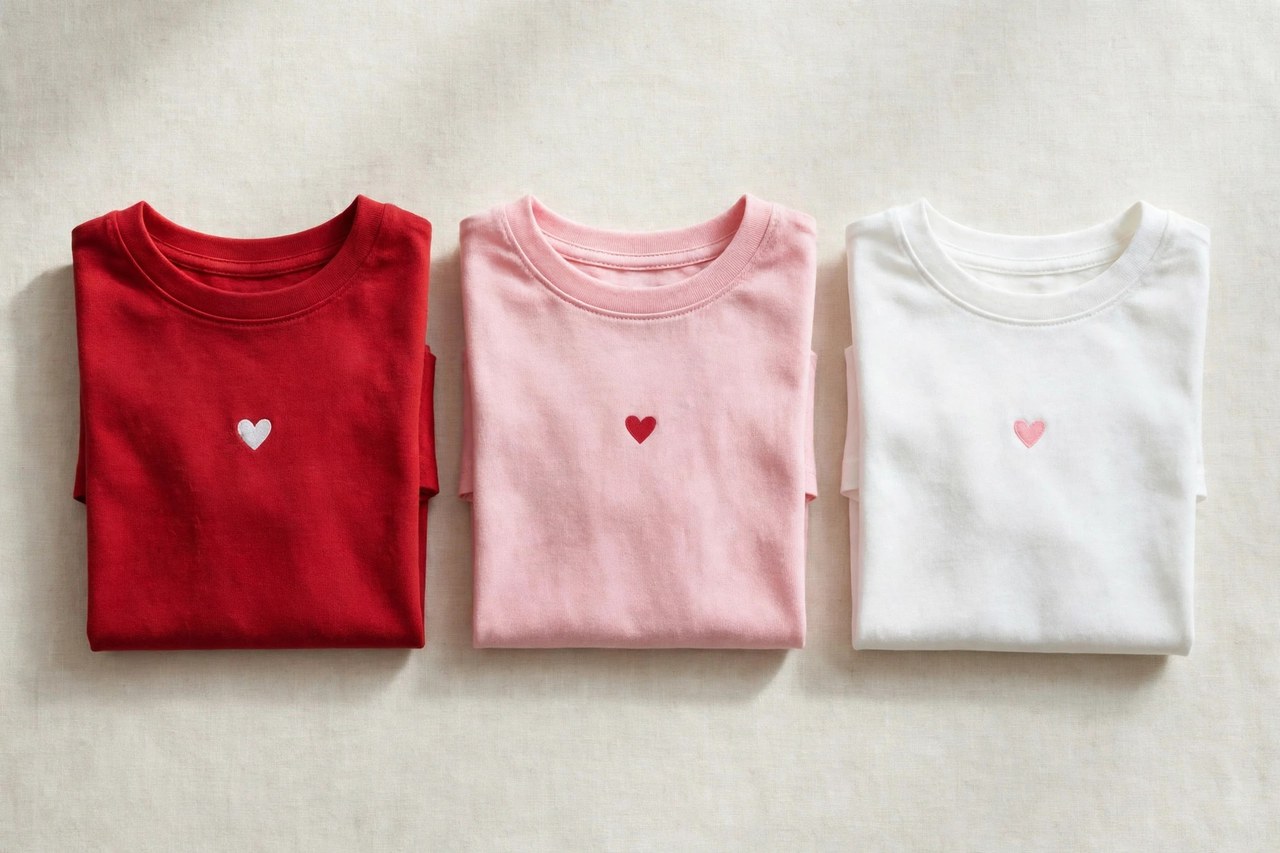
A children's Valentine's Day t-shirt is a graphic tee made for one date on the calendar: February 14. The original guide set out the holiday behind the shirt: Valentine's Day, also called Saint Valentine's Day or the Feast of Saint Valentine, is an annual holiday celebrated on February 14, which originated as a Western Christian liturgical feast day honoring one or more early saints named Valentinus, and is recognized as a significant cultural and commercial celebration in many regions around the world, although it is not a public holiday in any country. For children the day is mostly a school day - cards exchanged in class, a party, perhaps a first crush, as the original page teased - and the t-shirt is its uniform.
That single-day purpose changes how the shirt should be bought. A Valentine's tee is a seasonal graphic garment, not a wardrobe staple: it is bought for the print, worn intensely around one week in February, then either saved for a younger sibling or outgrown by the next year. This guide covers the symbols that make the print, the red colour question, construction and print methods, sizing for a garment with a short window, and care that keeps hearts from cracking before the party.
The Holiday and Its Symbols
The original guide explained how the day is marked: Valentine's Day has become the day of the year when people show their love to each other, by giving flowers, chocolates, Valentine's cards or just a nice gift, and the love notes people give out are called valentines, with some people picking one person and calling them their Valentine as a gesture to show love and appreciation. In a children's classroom that tradition becomes the card exchange - every child gives and receives - and a Valentine's tee is designed to belong to that scene: friendly, cheerful and about kindness and friendship as much as anything else.
The symbols of Valentine's Day, as the original page listed them, are heart shapes, roses, and Cupid with his arrows - and those three motifs, plus the words that travel with them, are nearly the whole design language of the children's Valentine's shirt. Hearts dominate because they read at any scale and suit every age, from a single glitter heart for a toddler to a scattered pattern for an older child. Roses appear as prints on shirts for older children, and Cupid - the small winged figure with a bow - is the classic character motif. Wordplay does the rest of the work: short, kind slogans about friendship, kindness and being sweet, printed large enough to read across a classroom.
Red, Pink and the Rest of the Palette
In regard to fashion, the original guide noted, red is the common color of choice for Valentine's Day - and on the tees the palette runs red first, then pink, then white as the base that makes both colours print cleanly. Red shirts with white hearts, white shirts with red prints and pink shirts with either are the core range. For school, check the practical side of the colour: a saturated red tee should be washed separately the first few times because new red dyes can bleed onto lighter laundry, and a child who dislikes standing out may be happier in a white shirt with a small heart than in head-to-toe scarlet.
Construction is the standard children's tee: a cotton or cotton-blend jersey, crew neck, short sleeves, with the graphic applied by screen print, heat transfer or direct-to-garment printing. Screen prints are the most durable and the usual choice for bold heart designs in one or two colours; transfers and DTG prints carry the detailed, multi-colour and personalised designs - a name under a heart, a class-year line - at some cost in wash life. Check that any glitter, foil or puff element is firmly bonded, because those finishes are the first to crack and peel, and on a shirt bought for one week that failure arrives exactly when it matters.
Sizing, School Wear and Print Care
Buy the child's current size. A Valentine's tee has no next year in the same body - by the following February the child will very likely have changed sizes - so the usual children's habit of buying a size up to grow into simply produces a baggy shirt for its one big day and a still-baggy keepsake afterwards. If the shirt will be worn for a school party, layer it over a long-sleeve tee or under a cardigan where February weather requires it, and check the school's dress expectations: most treat a friendly holiday graphic as ordinary festive dress, which is exactly what these shirts are made to be.
Care is print care. Wash the shirt inside out on a cool or warm gentle cycle, avoid harsh bleach on coloured prints, and tumble dry low or line dry - high heat is what cracks screen-print ink and lifts transfers. Iron inside out, never directly on the graphic or on glitter and foil. Stored clean and folded after the holiday, a well-printed Valentine's tee survives to be handed down, and toddler and early-years sizes in particular pass from child to child because each wearer only needs the shirt for a season too short to wear it out. The original page closed by hoping that for Valentine's Day children would be dressed in red - and with a shirt chosen in the right size, in a print the child enjoys, that part at least is easy.
Common Questions
When is Valentine's Day and where did it come from?
February 14. The original guide records that Valentine's Day - also called Saint Valentine's Day or the Feast of Saint Valentine - originated as a Western Christian liturgical feast day honoring one or more early saints named Valentinus, and is now a significant cultural and commercial celebration in many regions, though it is not a public holiday in any country.
What symbols and colours belong on a children's Valentine's t-shirt?
The original guide's symbols are heart shapes, roses, and Cupid with his arrows, and its fashion note is that red is the common color of choice for Valentine's Day - with pink and white as the other core colours for children's tees.
Should a Valentine's tee be bought a size up to grow into?
No - buy the child's current size. The shirt is a seasonal garment for one week in February; by the next Valentine's Day the child will very likely need a different size anyway, and an oversized shirt just looks baggy on its one big day.
More in Children's Clothes Guide V
The V letter hub and the other V guide:
Looking for Children's Clothing Stores?
This guide helps you choose children's valentines day t-shirts. To browse where to buy, visit our children's clothing store directory, where you can find retailers that carry them.