Children's Vests Guide
A children's vest is a layer without sleeves, and the definition is simple: a vest is a sleeveless garment covering the upper body, and the term has different meanings around the world. In modern times, vests can be worn by boys or girls. That simple definition covers a surprisingly wide family - the formal buttoned vest of a dress outfit, the fleece vest of a cool school morning, the padded vest that stands in for a coat in autumn - all sharing one idea: warmth and finish for the torso, with the arms left completely free.
Shop Children's Vests Now
Shop Children's Vests on Amazon Shop Children's Vests on eBayThe Amazon and eBay links on this page are affiliate links. If you make a purchase through them, Apparel Search may earn a commission.
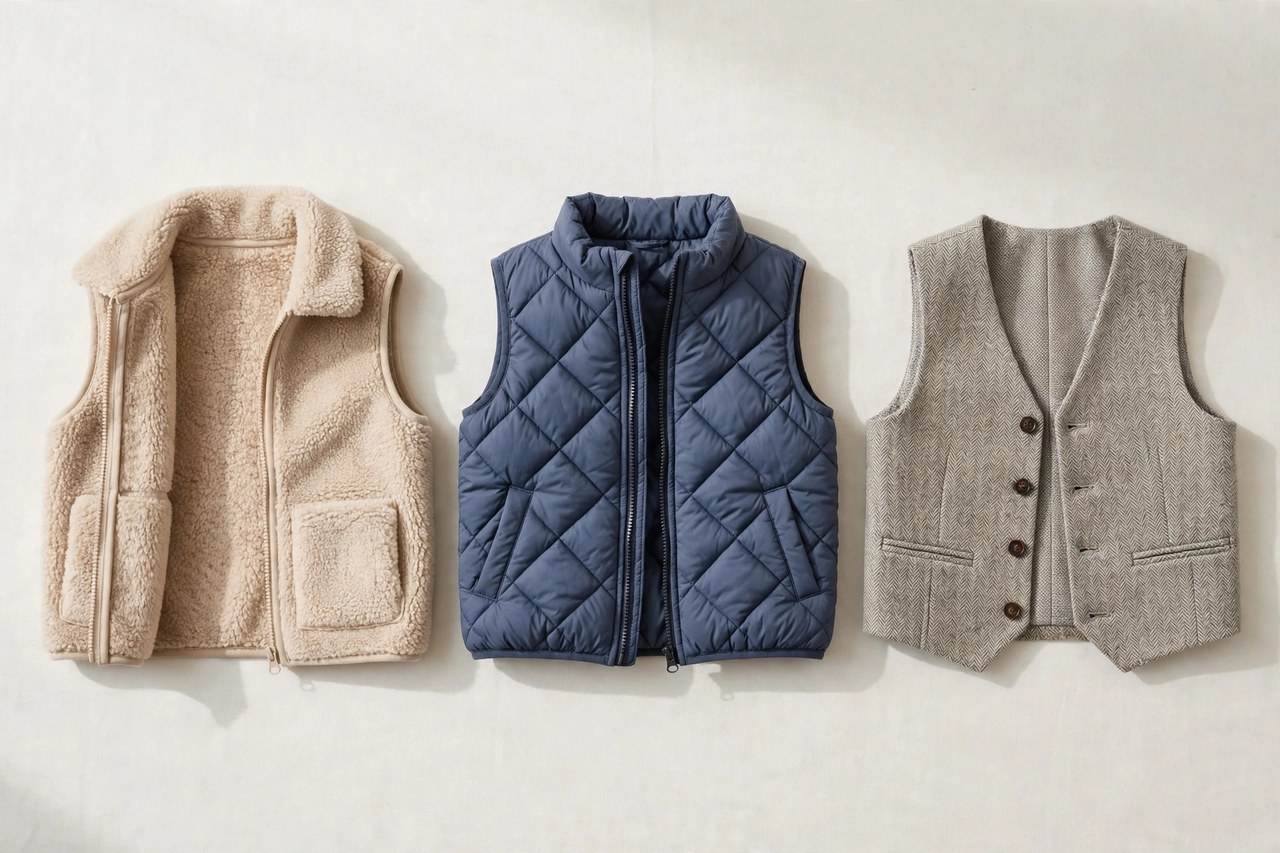
A children's vest is a layer without sleeves, and the definition is simple: a vest is a sleeveless garment covering the upper body, and the term has different meanings around the world. In modern times, vests can be worn by boys or girls. That simple definition covers a surprisingly wide family - the formal buttoned vest of a dress outfit, the fleece vest of a cool school morning, the padded vest that stands in for a coat in autumn - all sharing one idea: warmth and finish for the torso, with the arms left completely free.
That freedom is why the vest earns its place in a child's wardrobe. Children run, climb, write, draw and play instruments with their arms, and a sleeveless layer adds core warmth and polish without the bulk, heat and restriction of a full jacket or a long-sleeved sweater. This guide covers the vest's history and name, its main families for children, how it layers, and the fit and fastening checks that decide whether a vest gets worn or left in the drawer.
The Name, the History and the Two Meanings
The term vest derives from French veste, meaning jacket or sport coat, Italian veste, meaning robe or gown, and Latin vestis. The sleeveless garment worn by men beneath a coat, it continued, may have been first popularized by King Charles II of England - the seventeenth-century court fashion that turned the waistcoat into a standard part of formal dress, from which the children's formal vest directly descends. Knowing the history explains the garment's double life: the same word covers a piece of formal tailoring and a piece of outdoor kit, because both grew from that sleeveless under-coat idea.
The term has different meanings around the world, and parents shopping internationally meet that difference quickly. In American usage a vest is the sleeveless outer or formal garment this page describes. In British usage a vest is an undergarment - the sleeveless undershirt worn under a shirt - while the sleeveless formal garment is a waistcoat and the outdoor padded style is often called a gilet or bodywarmer. Check which garment a listing means before buying across that line: the photos answer the question faster than the title does.
The Children's Vest Families
The formal vest - the waistcoat style - buttons down the front, is cut from suiting fabrics, satin-backed cloth or velvet for festive occasions, and is sold on its own or as part of a three-piece set with trousers and a jacket for weddings, recitals, photographs and holidays. It is worn over a buttoned shirt, sometimes with a tie, and it is the vest that carries the Charles II lineage into the children's department. Fit matters more here than anywhere: a formal vest should sit close, end at the waistband, and button without pulling.
The working families are built for weather and play. Fleece vests are the mid-layer staple: light, warm for their weight, easy to wash and dry, worn over long-sleeve tees and under rain shells. Padded or puffer vests - the gilet form - carry quilted synthetic or down fill and serve as outerwear in cool, dry weather and as the warmest mid-layer under a coat in deep winter. Denim and twill vests are style pieces worn open over tees and dresses. Sweater vests - knitted, V-neck or crew - are the school-uniform and smart-casual family, layering over shirts without sleeve bulk in the classroom. Safety and activity vests, in bright colours with reflective trim, belong to cycling, walking to school and outdoor programmes, where being seen is the garment's whole job.
Layering, Fit and Fastenings
A vest layers by a simple rule: it warms the core, so everything else can be lighter. Over a long-sleeve tee or a shirt it replaces a sweater on a mild day; under a waterproof shell it is the insulation of a rain system; over a dress shirt it is pure formality. Because the arms are bare of bulk, vests suit children who overheat in jackets, children in car seats where thick coats are unsafe under harness straps, and any activity - cycling, riding, playground play - where sleeves snag, drag or restrict. Size for the layer beneath: a vest worn mostly over thin shirts fits closer than one bought to go over chunky knitwear, and an adjustable hem or side tabs help one vest serve both.
Fastenings are the child's independence test. Front zips are fastest and the standard on fleece and puffer styles - look for a zip the child can start unaided, with a chin guard so it cannot catch skin. Buttons on formal vests are part of the look and a fine-motor exercise younger children may need help with; snaps split the difference. Check armholes as carefully as closures: they should be deep enough not to bind over the layer beneath, with bound or elastic edges on active styles so the vest moves with the child. See also vest stores and vest factories and to its fashion vests product summary, because a vest, unusually among children's garments, is bought from tailors, outdoor shops and uniform suppliers alike.
Common Questions
What is a vest?
A sleeveless garment covering the upper body - with the note that the term has different meanings around the world. The word derives from French veste (jacket, sport coat), Italian veste (robe, gown) and Latin vestis, and the sleeveless garment worn beneath a coat may have been first popularized by King Charles II of England.
What is the difference between a vest in American and British use?
In American usage a vest is a sleeveless outer or formal garment. In British usage a vest is a sleeveless undergarment, the formal sleeveless garment is a waistcoat, and the padded outdoor style is often called a gilet or bodywarmer - so check the photos on international listings.
Why choose a vest instead of a jacket for a child?
A vest warms the torso while leaving the arms completely free, so it suits active play, children who overheat in jackets, and layering under a coat or rain shell. It is also the safe warm layer in car seats, where thick coats should not be worn under harness straps.
More in Children's Clothes Guide V
The V letter hub and the other V guide:
Looking for Children's Clothing Stores?
This guide helps you choose children's vests. To browse where to buy, visit our children's clothing store directory, where you can find retailers that carry them.