Men's Big and Tall Socks Guide
Big and tall socks are hosiery in extended sizes: lengths beyond the standard sock range (which quietly ends around a US shoe 12) and - the specification that actually matters - calf and leg dimensions that fit a larger leg without a tourniquet's enthusiasm. A sock is a small garment with an exact job, and in extended sizes its grading is the difference between a sock that stays up by engineering and one that stays up by constriction. This page covers sock sizing by shoe size and calf, heights, and the fibers that serve big feet best.
Shop Men's Big and Tall Socks Now
Shop Men's Big and Tall Socks on Amazon Shop Men's Big and Tall Socks on eBayThe Amazon and eBay links on this page are affiliate links. If you make a purchase through them, Apparel Search may earn a commission.
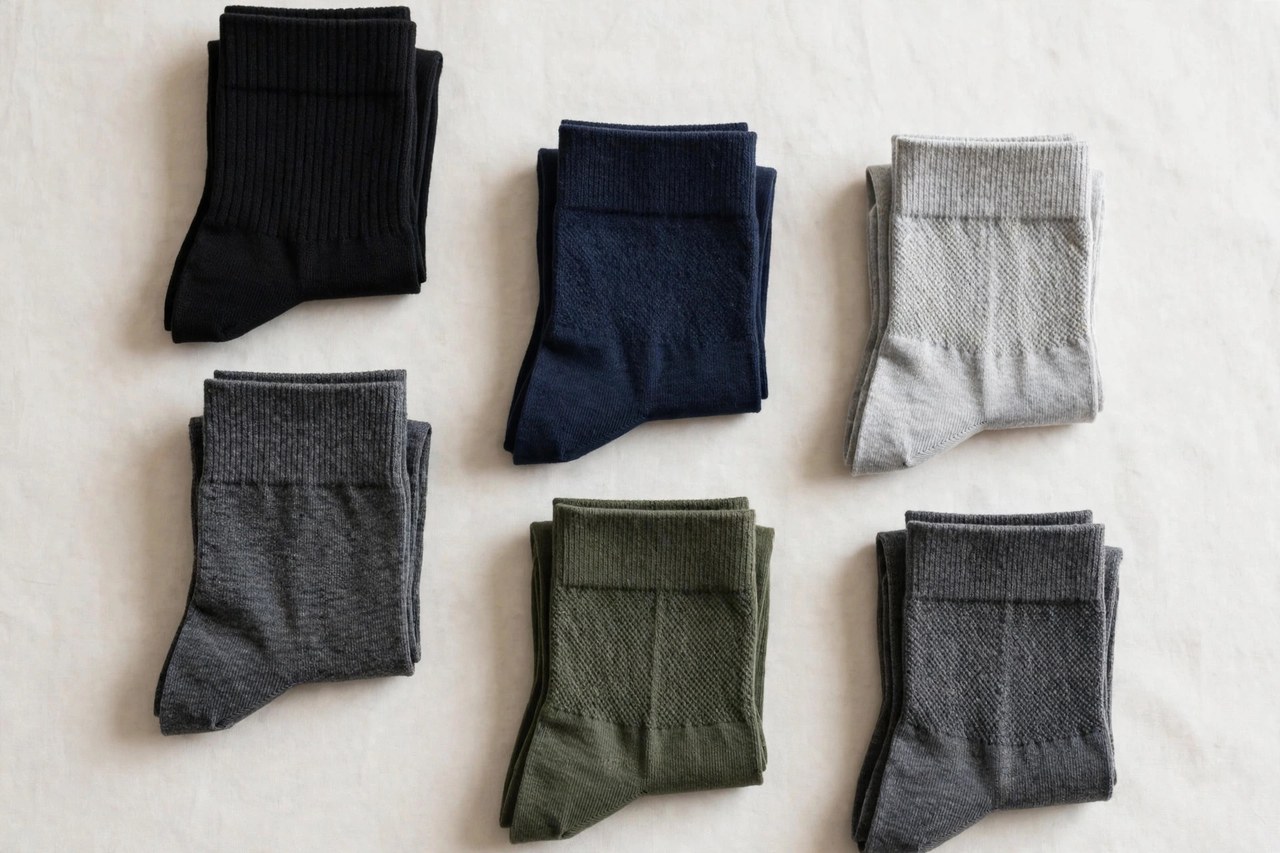
Big and tall socks are hosiery in extended sizes: lengths beyond the standard sock range (which quietly ends around a US shoe 12) and - the specification that actually matters - calf and leg dimensions that fit a larger leg without a tourniquet's enthusiasm. A sock is a small garment with an exact job, and in extended sizes its grading is the difference between a sock that stays up by engineering and one that stays up by constriction. This page covers sock sizing by shoe size and calf, heights, and the fibers that serve big feet best.
Big and tall sizing answers two different bodies with two different ranges: big sizes (1X through 6X in most lines) add circumference - chest, waist, seat and thigh - at regular lengths, while tall sizes (LT through 4XLT) add length - sleeves, body, rise and inseam - at a given circumference. Many men need one, some need both, and buying the wrong axis is the classic big-and-tall mistake: a big size bought for length drowns the shoulders, and a tall size bought for girth strains at every closure. Measure both axes - circumference where the garment closes, and length where it must reach - and order from the maker's own chart, because an X in one brand is a rumor in another.
Sizing for Bigger and Taller Frames
Buy socks by shoe size first: extended sock sizes run to shoe 15, 16 and beyond in the serious lines, and a sock too small in the foot will heel-slip and wear through at the toe within the month. Then check the leg: measure your calf at its fullest and compare with the sock's stated fit - king-size and wide-calf lines exist because a standard leg opening stretched over a large calf loses elasticity, cuts in, and slides down in surrender. Cushion placement should match your shoe volume: a heavily cushioned sock in a close-fitting dress shoe is a sizing error wearing a disguise.
Proportions are the second half of the system. A garment simply scaled up in every dimension fits nobody: proper big-and-tall patterns widen the shoulder and chest without dropping the armhole to the waist, add rise so a waistband sits where trousers are meant to sit, and grade pockets, collars and cuffs up modestly rather than comically. When a tall or big version looks like a regular garment photographed through a magnifier, that is usually better than it sounds - restraint in grading is what keeps a 3X shirt reading as a shirt and not as a tent with buttons.
Fabric and Construction
Fibers follow the sock's duty: merino wool blends regulate temperature and odor for dress and everyday wear, cotton-rich socks stay the inexpensive everyday standard (and hold moisture, which active feet notice), and synthetic performance blends wick and endure for sport and work boots. Heights are a system - no-show, quarter, crew, over-the-calf - and in extended sizes over-the-calf earns special respect: it stays up by geography rather than grip, the kindest solution for a large calf. Reinforced heels and toes are worth paying for at larger sizes because the loads, honestly, are larger.
Judge any pair by the same construction checklist: how the sole is attached (cemented soles are light and cheaper, stitched welts are repairable and dearer), what the lining does with moisture over a long day, and whether the insole is removable if you use your own supports. Weight matters more than most listings admit - a heavy pair taxes every step, while a well-balanced lighter pair disappears on the foot. Finally, check the outsole compound against your surfaces: hard rubber lasts, soft rubber grips, and the right answer is the one matched to where the shoes will actually walk, play or work.
Wearing and Care
Care for socks in extended sizes follows the same rules as any quality garment, with two additions: the extra fabric weight makes hangers work harder, so fold heavy knits and use broad hangers for tailored pieces; and alterations budget matters more, because a hem or sleeve adjustment is often the difference between an extended size that fits and one that merely covers.
Care is rotation first: never wear the same pair on consecutive days if you can help it, because twenty-four hours lets moisture leave the lining and cushioning recover its shape. Brush or wipe down after wear, use trees or stuffing to hold the shape while drying, and never dry footwear on direct heat, which cracks leather and warps adhesives. Condition leather on schedule rather than on appearance - by the time it looks thirsty it is already dry - and reproof water-resistant finishes when water stops beading on the surface.
Common Questions
What sock size fits a size 15 shoe?
A sock labeled for shoe sizes 13-16 (or XL/king in maker terms) - not the standard 10-13 sock stretched to its limit, which will heel-slip and thin at the toe almost immediately. Extended sock lines exist from most hosiery makers; the foot length printed on the package, measured against your own, settles any chart's ambiguity.
Why do socks cut into big calves?
Because the leg opening's elastic is doing a job it was not sized for: stretched past its designed range, it grips harder and dies sooner. Wide-calf and king-size socks grade the leg circumference up with the foot length. Over-the-calf heights also solve it mechanically, staying up by position above the calf's taper rather than by squeeze.
Are expensive socks worth it in extended sizes?
The premium buys graded sizing, better fibers and reinforced wear zones - all three worth more at larger sizes, where a cheap sock fails faster under greater load. Merino dress socks and properly cushioned work socks in true extended sizes outlast budget multipacks by seasons. Buy fewer, better, and rotate them like the footwear they serve.
More Big and Tall Guides
Background
Socks in extended sizes are part of the Big and Tall collection, listed on its second page. The links below lead to big and tall clothing stores and onward through the collection’s other categories, and this guide covers the garment’s extended sizing, fabrics, fit and care, written for big and tall men.
Looking for Men's Clothing Stores?
This guide explains men's big and tall socks and their sizing. To browse where to buy, visit our men's clothing store directory, where you can find retailers that carry extended sizes.